EN
EN
 ES
ES
 AR
AR


Article Overview: This evaluation guide helps CTOs, technical architects, and procurement teams choose bag making machine manufacturers through a buyer-side decision framework. It explains how to translate operating needs into selection criteria, what evidence to verify before ordering, and which trade-offs matter, using supplier documentation and reference installations as the factual boundary.
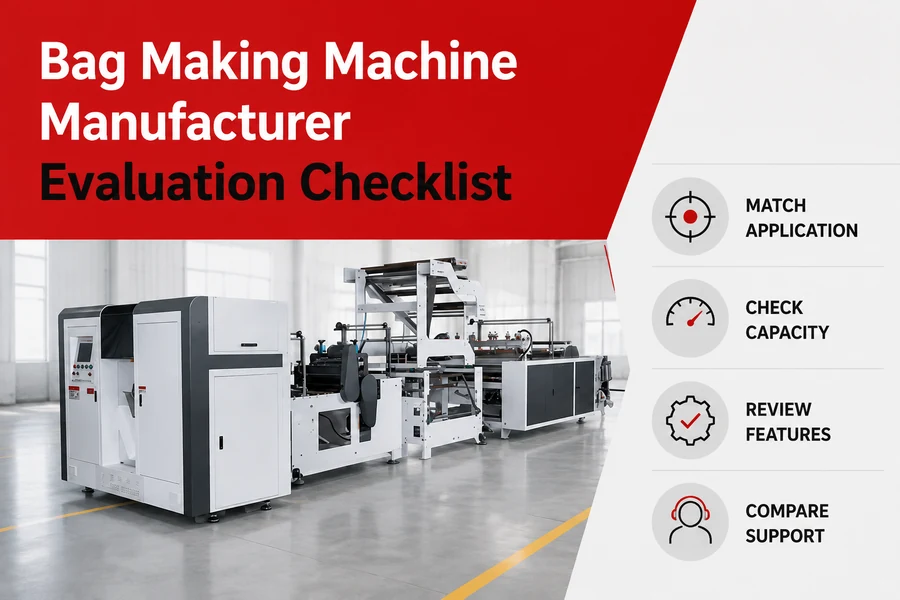
How Should Buyers Approach Bag Making Machine Manufacturer Evaluation?
Start evaluation by defining bag geometry, film materials, speed targets, and changeover frequency before contacting suppliers. These operating constraints become measurable criteria for comparing quotes, so manufacturer evaluation remains based on line fit rather than brochure claims.
A manufacturer cannot be assessed responsibly until the production profile is fixed. The equipment family must match the bag style: bottom sealing machines suit flat bags, trash liners, and produce bags, while side sealing machines form pouches, courier mailers, and gusseted products. Material selection adds another filter because HDPE, LDPE, and PLA/PBAT blends differ in seal temperature, knife adhesion, and achievable line speed. These constraints should be written into the request for quotation before any supplier comparison begins.
For example, a request that only names a “t-shirt bag making machine” leaves bag width, gusset depth, film thickness, and handle cut-out undefined. Suppliers may quote machines with drastically different capabilities, making the responses impossible to compare. The fix is to define the following minimum set before contacting vendors:
- Bag style and dimensions, including gusset depth and handle format.
- Film resin and thickness range in microns or mil, plus tolerance.
- Target output per shift and whether single-lane or dual-lane line fits the floor plan.
- Expected changeover frequency across product sizes.
- Integration constraints such as existing extruders, printing units, or perforation lines.
A hypothetical candidate that ignores dimensional tolerances or offers only a generic machine design should be flagged early. The goal of the first stage is not to rank suppliers but to remove machine configurations that cannot meet the bag portfolio.
Keep the criteria brief enough for every supplier to answer but specific enough to eliminate non-fit machines. This approach makes the later audit easier because each vendor response can be mapped to the same test. A deeper supplier-criteria list for automated bagging equipment is available in the automatic bagging machine manufacturer evaluation guide.
What Should Buyers Verify Before Ordering a Bag Making Machine?
Verify documented material runs, machine layout and modularity, spare-part response, and after-sales service contracts. Ask for successful production records on your film type and bag dimensions; a supplier’s willingness to run trials is a stronger signal than promised line speed.
Promised throughput and quoted specifications are starting points, not acceptance evidence. The evaluation should move to verifiable artifacts: test reports, video of production runs, reference installations, and a spare-parts policy. If a manufacturer cannot show a documented successful run on your film type and required thickness, the risk is transferred to your commissioning schedule.
Step 1: Define acceptance criteria
State the bag dimensions, film grade, sealing quality, maximum defects per roll, line speed, and changeover time in numeric terms. Leave no acceptance criterion as an adjective; each one needs a threshold that can be checked.
Step 2: Request evidence against those criteria
Ask for successful run documentation, video logs, or reference customers using the same film and similar bag geometry. Define whether the trial will use your film or a commercially equivalent grade and who will observe it.
Step 3: Check after-sales infrastructure
Confirm response times for spare parts, remote diagnostics, technician availability, and operator training. The final contract should name the responsible party for each service activity.
For capital equipment, the purchase order should state that final acceptance depends on a trial run using your film or a commercially equivalent grade. This is not an unusual requirement; it protects both parties from ambiguity. Use a bag making machine procurement checklist to standardize the RFQ and acceptance language across suppliers.
Which Bag Making Machine Manufacturer Evaluation Trade-Offs Matter Most?
The core trade-offs are automation versus operator skill, line speed versus changeover flexibility, and machine cost versus total cost of ownership. No single configuration wins; fit to your production mix and maintenance capacity determines the right manufacturer.
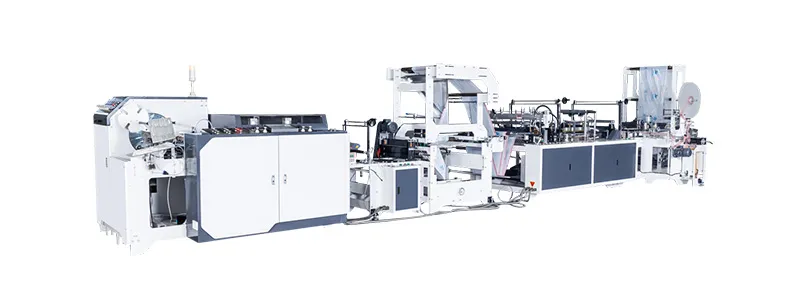
Comparing distinct machine configurations reveals recurring constraints rather than a universal best option. Single-line and dual-line machines demonstrate one such trade-off: single-lane units are simpler and easier to operate, while dual-lane units offer higher output per floor space but require more advanced controls and operator training. Typical quoted speeds for t-shirt bag lines are up to 120 bags per minute for a single lane and 200–300 bags per minute for dual-lane configurations, yet those figures matter only if the machine can hold them on your film and bag geometry.
Line configuration
Single-lane: Lower initial complexity, simpler setup, easier operator training; suited to small and medium production volumes.
Dual-lane: Higher output per machine footprint, but synchronized drives add control complexity and maintenance skill requirements.
Buyer note: Choose based on sustained demand and available operators, not brochure peak speed.
Sealing orientation
Bottom sealing: Better fit for T-shirt bags, shopping bags, and produce bags; the seal is transverse to film flow.
Side sealing: Better fit for pouches, courier mailers, and specialty shapes; the seal runs parallel to film flow and often requires folded film.
Buyer note: The bag portfolio decides the mechanism; do not force a side seal machine to emulate bottom seal economics.
Supplier service model
In-house service: Usually gives direct access to machine documentation, spare parts, and technical support.
Dealer or agent network: Can improve local response but may add a layer to warranty decisions and training.
Buyer note: Verify who actually responds and who owns the spare parts inventory before signing.
The same machine model can perform very differently across operators and film batches. That is why the evaluation should measure repeatability over a defined production run, not only a short demonstration.
Material inputs create another trade-off. HDPE film is stiffer and generally supports high-speed converting, while LDPE provides softer, more tear-resistant bags; PLA/PBAT blends add compostability but require tighter temperature control and can affect knife wear. A manufacturer evaluation should ask which of these materials the vendor has actually run and under what conditions. For broader supplier-selection logic, review how to choose a plastic bag making machine manufacturer.
Turning Evaluation Criteria Into a Pre-Purchase Checklist
The evaluation framework can be condensed into a short checklist that procurement teams apply to every candidate. The purpose is to produce comparable evidence at each gate rather than a first impression based on marketing material.
- Operating profile defined: bag style, film resin, dimensions, and output target are written down.
- Identical RFQ sent to every candidate, with the same parameters and acceptance terms.
- Technical evidence reviewed: test reports, video logs, reference calls, and spare-part lead times are documented.
- Trial or acceptance plan agreed before the purchase order, with success thresholds named.
- Service commitment in writing: the contract binds the supplier to response times and training support.
When the candidate list is narrowed, schedule a technical call with the manufacturer’s application engineer. That conversation reveals whether the vendor understands your process or is merely converting your RFQ into a price quotation.
Each gate should have a pass or fail outcome. A manufacturer that cannot supply film-specific evidence should not advance to the trial stage; changing the system later is more expensive than rejecting a candidate early. This decision framework does not depend on any single supplier ranking. It forces every vendor to respond to the same operating reality and gives the internal team a clear audit trail.
FAQ
What counts as acceptable film compatibility evidence from a manufacturer?
Acceptable evidence includes documented successful production runs on your resin type, video or witness trial records, and reference customers producing similar bags. Line-speed claims alone are not evidence. Verify that the trial used film thickness and bag dimensions close to your specification, and check failure data such as seal leaks and skips.
Should buyers request a machine trial before the final order?
Yes, when the production mix is unusual or film behavior is uncertain. A trial with your film or a commercially equivalent grade demonstrates sealing, cutting, and speed performance under realistic conditions. Contractually link final acceptance to trial results so both parties share the same definition of successful operation.
How many manufacturers should be in a formal comparison?
A practical comparison typically includes three to five suppliers whose machines fit the defined operating profile. More quotes create noise unless the RFQ is identical. Keep bidders within the same machine category, such as bottom seal or side seal, so responses remain comparable and you can evaluate trade-offs systematically.
What are the signs of an unreliable bag making machine manufacturer?
Common signs include vague answers on film compatibility, refusal to share reference installations, long spare-part lead times, and documentation that lists speeds without operating conditions. Unclear changeover procedures and unwillingness to commit to acceptance testing are additional red flags for procurement teams.
How should procurement teams document supplier comparison results?
Create a shared scorecard with the same criteria for every candidate. Record quoted performance, film compatibility evidence, service terms, and trial results before the final decision. The audit trail protects the team during internal review and makes the evaluation repeatable for future machine purchases.
Conclusion: Make Manufacturer Evaluation a Process, Not a Preference
Bag making machine manufacturer evaluation is most useful when it converts operating needs into measurable criteria, verifies supplier claims with film-specific evidence, and compares trade-offs against your production mix. No single manufacturer type is a safe default; line configuration, sealing orientation, material compatibility, and service model determine fit. Use identical RFQs and make acceptance testing the final gate to keep supplier comparison objective and reduce purchase risk.