EN
EN
 ES
ES
 AR
AR


Article Overview: This guide helps procurement managers, sourcing teams, and project engineers translate operating needs into selection criteria for Lingfeng Machinery bag-making equipment. It answers how to choose, what to verify before ordering, and which trade-offs matter. The conclusions rely on Lingfeng Machinery's published blog content and general procurement practice; no specific model, price, or certification is assumed.
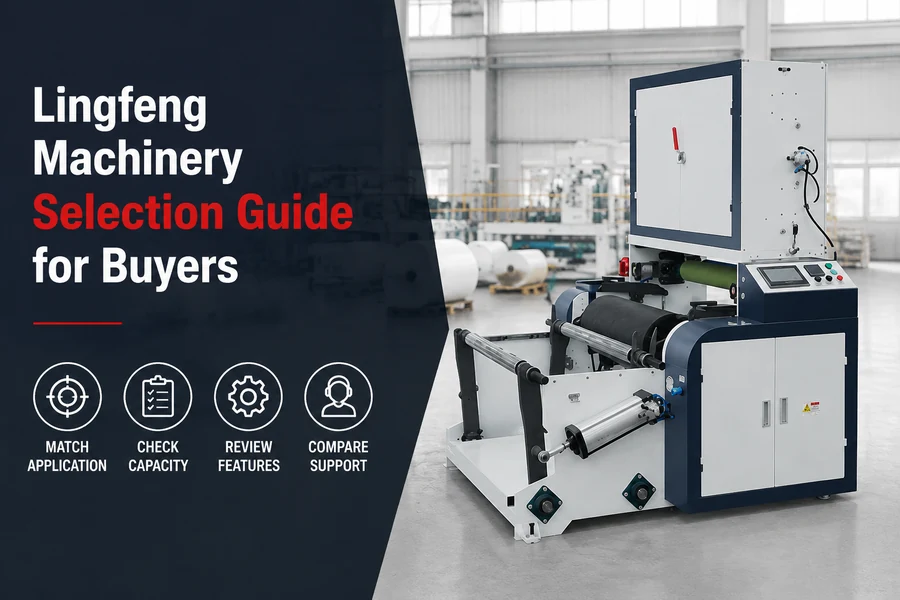
How Should Buyers Choose Lingfeng Machinery?
Translate your bag geometry, film type, output speed, and floor space into measurable selection criteria before contacting suppliers. Compare only machines that meet those parameters, then judge supplier evidence, after-sales support, and total operating cost.
Start with the product you will make, not with the machine name. Lingfeng Machinery's published guides describe machine categories according to sealing and cutting mechanisms, so bag style is the natural first filter. A T-shirt bag, a side-seal pouch, and a bag-on-roll each require a different film path and sealing arrangement.
After defining the bag, set measurable constraints for material, output, and floor space. These parameters become the line-item criteria that every supplier quote must answer.
- Bag style and seal geometry: Decide whether the final product is a T-shirt bag, a bottom-seal flat bag, a side-seal pouch, or a bag on a roll. Lingfeng Machinery's guidance on plastic bag machine types maps each style to a machine category.
- Film materials and thickness: Name the resins you expect to run, such as HDPE, LDPE, or PLA/PBAT blends, and the micron or mil range. Material choice changes heating and cutting behavior more than speed alone.
- Output rate and shift pattern: Estimate daily bag volume including setup and changeover time. A single-line machine may be enough for a focused line; a double-line configuration is designed to raise throughput per floor area with added control complexity.
- Operator and maintenance capacity: Higher automation reduces manual work but increases training and spare-parts requirements. Match the machine to the skill level you can maintain.
Use these criteria to create a shortlist. If a supplier cannot confirm the first four items, more detailed negotiation is unlikely to resolve the mismatch.
Step 1: Define product geometry
Write bag width, length, gusset depth, seal orientation, and handle details. These values decide the machine configuration and make quotes comparable.
Step 2: Lock material and speed range
Confirm film resin, thickness, and required bags per minute. Keep physical film samples for validation runs.
Step 3: Evaluate only matching configurations
Reject quotes that do not meet the geometry or material constraints. Then compare supplier evidence such as reference installations and documented runs. For a structured assessment, use the automatic bagging machine manufacturers evaluation guide published by Lingfeng Machinery.
What Should Buyers Verify Before Ordering Lingfeng Machinery?
Verify documented film compatibility, sealing and cutting configuration, output capacity, changeover time, spare-parts availability, training scope, and warranty terms. Ask for reference installations and validated line-speed data rather than catalog claims.
A quotation is not an acceptance test. Lingfeng Machinery's RFQ checklist article emphasizes that structured specifications force every supplier to answer the same questions, so verification belongs inside the RFQ process, not after delivery. Define what you will test during commissioning and how line performance will be measured.
- Sealing and cutting mechanism: Confirm whether the unit uses hot-bar sealing, flying-knife sealing, hot-air sealing, or hot-knife sealing. Each option affects film tension, seal alignment, and possible bag geometry.
- Film compatibility evidence: Request documented successful runs for the resins and thickness range you plan to process. Material parameters matter; Lingfeng Machinery's HDPE, LDPE, and PLA comparison explains how resin type drives temperature profiles and machine settings.
- Changeover and setup procedure: Ask how long a bag-size change takes, which tooling must be swapped, and whether adjustments are manual or automatic. Changeover time is part of effective capacity.
- Spare parts and service network: Confirm the availability of sealing bars, blades, and electrical components, and whether service includes remote troubleshooting or on-site commissioning.
- Training, documentation, and warranty: Check operator and maintenance training, the machine manual, electrical diagrams, and the warranty conditions that will apply after installation.
Ask for a pre-delivery inspection if the supplier has a demonstration line. A short trial run with your film and bag layout provides more useful evidence than any brochure.
For a ready-made structure, start with the t-shirt bag machine RFQ checklist for buyers and adapt it to the machine type you are evaluating.
Which Lingfeng Machinery Trade-Offs Matter Most?
The primary trade-offs are sealing orientation, line configuration, automation level, and material compatibility. Each choice changes bag geometry, throughput, operator skill needs, and maintenance burden, so the right balance depends on your product mix.
Sealing orientation is the first major trade-off. Lingfeng Machinery's comparison guide shows that bottom sealing creates a transverse seal at the bag bottom, while side sealing runs along the film length. These orientations fit different bag geometries and film handling methods.
Bottom sealing configuration. Seal is perpendicular to film flow. Suitable for flat bags, trash liners, produce bags, and T-shirt bags. Film tension must be controlled to keep seal alignment.
Side sealing configuration. Seal runs parallel to film flow. Suitable for pouches, courier mailers, and gusseted bags. Film is often folded before sealing.
The second trade-off is line configuration. Lingfeng Machinery's single-line vs double-line article reports that single-line machines produce one bag at a time and typically run up to 120 bags per minute, while double-line machines process two lanes simultaneously and can reach 200 to 300 bags per minute. Those output ranges depend on film and bag size, so treat them as supplier-specific claims to verify.
The third trade-off is automation versus flexibility. A machine that is easy to set up may require more manual handling; a fully automatic line may reduce labor but create longer changeovers and higher maintenance demands. There is no universal optimum.
Material compatibility is the fourth trade-off. If you expect to switch between HDPE, LDPE, and biodegradable films, the machine's sealing and cutting systems must be matched to the whole material range, not just your first product. Use Lingfeng Machinery's bottom sealing vs side sealing bag machine comparison guide to orient your team before you define RFQ parameters.
How Do You Turn Trade-Offs into RFQ Criteria?
Turn each accepted trade-off into a written functional requirement in the RFQ: minimum speed, bag dimensions, film range, changeover time, and commissioning support. Require suppliers to state how their configuration meets each line item before you compare prices.
This step is the bridge between selection and purchase. The goal is to make supplier responses structurally identical so technical evaluation can be measured against the same criteria.
- Write functional requirements, not model names: describe bag width, length, seal orientation, film type and thickness range, output rate, and space constraints.
- Require condition-based performance data: ask suppliers to state the exact film, bag size, and line speed used for any quoted output figure.
- Ask for site references and commissioning evidence: request recent installations that run materials similar to yours, and a commissioning plan with acceptance criteria.
- Score suppliers before price comparison: use a weighted scorecard for technical fit, service capacity, delivery, and total operating cost, then review pricing only for shortlisted configurations.
In practice, procurement teams often discover that two suppliers quote the same nominal speed but different bag sizes or film thicknesses. A condition-based RFQ prevents that ambiguity by making the context of every number explicit.
Commercial terms should also be separated from technical criteria. Delivery time, installation schedule, payment conditions, and spare-parts pricing affect total cost of ownership, but they should not be allowed to compensate for missing technical evidence. Keep the technical scorecard dominant.
FAQ
Should I choose a single-line or double-line Lingfeng machinery configuration?
Choose based on required daily output, available floor space, and operator capability. Lingfeng Machinery's published comparison indicates single-line machines produce one bag at a time at speeds up to 120 bags per minute, while double-line configurations can reach 200 to 300 bags per minute but require more advanced controls and operator training. Confirm these values for your material and bag size before ordering.
Which film materials should a Lingfeng Machinery RFQ cover?
Cover HDPE, LDPE, and any PLA/PBAT blends you plan to run. The material determines sealing temperature, knife adhesion behavior, and line speed. Ask the supplier for documented successful runs on each film you list. For biodegradable resins, be explicit about blend ratio and thickness range.
What is the safest way to compare quotes from Lingfeng Machinery?
Require every supplier to fill the same RFQ template with conditions attached to speed and output claims, tooling included, warranty terms, and commissioning scope. Avoid comparing prices until technical responses are normalized. This reduces the risk of non-comparable quotes and hidden add-ons.
Conclusion: Select on Evidence, Not Brand Names
Selection is not about picking a brand. Define your bag geometry, film type, output, and service needs; verify those parameters with documented evidence; and use the trade-off analysis to write an RFQ that forces comparable responses. Lingfeng Machinery's published technical guides support this approach, but the acceptance decision should rest on validated line runs and contractual performance criteria.