EN
EN
 ES
ES
 AR
AR


Article Overview: This guide provides procurement managers and project engineers with a comprehensive framework for evaluating automatic bagging machine manufacturers. It covers essential evaluation criteria, common procurement mistakes, validation techniques, and actionable steps to help you select a reliable partner for your bagging line.
Why Is Supplier Evaluation Critical for Automatic Bagging Machine Manufacturers?
Selecting the right partner among automatic bagging machine manufacturers directly impacts production efficiency, product quality, and total cost of ownership. A machine that appears cost-effective at first may lead to costly downtime if the manufacturer lacks reliable after-sales support or compatibility with your film types. Systematic evaluation helps you avoid these risks, ensuring your investment delivers long-term value. Beyond the initial purchase, the manufacturer’s ability to provide timely spare parts, remote troubleshooting, and operator training influences overall operational reliability. By investing time upfront in supplier assessment, you mitigate hidden costs and align equipment performance with your production goals.
What Key Criteria Should You Compare When Evaluating Automatic Bagging Machine Manufacturers?
When evaluating suppliers, focus on these technical and operational factors:
- Line configuration and modularity: Can the machine integrate with your existing extruders or printing lines? Look for flexible expansion options.
- Film compatibility: Does the manufacturer support HDPE, LDPE, biodegradable films, and required thickness ranges? Request documented successful runs.
- Changeover speed: How quickly can the machine switch between bag sizes and styles? Tool-less changeover reduces downtime.
- Servo versus pneumatic drives: Servo-driven systems generally offer higher accuracy and lower maintenance. Evaluate energy consumption and repeatability.
- Stacker and packaging options: Verify availability of automatic stacking, counting, and bundling to match your end-of-line needs.
- Control system: Look for user-friendly HMI, remote diagnostic capability, and industry-standard PLCs from reputable brands.
- Certifications: CE, UL, or other regional compliance reduces installation delays and ensures safety.
Additionally, consider the manufacturer’s production capacity, lead times, and customization willingness. These factors often separate a standard supplier from a strategic partner.
How Can You Validate a Manufacturer's Capabilities Before Purchase?
Beyond reviewing brochures and datasheets, take these actionable steps to confirm a supplier’s readiness:
Step 1: Request a Production Demonstration
Ask for a live or recorded run using your target bag dimensions and film material. Observe actual speed, bag quality, and scrap rate. Confirm the machine can sustain rated output over a full production shift. Pay attention to registration accuracy and seal integrity.
Step 2: Audit Spare Parts and Support Infrastructure
Inquire about local stock, lead times for common consumables (sealing bars, photoelectric sensors), and availability of remote troubleshooting. A manufacturer with a dedicated support team can reduce downtime significantly. Ask for a sample parts list and pricing.
Step 3: Visit a Reference Installation
Arrange a site visit or virtual tour of a production floor running similar equipment. Talk to maintenance staff about real-world reliability, ease of operation, and response time for technical issues. This firsthand feedback is invaluable.
What Are Common Procurement Pitfalls When Choosing Automatic Bagging Machine Manufacturers?
Procurement teams often face these recurring challenges:
- Underestimating changeover complexity: A machine may advertise quick changeover but require manual adjustments that consume labor hours. Always test with your product range.
- Ignoring film waste: Machines that use automatic registration and tension control reduce scrap; ask for specific waste percentages under production conditions.
- Neglecting training support: Without proper operator training, even the best machine may run sub-optimally. Ensure comprehensive initial and refresher training.
- Overlooking local voltage and safety codes: Confirm the manufacturer can configure the machine for your electrical standards and safety regulations.
- Focusing solely on price: Cheaper options often have higher total cost of ownership due to downtime, poor support, and shorter lifespan.
To avoid these, prepare a detailed technical questionnaire and ask manufacturers to provide written commitments on performance benchmarks.
How to Structure an Effective RFQ for Automatic Bagging Machine Manufacturers?
A well-structured RFQ saves time and ensures comparable quotes. Follow these steps:
Step 1: Define Your Production Requirements
Specify bag dimensions, styles, film type and gauge, desired output per minute, and shift pattern. Include any future expansion plans.
Step 2: Request Detailed Technical Specifications
Ask for machine footprint, power consumption, noise levels, warranty terms, and list of included components. Avoid vague descriptions.
Step 3: Require Performance Guarantees
Demand written commitments on uptime, scrap rate, and changeover time. Include penalties for non-compliance in the contract.
Step 4: Ask About After-Sales Support
Inquire about response times, spare parts availability, and training packages. Clarify costs for on-site service.
Where to Find Reliable Automatic Bagging Machine Manufacturers
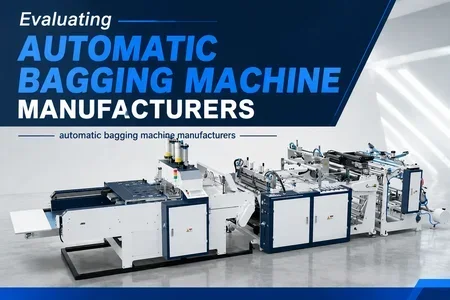
Start your search with industry trade shows, online directories, and referrals from peers. Established manufacturers often have detailed case studies and product libraries online. For instance, you can explore automatic bagging machine manufacturers that specialize in specific formats, such as those offering comprehensive solutions for your bagging line. Additionally, reviewing a manufacturer’s product range helps assess whether their equipment matches your requirements. Always verify that the manufacturer provides commissioning, warranty, and spare parts support for your region.
Consider using the following resources to identify candidates: automatic bagging machine manufacturers for your production line and automatic bagging machine manufacturers solutions. These pages provide insights into available equipment and typical configurations.
FAQ
How do I compare quotes from different automatic bagging machine manufacturers?
Create a standardization sheet covering price, specifications, warranty, delivery, and service terms. Calculate total cost of ownership including energy, consumables, and maintenance over five years.
What is the typical lead time for a custom automatic bagging machine?
Lead times vary from 8 to 20 weeks depending on complexity and manufacturer’s backlog. Always request a written delivery schedule and include penalties for delays.
Can one machine handle multiple bag types?
Many modern machines offer tool-less changeover for different sizes, but switching between material types (e.g., HDPE to biodegradable film) may require additional adjustments or optional modules. Always test with your specific films.
What is the typical lifespan of an automatic bagging machine?
With proper maintenance, a well-built machine can last 10–15 years. Servo-driven systems often have longer service intervals than pneumatic ones.
What after-sales support should I expect?
Look for remote troubleshooting, on-site commissioning, operator training, and a spare parts stock near your location. Clarify response times for emergency repairs.
Conclusion
Evaluating automatic bagging machine manufacturers requires a structured approach that goes beyond price comparisons. By focusing on line modularity, film compatibility, changeover efficiency, and after-sales support, you can select a partner that delivers long-term value. Use the checkpoints and RFQ structure outlined above to prepare your procurement process and move forward with confidence. A thorough evaluation ultimately protects your investment and ensures smooth production operations.