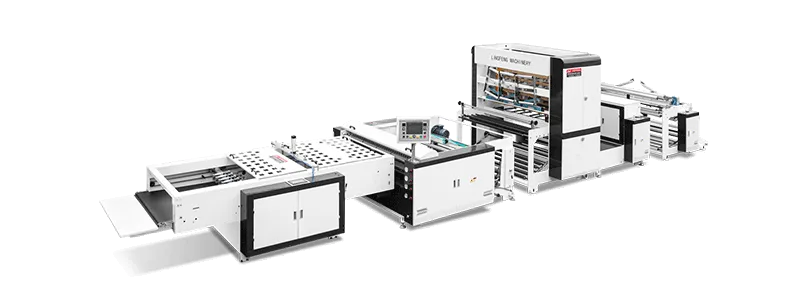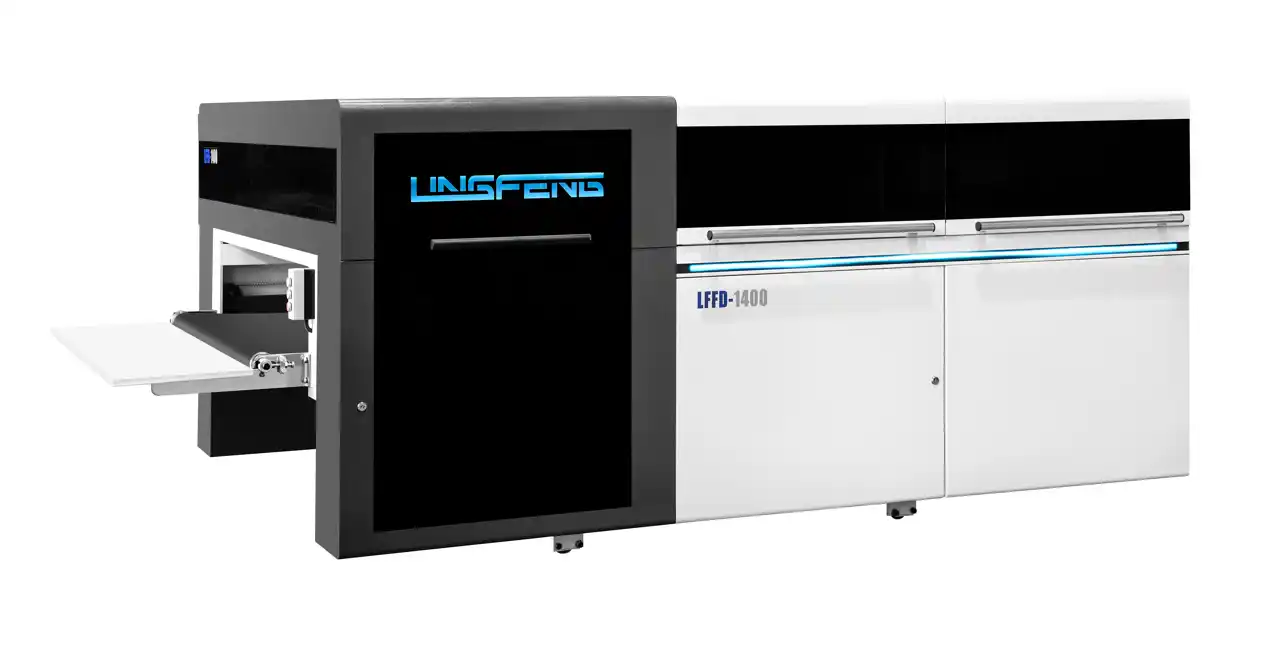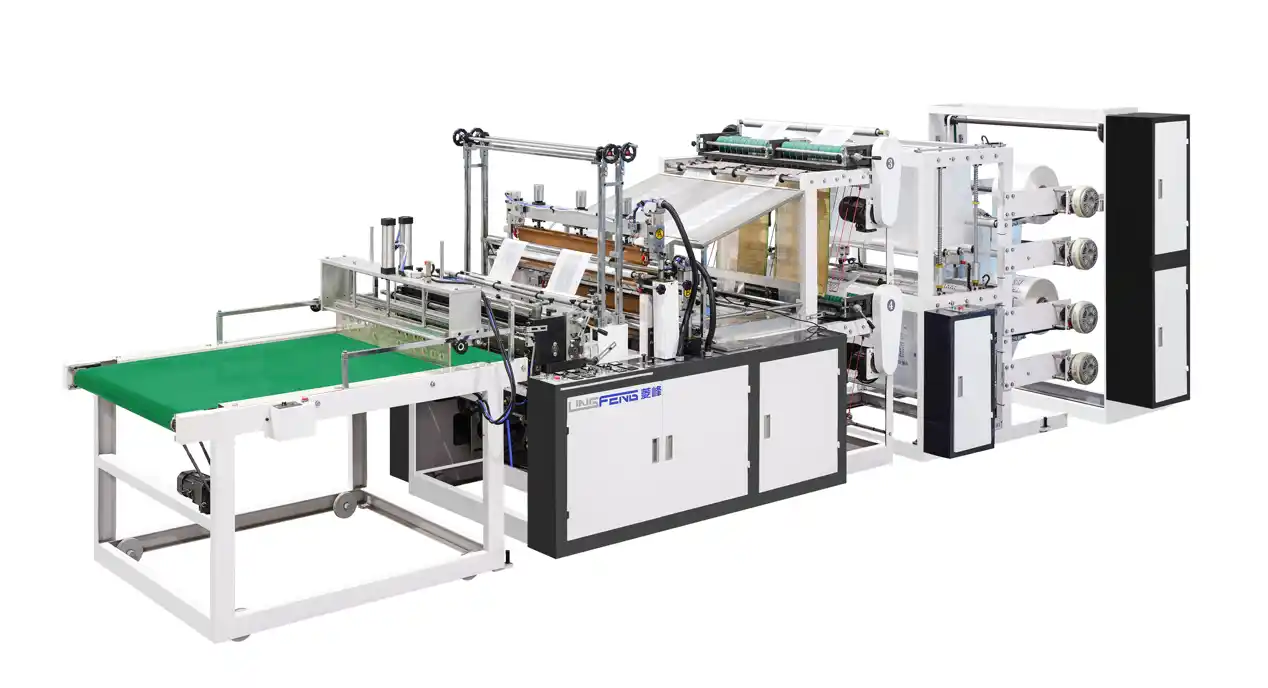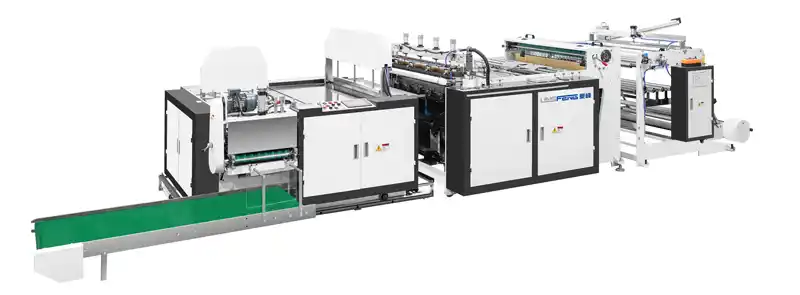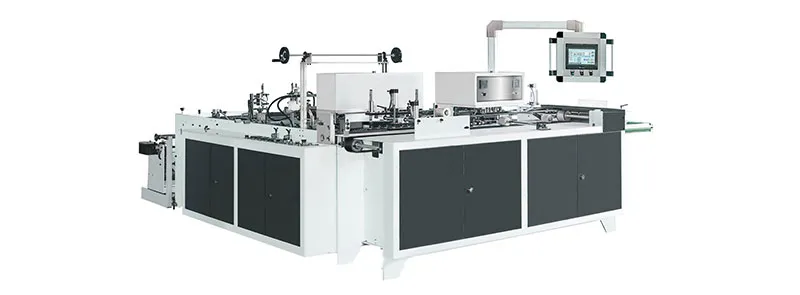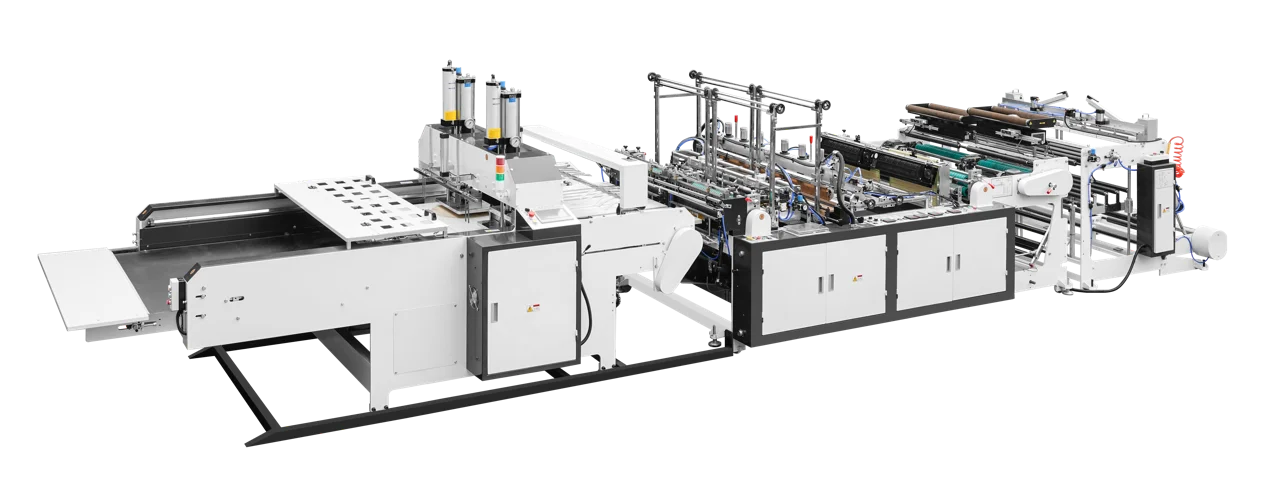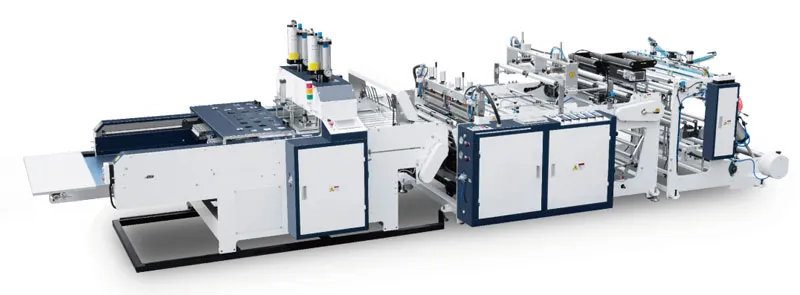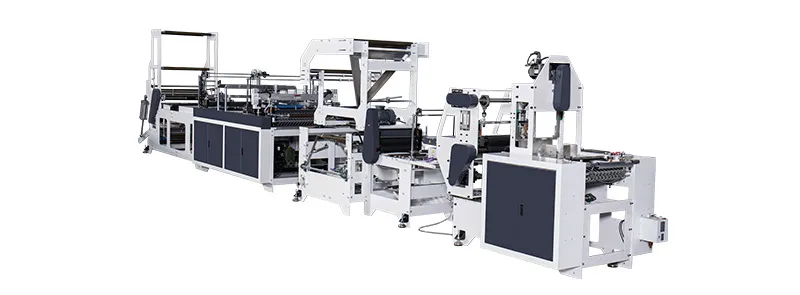
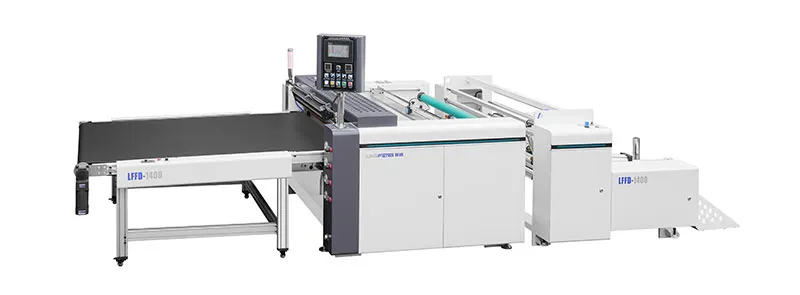
High Speed Bottom Seal Bag Making Machine By Flying Knife System
1000mm
200-2000mm
80pcs/min
{if condition="Cms_raw($Model.field,'pro_faq1')"}
The roll packaging bag making machine integrates a cutting-edge tension control system to optimize roll packaging performance. Its core value is boosting the quality of roll packaging bags (e.g., fresh-keeping, medical sterilization, industrial part, quick-frozen food bags). Using high-precision sensors and real-time feedback, the system dynamically adjusts packaging material tension throughout production (film feeding, heat sealing, punching, winding), ensuring the produced bags meet key quality standards: flat/defect-free bodies, stable functions (no usage issues), high batch consistency, and less material waste.
1000mm
200-2000mm
80pcs/min
1500mm700mmx2450mmx3330mmx2
200-2000mm
70pcs/min
380mm×2
300-700mm
220pcs/min
380mmX2
300-700mm
180pcs/min
900mm
400-2000mm
80pcs/min
200mm*8
300-600mm
120pcs/min
900mm
700-1200mm
30-150pcs/min
250-550mm
350-600mm
60pcs/min
450-1000mm
400-1080mm
160pcs/min
Explore our expert guides and technical tips to optimize your bag production line efficiency and reduce operational costs.
Leak-proof bottom seals on thick HDPE and recycled-content sacks depend on getting enough heat to the full thickness of the film without overheating the surface, which means balancing heating-bar temperature against dwell time at a slower, more deliberate cycle. Recycled material in particular varies in melt behavior, so seal parameters should be validated by destructive testing rather than assumed from virgin-resin settings. Consistent bar temperature, adequate pressure, and the correct cooling interval together produce the seal strength that heavy-duty industrial bags require.
Multi-lane configurations multiply throughput by running several narrow webs in parallel, making them well suited to high-volume standard-size bags where labor cost per unit is the deciding factor. Single-lane jumbo setups trade raw speed for the flexibility to handle wide, thick, or oversized bags that multi-lane tooling cannot accommodate. A sound ROI comparison weighs output capacity, floor-space and layout constraints, changeover frequency, and labor per shift, so the better choice ultimately follows from product mix rather than headline cycle speed.
Reliable bottom-sealing output relies on a disciplined maintenance routine: daily inspection and adjustment of the flying-knife clearance, removal of carbon buildup from heating bars before it degrades seal quality, and periodic checks of copper-bar surface condition. Uniform pressure across the seal bar must be calibrated regularly, since localized wear creates weak spots that only appear under load. Following a step-by-step schedule for blade alignment, contamination removal, and pressure verification keeps seal consistency stable and extends component service life.
Our packaging machinery is engineered to support stable roll-to-roll processing across various flexible substrates. Explore the material compatibility based on your production requirements.
Specially engineered heavy copper heating bars deliver profound thermal penetration for sealing thick, multi-layered high-strength industrial agricultural films.
Our adaptive pneumatic press system compensates for film thickness variance commonly found in 100% recycled plastics, guaranteeing leak-proof bottom seals.
Integrates precise PLC temperature control modules to secure ultra-stable and aesthetic hermetic bottom seals for strict hygiene-sensitive clinical packages.
Send us your substrate technical data sheets (thickness in microns, film width, and film type). Our engineering team in Ruian will evaluate your samples and recommend the optimal mechanical setup.
The lowest quote is rarely the lowest total cost. Before comparing models, fix three things: your target bag style, your realistic daily output, and the exact film material and thickness range you will run. Match the configuration to those, not to the price tag.
Choose a bottom sealing machine when strength and leak resistance are non-negotiable. The bottom seal is a single continuous line that bears the contents' weight directly, while the folded sides are not sealed seams — making the bag inherently strong for heavy or sharp items such as industrial sacks and courier mailers. Verify that the precision cutter works in sync with the sealing unit so every bag gets a clean, uniform, leak-proof seal on your actual film thickness.
Bottom-sealed bags have a clear front and back panel and a flat bottom that can stand upright, so confirm the forming device produces the stand-up or flat-bottom profile your product needs. For mass production, look for multi-lane flying-knife configurations with an optional inline side-gusset unit, letting a single line cover both standalone sacks and gusseted formats.
Share your production parameters — bag style, film material and thickness range, and maximum width target. Our engineering team will return a recommended machine structure and quotation matched to your output goals and expansion plans.
Founded in 1994, dedicated solely to bag making machinery — not a side product line.
Exported to 50+ countries with a documented history of reliable performance.
Compliant with international standards under a full ISO 9001 quality system.
Full process control, with rigorous load testing on every machine before shipment.
Runs PE, HDPE, LDPE, PP, and biodegradable PLA/PBAT, with quick mold change.
Installation guidance, operator training, and fast spare-parts response after the sale.