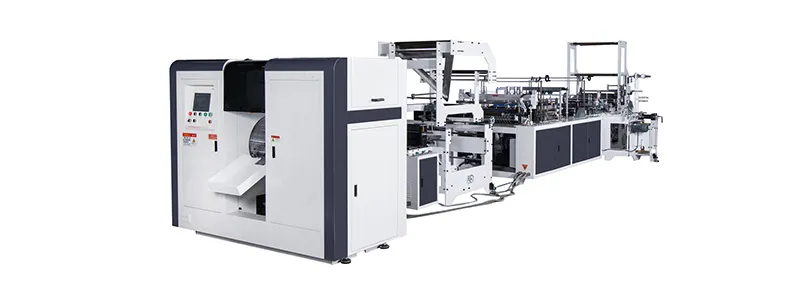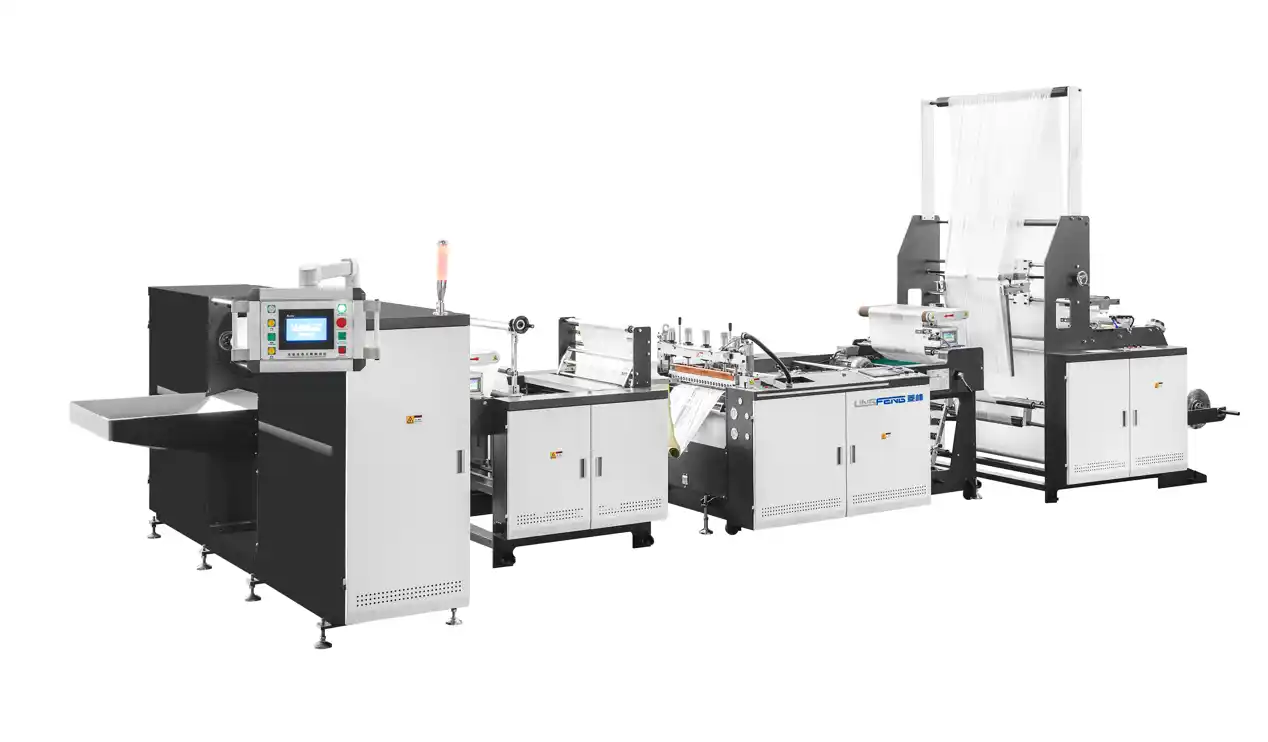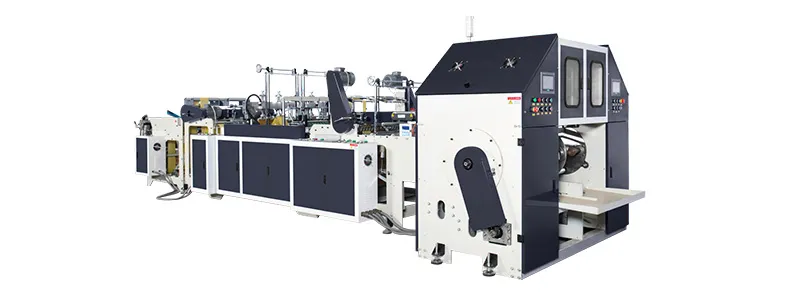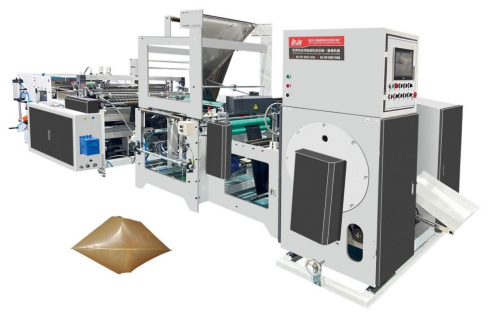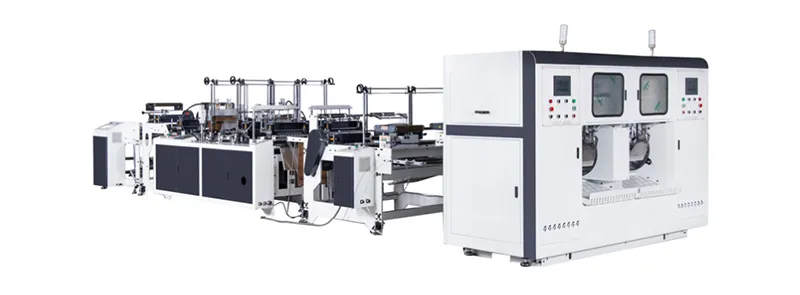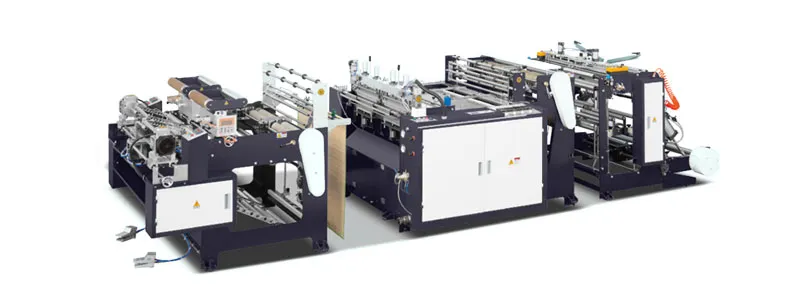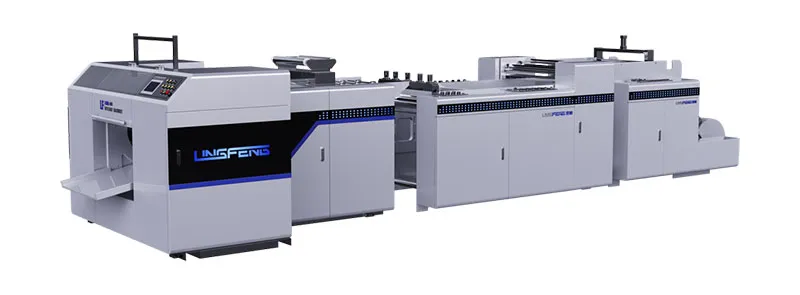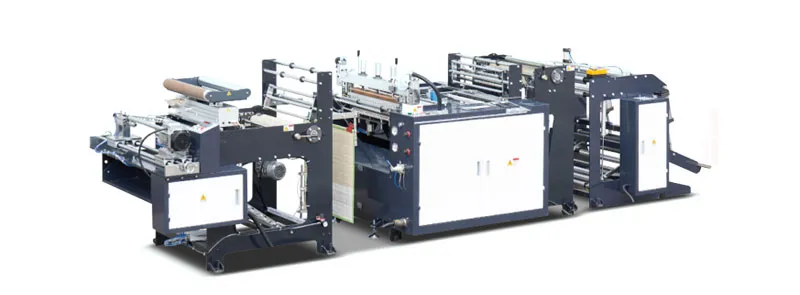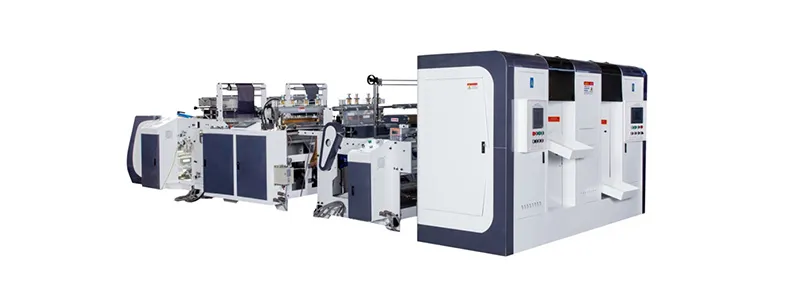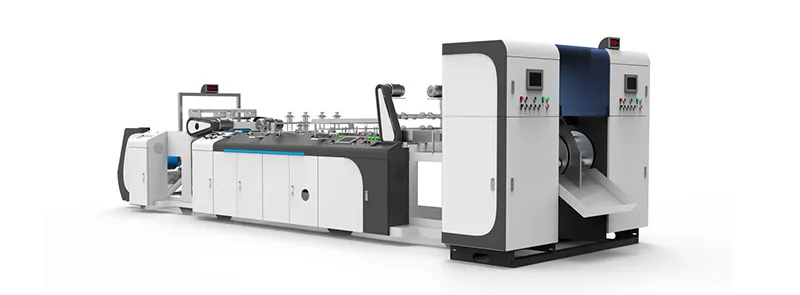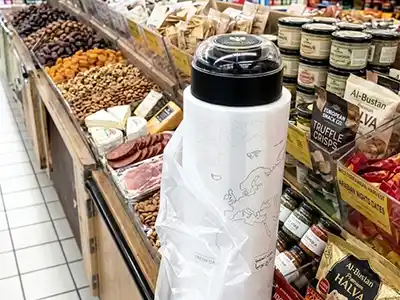
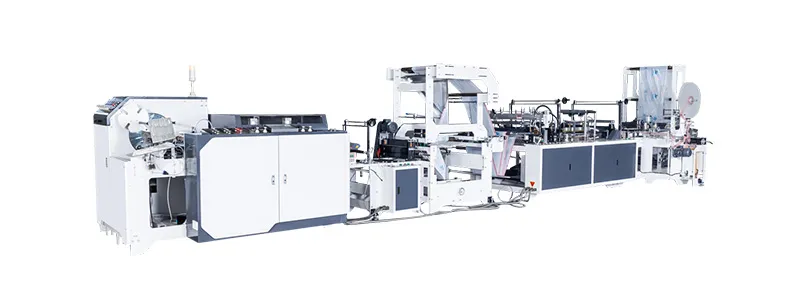
Automatic interleave Draw Tape Bag-on-roll Making Machine
400-650mm
400-680mm
40-160pcs/min
The Bags on Roll Making Machines integrate a cutting-edge tension control system designed to optimize roll packaging performance. By leveraging high-precision sensors and real-time feedback mechanisms, the system dynamically adjusts packaging material tension throughout the production process. This ensures the film tightly conforms to rolled products while eliminating risks of wrinkles, loosening, or uneven adhesion caused by imbalanced tension levels.
Wrinkle-Free Packaging: Maintains consistent tension to prevent film slippage or deformation.
Material Integrity Protection: Avoids over-tightening that could damage sensitive products or films.
Process Stability: Minimizes downtime from manual tension adjustments and material waste.
Adaptive Compatibility: Works seamlessly with various film types (PE, PP, PVC) and roll dimensions.
400-650mm
400-680mm
40-160pcs/min
500-1000mm
500-3000mm
120m/min
400-650mm
400-680mm
40-160pcs/min
600mm
200-1200mm
180pcs/min
350x2
200-1200mm
220pcs/minX2
200x2
500-1500mm
300mmX2
300-600mm
350pcs/min
2mm
120-500mm
230pcs/min
350mmX2
300-600mm
300pcs/min
500mm
300-600mm
280pcs/min
300mm
300-600mm
350pcs/min
300-1200mm
400-1280mm
120m/min
Explore our expert guides and technical tips to optimize your bag production line efficiency and reduce operational costs.
Clean, uniform rolls depend on precise rewinding tension, where magnetic powder clutches and dual-servo control hold the web at a controlled force as roll diameter grows. Too much tension deforms the core and telescopes the roll; too little produces soft, uneven winds that jam downstream. Closed-loop tension regulation that adapts continuously through the wind cycle is what allows high-speed garbage-bag rewinding to deliver consistent roll geometry without operator intervention.
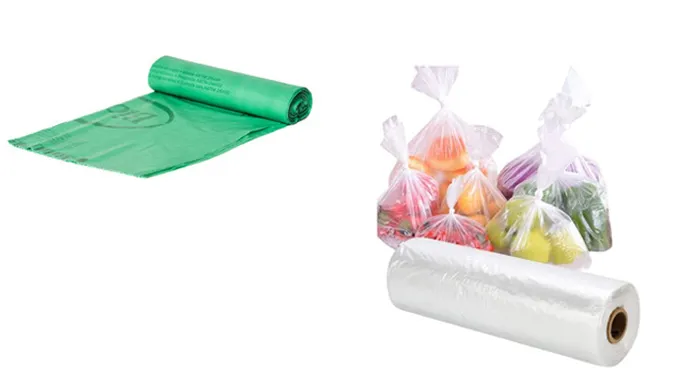
Switching between star-sealed trash bags and flat grocery rolls is primarily a question of folding and sealing-module configuration: star-sealed bags require a gusset-and-fold arrangement that distributes load around the base, while flat-sealed rolls use a simpler bottom or side seal. Each format also calls for its own perforation setup so the bags tear cleanly at the right interval. Understanding which folding boards, sealing geometry, and perforation modules each style needs lets a single platform be reconfigured for both product types.
A perforation that tears cleanly for the end user but survives processing comes down to matching tooth profile and blade depth to the film gauge—too aggressive a blade weakens the web and causes breaks during rewinding, while too shallow a cut leaves bags that will not separate. Coreless rolls add sensitivity because there is no core to stabilize tension at the center. Selecting the correct perforation blade and depth, and keeping it sharp, delivers the predictable tear strength that consistent roll production requires.
Our packaging machinery is engineered to support stable roll-to-roll processing across various flexible substrates. Explore the material compatibility based on your production requirements.
Perfectly optimized for processing high-density and low-density polyethylene films. Ensures precise tension control and flawless heat-sealing even at maximum cycle speeds.
Configured with specialized static eliminators and continuous ultrasonic/hot-cutting knives to process highly fragile, clear, and brittle polypropylene films without structural tearing.
Equipped with our patented temperature calibration logic to easily handle the low melting point and high elasticity profiles of compostable and biodegradable green films.
Send us your substrate technical data sheets (thickness in microns, film width, and film type). Our engineering team in Ruian will evaluate your samples and recommend the optimal mechanical setup.
The lowest quote is rarely the lowest total cost. Before comparing models, fix three things: your target bag style, your realistic daily output, and the exact film material and thickness range you will run. Match the configuration to those, not to the price tag.
This is a winding-and-perforating line, so the buying criteria center on the rewinder. In a coreless system the bags are held on the roll by the bags themselves rather than a separate core, removing a production step and lowering material cost. Decide up front whether you need cored, coreless, or both — dual-function servo machines handle both with EPC film-feed correction. Insist the perforation line stays a constant distance from the sealing line even when bag length changes, so tear-off stays clean across sizes.
For uptime, look for double-shaft automatic roll-change rewinders, an accurate print-mark photocell, and servo feed, plus the folding options (C/E-fold, flat or gusseted bottom) your product range requires. For drawstring garbage bags, confirm a draw-tape inserting device with double unwinding units, automatic changeover, and continuous hot-air sealing.
Share your production parameters — bag style, film material and thickness range, and maximum width target. Our engineering team will return a recommended machine structure and quotation matched to your output goals and expansion plans.
Founded in 1994, dedicated solely to bag making machinery — not a side product line.
Exported to 50+ countries with a documented history of reliable performance.
Compliant with international standards under a full ISO 9001 quality system.
Full process control, with rigorous load testing on every machine before shipment.
Runs PE, HDPE, LDPE, PP, and biodegradable PLA/PBAT, with quick mold change.
Installation guidance, operator training, and fast spare-parts response after the sale.