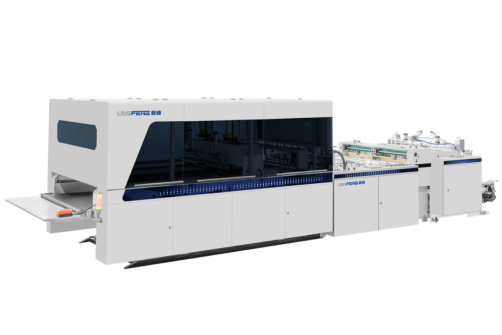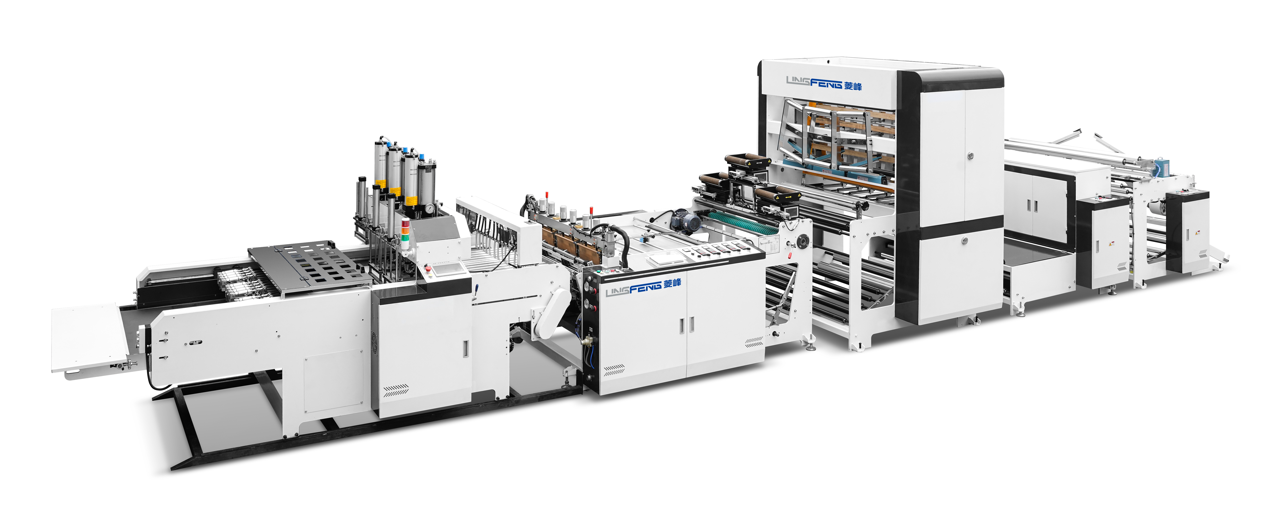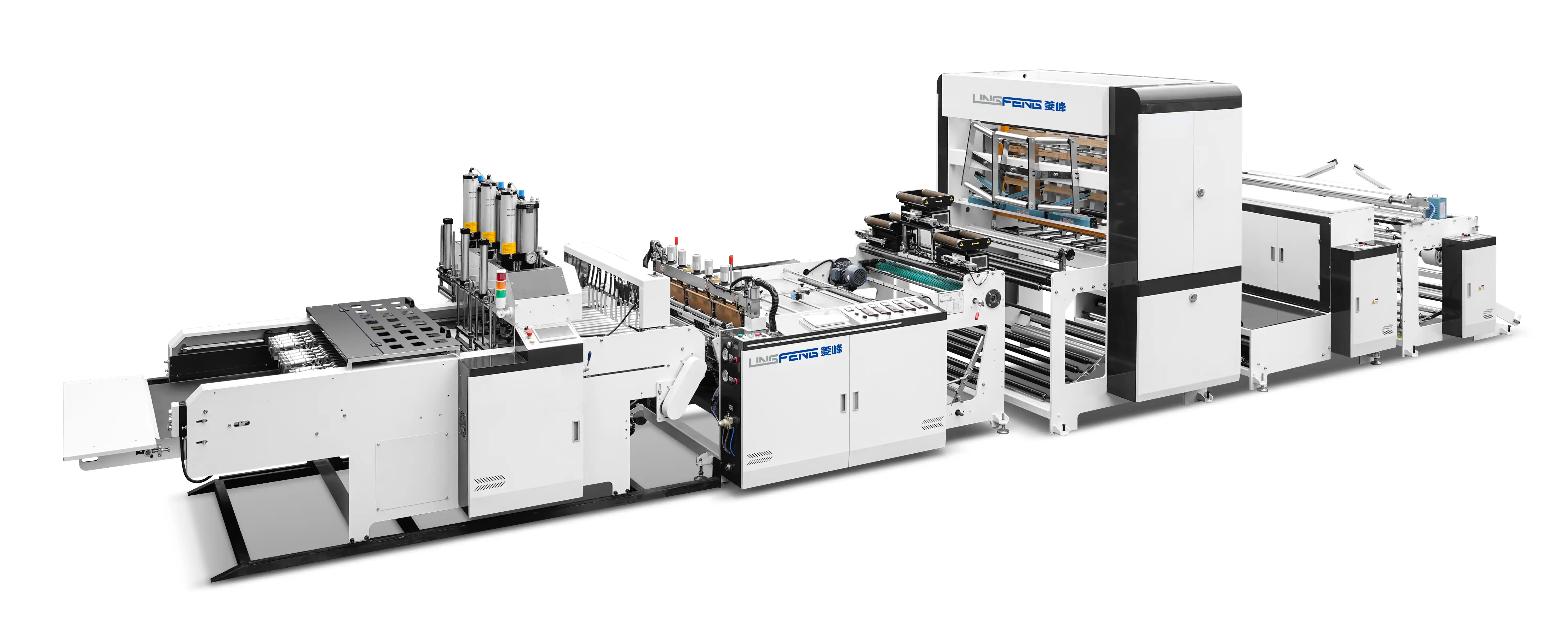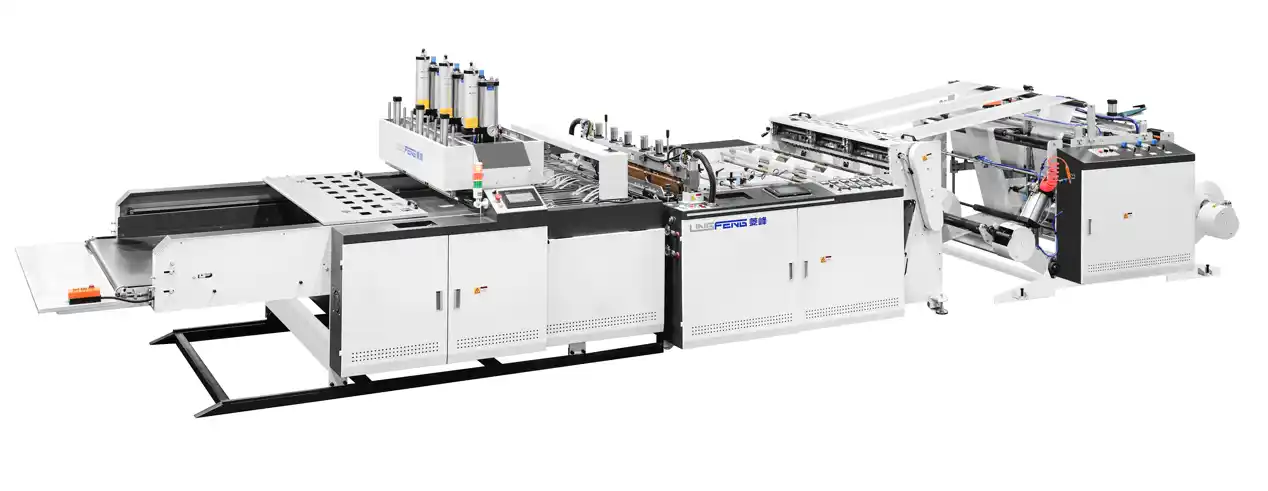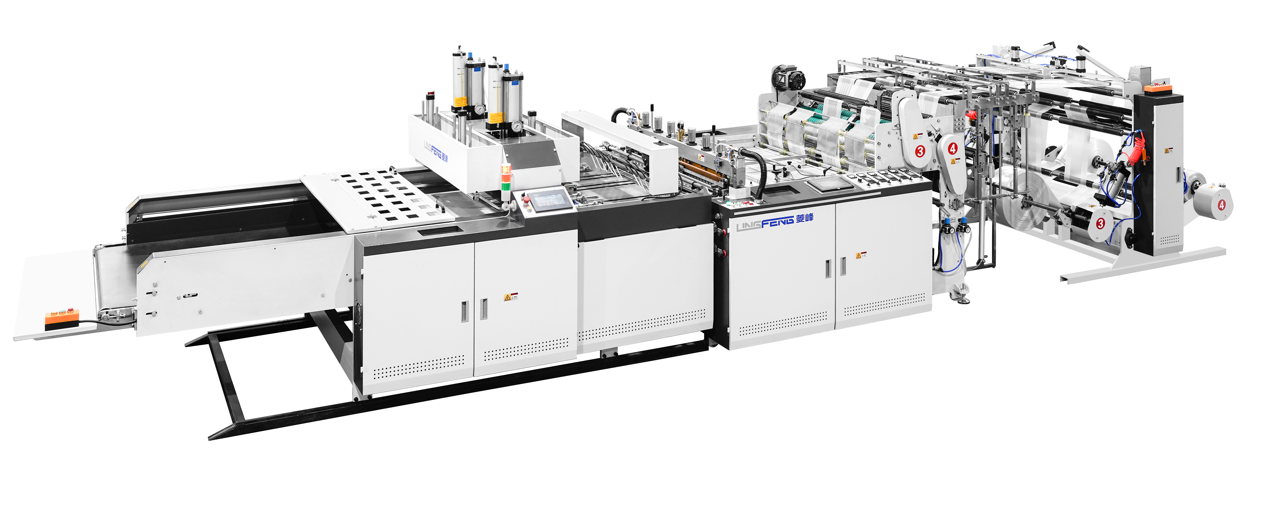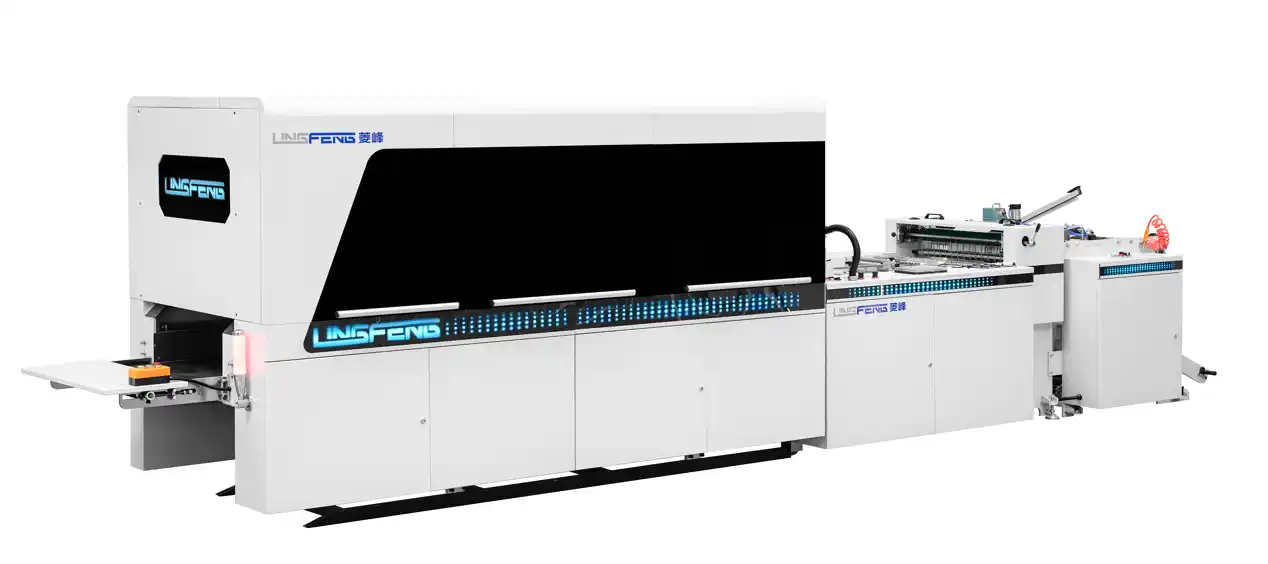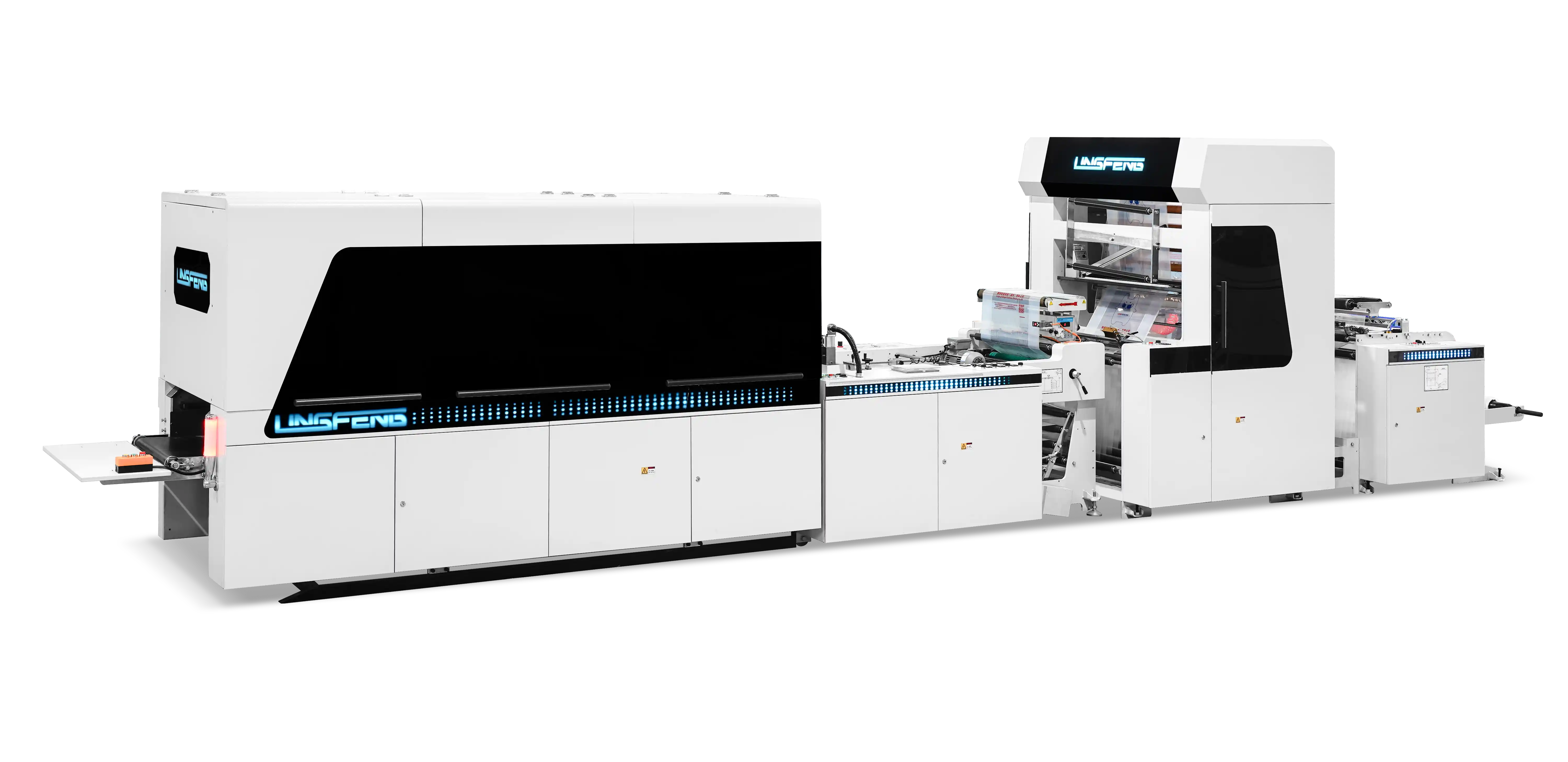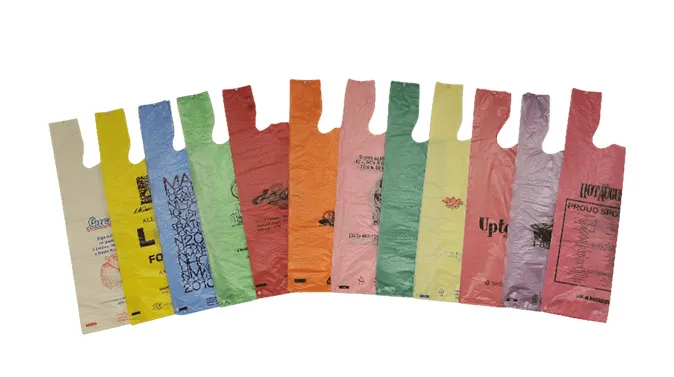
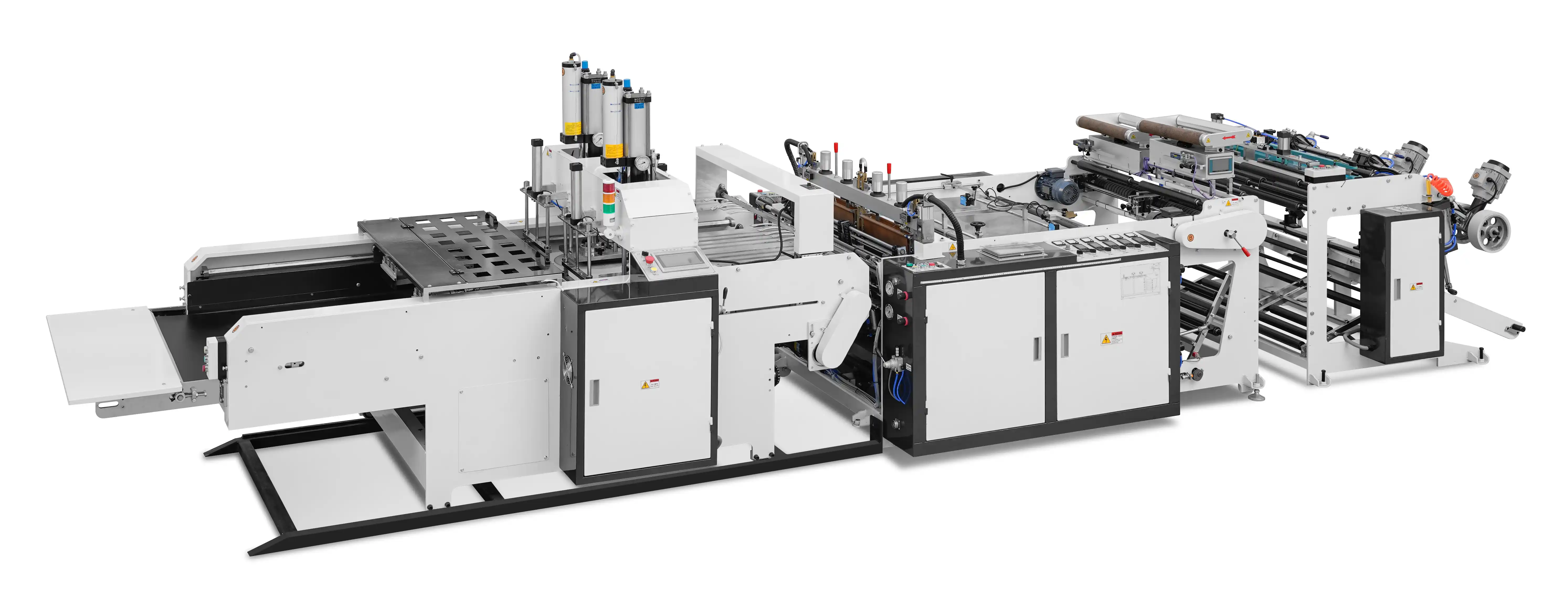
Single Line T-shirt Bag Making Machine with Inline Side Gusset
700mm
450-850mm
250pcs/min
{if condition="Cms_raw($Model.field,'pro_faq1')"}
Fully automatic double-line synchronous T-shirt bag-making machine. The dual-line synchronous drive is stable, reducing downtime for debugging and making the operation smoother. It is specifically designed for PE/PP material shopping bags, with strong sealing and high flatness. The production capacity has been increased by 40%.Fully automatic double-line synchronous T-shirt bag-making machine. The dual-line synchronous drive is stable, reducing downtime for debugging and making the operation smoother. It is specifically designed for PE/PP material shopping bags, with strong sealing and high flatness. The production capacity has been increased by 40%.
700mm
450-850mm
250pcs/min
300mmX3
300-700mm
250pcs/min
330mmX2
300-700mm
250pcs/min
380mmX2
300-700mm
300pcs/min
320mmX2
300-700mm
300pcs/min
500mmX2 240mmX4
300-700mm
280pcs/min
500mm
450-950mm
250pcs/min
Explore our expert guides and technical tips to optimize your bag production line efficiency and reduce operational costs.
Selecting the right vest-bag machine starts with matching servo-driven film feed and tension control to your target output, since stable web tension is what keeps print registration and bag length consistent at high speed. Evaluate the punch unit and patch-handle mechanism for durability under continuous shifts, confirm the sealing-and-cutting station can hold seal width tolerances on thin PE, and check that the bag length is set digitally rather than by mechanical cam. A well-specified machine balances speed against scrap rate, so prioritize repeatable accuracy and quick changeover over peak cycle numbers alone.
Weak or peeling seals usually trace back to heating-bar temperature drift, insufficient dwell time, or worn PTFE tape rather than the film itself, while uneven cutting points to a dull knife or inconsistent platen pressure. Registration drift is most often caused by a dirty or misaligned electric-eye sensor losing the print mark, so cleaning the sensor lens and re-teaching the mark position resolves the majority of length-variation faults. Systematic diagnosis—checking temperature stability first, then mechanical pressure, then sensor tracking—lets operators isolate the root cause without halting the whole line.
Compostable films such as PBAT and PLA have a narrower heat-sealing window and lower melt strength than conventional PE, which makes temperature control and tension management critical to avoid stretching, tearing, or scorching. The right blade geometry and a clean, low-friction film path allow these eco-friendly substrates to run without the speed penalty that poorly tuned lines suffer. With careful calibration of seal temperature, cutting pressure, and rewinding tension, traditional bag machinery can convert biodegradable materials while protecting both throughput and film integrity.
Our packaging machinery is engineered to support stable roll-to-roll processing across various flexible substrates. Explore the material compatibility based on your production requirements.
Perfectly optimized for processing high-density and low-density polyethylene films. Ensures precise tension control and flawless heat-sealing even at maximum cycle speeds.
Configured with specialized static eliminators and continuous ultrasonic/hot-cutting knives to process highly fragile, clear, and brittle polypropylene films without structural tearing.
Equipped with our patented temperature calibration logic to easily handle the low melting point and high elasticity profiles of compostable and biodegradable green films.
Send us your substrate technical data sheets (thickness in microns, film width, and film type). Our engineering team in Ruian will evaluate your samples and recommend the optimal mechanical setup.
The lowest quote is rarely the lowest total cost. Before comparing models, fix three things: your target bag style, your realistic daily output, and the exact film material and thickness range you will run. Match the configuration to those, not to the price tag.
A T-shirt bag machine integrates side welding, bottom sealing, die-cut handle punching, and stacking in one line, and most models run HDPE, LDPE, or biodegradable film. The decisive step is to confirm the film thickness range, sealing temperature requirement, and material compatibility up front. Biodegradable PLA/PBAT blends in particular need verified sealing performance before you commit, so request sample bags run on your own film.
Fully automatic lines suit large-scale, high-speed production with minimal manual intervention; semi-automatic models cost less and fit smaller operations. For an output of 40–60 bags per minute, a mid-range machine usually delivers the best long-term value, balancing automation against maintenance cost. Size film width to your largest bag — common ranges run from 200mm up to 1,200mm, with wider machines costing more.
Share your production parameters — bag style, film material and thickness range, and maximum width target. Our engineering team will return a recommended machine structure and quotation matched to your output goals and expansion plans.
Founded in 1994, dedicated solely to bag making machinery — not a side product line.
Exported to 50+ countries with a documented history of reliable performance.
Compliant with international standards under a full ISO 9001 quality system.
Full process control, with rigorous load testing on every machine before shipment.
Runs PE, HDPE, LDPE, PP, and biodegradable PLA/PBAT, with quick mold change.
Installation guidance, operator training, and fast spare-parts response after the sale.