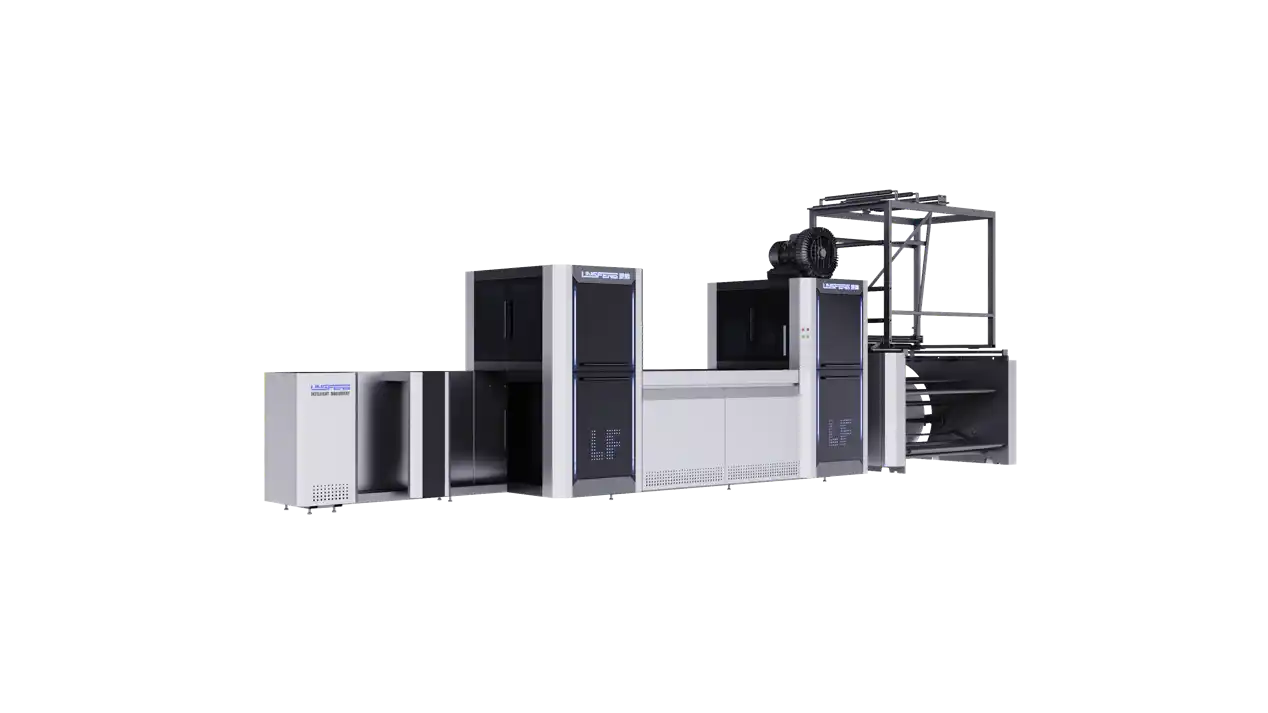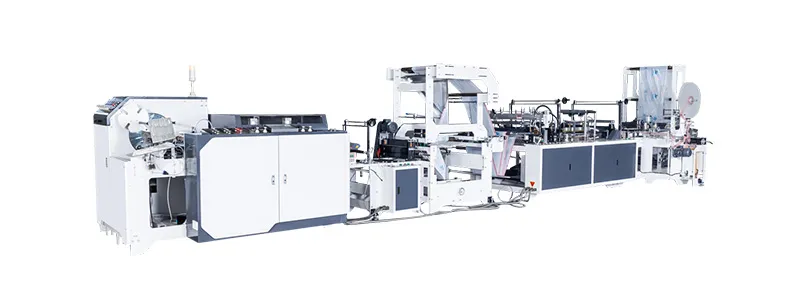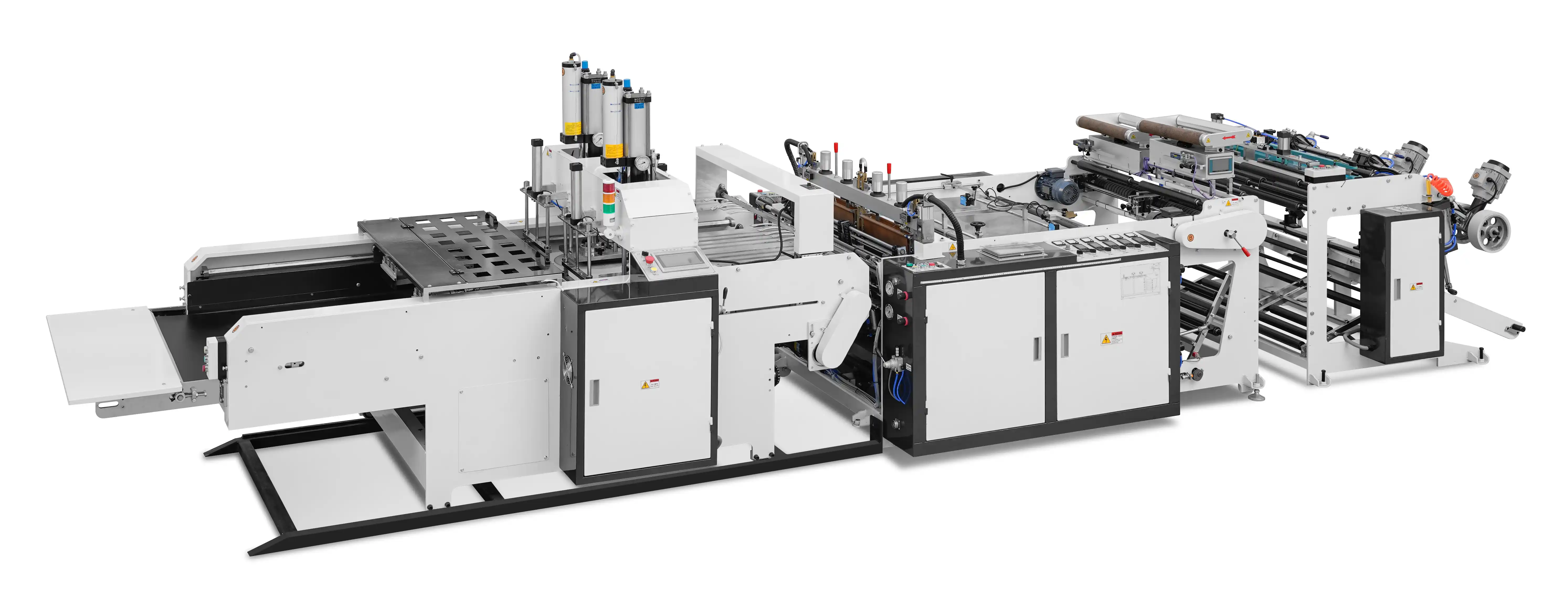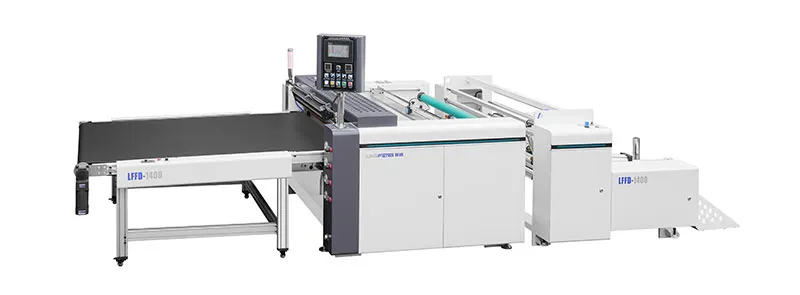

In the flexible packaging industry, production efficiency is not simply a matter of machine speed. It is the result of deliberate choices in mechanical design, process engineering, parameter control, and a clear understanding of industry requirements. This guide provides an expert-level overview of how these four elements converge to deliver reliable, high-quality output—whether you manufacture shopping bags, medical waste bags, or biodegradable packaging.
The mechanical foundation of a bag making machine determines its long-term reliability. Three structural elements warrant particular attention.
The machine frame supports all moving components.
In simple terms: a rigid frame absorbs vibration and resists deflection, ensuring that cutting and sealing components maintain precise alignment over years of operation.
Manufacturers like Lingfeng use thicker iron plates for high-speed models. This design choice minimizes flex during acceleration and deceleration cycles, which is critical for maintaining registration accuracy—the ability to align printed patterns or cut lines consistently across thousands of cycles.
The sealing knife is arguably the most critical component in the entire system.
In simple terms: if the sealing knife cannot maintain uniform temperature across its entire length, seal quality becomes inconsistent.
Lingfeng employs imported special alloy sealing knives with higher melting points and greater hardness. This translates to uniform heat distribution, resistance to deformation under repeated thermal cycles, and extended service life—particularly important when processing demanding materials like biodegradable films.
The drive system coordinates the motion of multiple stations.
In simple terms: a synchronous drive ensures that feeding, sealing, cutting, and stacking happen in perfect sequence.
In a double-line synchronous configuration, two independent production lines operate simultaneously from a single control system. This architecture increases production capacity by up to 40% while reducing the mechanical complexity associated with running two separate machines.
Beyond the mechanical hardware, the processes executed by the machine determine final product quality.
Film tension refers to the force applied to the plastic web as it travels through the machine.
In simple terms: too much tension stretches the film; too little tension causes wrinkles and misalignment.
Modern bag making machines integrate closed-loop tension control using high-precision sensors that measure film tension in real time. The system automatically adjusts motor speeds to maintain consistent tension during feeding, sealing, punching, and winding. This ensures that finished bags lie flat, exhibit no warping, and maintain uniform dimensions.
Heat sealing is the process of bonding two layers of thermoplastic film using heat and pressure.
In simple terms: the seal must be strong enough to hold contents but clean enough to present professionally.
The sealing process involves three interdependent variables: temperature (how hot the sealing bar gets), pressure (how firmly it presses the films together), and dwell time (how long the bar remains in contact). For example, when sealing biodegradable PLA, a lower temperature combined with a slightly longer dwell time often produces stronger seals than a faster, hotter approach.
After sealing, the machine must cut individual bags and stack them for packaging.
In simple terms: a clean cut prevents jagged edges that can cause customer complaints, while accurate counting ensures correct packaging quantities.
Cold cutting uses sharp blades to cut films without heat, ideal for certain materials. Hot cutting uses heated blades that simultaneously cut and seal edges. Modern machines include photoelectric sensors that count bags automatically and trigger stack ejection when the preset quantity is reached.
Parameter settings translate mechanical capability into actual production results. Understanding how to optimize them separates high-performing lines from those plagued by downtime.
Machine speed is often the first parameter operators adjust.
In simple terms: running faster does not always mean running better.
As line speed increases, the available time for sealing and cutting decreases. To compensate, operators may need to increase sealing temperature or pressure. However, beyond a certain threshold, speed gains come at the expense of seal integrity or cut accuracy. The optimal operating window is where the machine achieves its rated speed without compromising quality metrics like tensile seal strength or dimensional tolerance.
Sealing temperature must be tailored to the specific film being processed.
In simple terms: thicker films require more heat to achieve full fusion, while heat-sensitive materials like PLA need lower temperatures.
A temperature profile defines how the sealing bar heats up and cools down during each cycle. For high-volume production, maintaining a stable temperature profile reduces the need for constant operator intervention. Advanced machines store parameter recipes that can be recalled when switching between materials.
Open-loop systems run according to preset parameters without feedback.
In simple terms: closed-loop control means the machine measures what is happening and adjusts itself.
Sensors continuously monitor parameters such as sealing temperature, film tension, and registration alignment. When deviations are detected, the control system makes instantaneous corrections—adjusting heater output or motor torque—to bring the process back within specification. This reduces scrap and ensures consistent output even as environmental conditions or material properties change.
Different industries impose distinct requirements on bag construction, material compatibility, and production standards. A machine that performs well for retail bags may not meet the demands of medical or food packaging.
Retail applications prioritize volume, visual appearance, and cost efficiency.
In simple terms: shopping bags need to look good and be produced quickly.
For T-shirt bags and shopping bags, double-line synchronous machines maximize throughput. Key parameters include high line speeds, precise registration for printed logos, and reliable bottom seals that prevent failures during use. Lingfeng’s double-line machines are specifically designed for PE/PP shopping bags, achieving up to 40% higher production capacity.
Food packaging demands strict hygiene and seal reliability.
In simple terms: food bags must be clean, and seals must not fail during transport or storage.
For fresh-keeping bags and quick-frozen food bags, seal integrity is non-negotiable. Machines used in food applications often incorporate stainless steel components, easy-clean surfaces, and advanced tension control to prevent contamination. Parameters are optimized for consistent burst strength and leak resistance, with real-time monitoring to detect any deviation.
Medical waste bags and heavy-duty garbage bags must withstand rigorous handling and, in some cases, sterilization processes.
In simple terms: these bags need to be tough enough to hold heavy or hazardous contents without tearing.
Machines for these applications use thicker film materials and require higher sealing temperatures and pressures to achieve the necessary bond strength. Additionally, medical waste bags often require compatibility with autoclave sterilization, meaning seals must remain intact under high-temperature steam exposure.
Biodegradable films such as PLA and PBAT behave differently than conventional polyethylene.
In simple terms: these materials are more heat-sensitive and can stick to sealing knives if not handled correctly.
Processing biodegradable materials requires specific parameter adjustments: lower sealing temperatures (typically 10–15°C below PE settings), longer dwell times, and specialized sealing knife coatings to prevent adhesion. Lingfeng’s patented sealing method uses fixed plates on both sides of the cutting area to prevent sticky biodegradable films from clinging after the cut.
The next generation of bag making machines will not simply execute preset parameters—they will learn, adapt, and communicate.
In simple terms: smart machines reduce the need for manual adjustments by using data to optimize themselves.
Key features that define future-ready equipment include:
Self-developed software platforms that allow firmware upgrades without replacing hardware. Lingfeng, for example, offers continuous software improvements even after machine purchase.
IoT connectivity that enables remote monitoring and predictive maintenance. Operators receive alerts when parameters drift or components show signs of wear.
Digital parameter management that stores recipes for different materials and applications, enabling rapid changeovers with minimal trial and error.
Understanding the technical principles behind bag making machinery is only the first step. The real value lies in applying this knowledge to your specific production environment—selecting the right equipment configuration, dialing in the optimal parameters for your materials, and ensuring consistent output across every shift.
In simple terms: knowing how a machine works helps you make better decisions, but the right machine partner ensures those decisions deliver results.
To explore how Lingfeng’s engineering expertise translates into reliable, high-performance bag making solutions, visit the Products page. There, you will find detailed specifications for each machine series—including fully automatic T-shirt bag making machines, bottom sealing models, and equipment designed specifically for biodegradable materials—allowing you to match the right mechanical architecture to your production goals.



 EN
EN
 ES
ES
 AR
AR