EN
EN
 ES
ES
 AR
AR

Article Overview: This article explains the working principle, key parameters, and compatible materials of side seal bag making machines. It is intended for CTOs, engineering managers, and technical buyers evaluating production equipment for flat bags, pouches, and courier mailers. The focus is on the film path, sealing mechanisms, and evidence-backed operational factors.
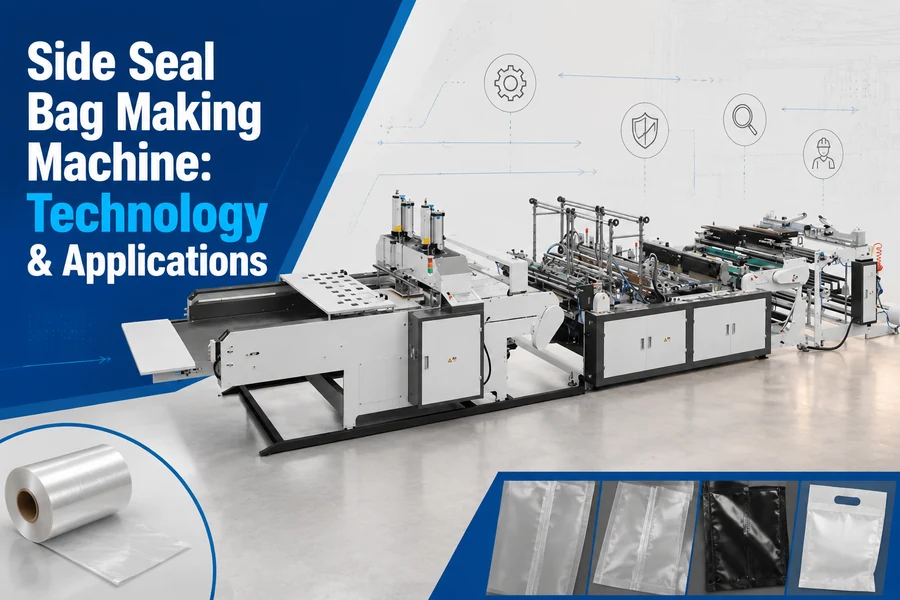
How Does a Side Seal Bag Making Machine Work?
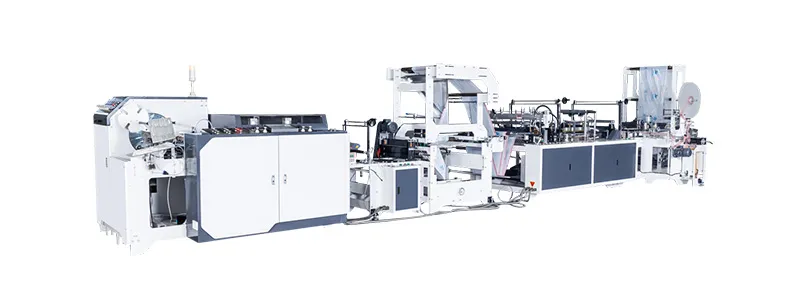
A side seal bag making machine unwinds film, folds it if needed, then creates seals parallel to the film flow using a hot bar or flying knife, forming bags with side seals.
The process involves precise film handling, sealing, and cutting. Below is the typical sequence.
Step 1: Film Unwinding and Tension Control
The film roll is mounted on an unwind stand with a tension control system. Dance rollers or servo-driven tension controllers maintain consistent web tension to prevent wrinkles or misalignment. This is critical for seal accuracy, especially at high speeds.
Step 2: Folding and Guiding
For pouch or gusseted bags, the film passes through a forming plow or folding board. The film is folded centrally or offset, depending on the bag design. Guide rollers ensure the folded web enters the sealing section with minimal skew.
Step 3: Sealing – Hot Bar vs. Flying Knife
Two common sealing methods are used. In hot bar sealing, a heated bar presses the film layers together at controlled temperature and dwell time, then retracts. In flying knife sealing, a continuous rotary knife with integrated heating simultaneously seals and cuts the film at the bag side edge. The flying knife can achieve line speeds in the range of 100–150 bags per minute but requires precise alignment and temperature control to avoid film build-up.
Step 4: Cutting and Stacking
After sealing, the continuous web is cut to individual bag lengths by a downstream cutting unit (chili knife or rotary shear). Bags then travel to a stacking or winding station. Some machines integrate hole punching or perforation for bags-on-roll applications.

What Are the Key Parameters of a Side Seal Bag Machine?
Key parameters include sealing temperature range, line speed, maximum film width, cut length range, and seal type (continuous or impulse). These determine the machine’s capability and the bag quality.
| Parameter | Typical Range | Influence on Production |
|---|---|---|
| Sealing Temperature | 100–180 °C (depending on film material) | Higher temperatures increase seal strength but risk film degradation; must be tuned per material. |
| Line Speed | 30–150 bags per minute (or 10–50 m/min) | Speed affects dwell time and cooling; too fast may result in weak seals. |
| Maximum Film Width | 200–1200 mm (standard models) | Wider webs require robust tension control and wider sealing bars. |
| Cut Length | 100–600 mm (adjustable) | Length accuracy depends on servo motor precision and encoder feedback. |
| Seal Type | Continuous (hot bar) or impulse (flying knife) | Continuous seals are simpler; impulse seals require more precise heat control but allow faster operation. |
When specifying a machine, include these parameters in your request for quote to ensure the equipment matches your bag dimensions and throughput targets. For a full product range, refer to the side seal bag making machines product line.
What Materials Can a Side Seal Bag Machine Process?
Common materials include HDPE, LDPE, LLDPE, and biodegradable films like PLA, provided they have suitable thermal sealing properties. Material choice affects sealing temperature, pressure, and knife wear.
Below is a summary of processability for typical films:
- HDPE (High-Density Polyethylene)
- Stiff, low-cost material. Typical sealing temperatures range from 130–150 °C. Requires higher sealing pressure due to rigidity. Suitable for flat bags and shopping bags.
- LDPE (Low-Density Polyethylene)
- Soft, flexible film. Seals at 100–130 °C. Lower heat input needed; good for pouches and liners.
- LLDPE (Linear Low-Density Polyethylene)
- Combines strength and flexibility. Sealing temperature similar to LDPE but with better tear resistance.
- PLA (Polylactic Acid) / Biodegradable Blends
- Requires a narrow temperature window (70–90 °C) to avoid degradation. Lower line speeds are often needed to maintain seal integrity. Knife wear may increase due to higher melting point differentials.
Film thickness depends on the machine and application; consult manufacturer specifications for limits. Always verify material compatibility with the manufacturer using documented trial runs.
Procurement Note: When requesting quotes, specify the exact film material and thickness. Request sample runs to confirm seal quality and cut reliability before committing to a full line.
FAQ
What bag styles can a side seal machine produce?
It produces flat bags, pouches, courier mailers, and gusseted bags. The side seal runs along the bag’s length, making it suitable for bags with a single side seal or two side seals (e.g., open-mouth pouches).
How does flying knife sealing differ from hot bar sealing?
Flying knife sealing uses a rotating heated blade that seals and cuts in one motion, allowing continuous operation at higher speeds (100–150 bags/min). Hot bar sealing is intermittent and typically slower but offers more control for thicker films.
Can a side seal machine process printed film with registration marks?
Yes, most modern machines include photoelectric sensors or vision systems to track print registration and adjust cut length automatically. This ensures design placement on the bag.
Conclusion
Side seal bag making machines are specialized for producing bags with vertical seals, offering flexibility in bag geometry and material handling. Understanding the film path, sealing method (hot bar or flying knife), key parameters, and material compatibility is essential for selecting the right equipment. When sourcing, provide detailed specifications to suppliers and request material-specific trial data to validate performance.