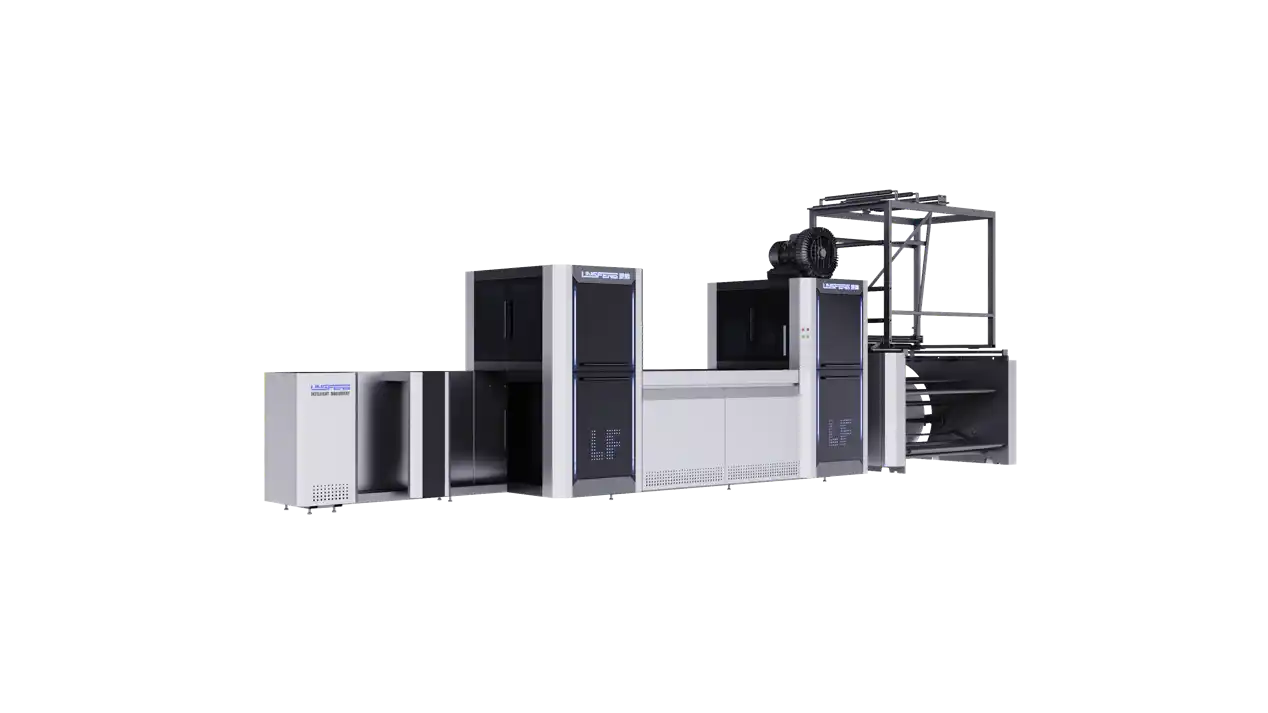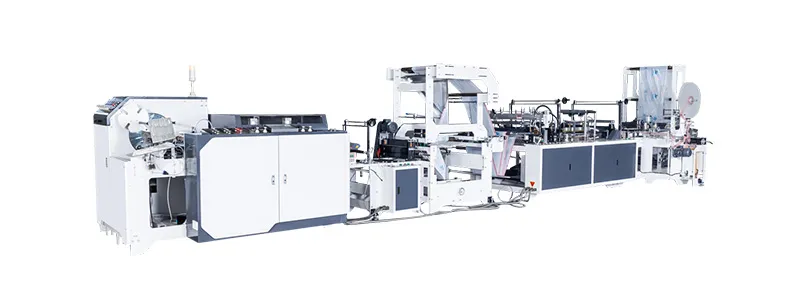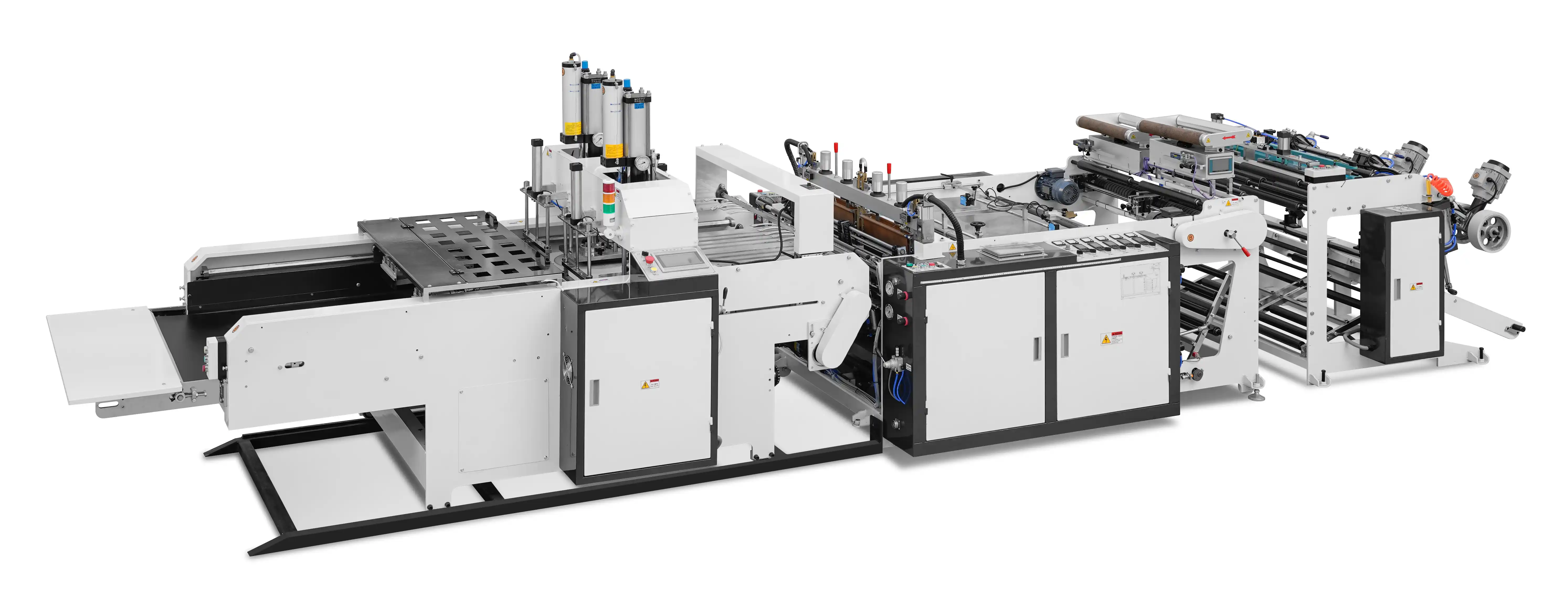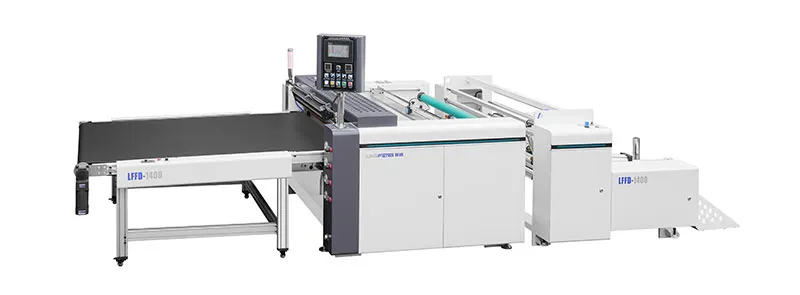

Choosing a plastic bag making machine is not about finding the “best” machine in isolation. It is about matching a machine’s technical capabilities to your specific production requirements. The right choice depends on eight core factors:
Bag type: T-shirt bag, flat bag, courier bag, garbage bag, bags on roll, medical waste bag, biodegradable bag, etc.
Film material: HDPE, LDPE, PP, PET, BOPP, PLA/PBAT, recycled film, and multi-layer laminates.
Bag width and length: Determines the maximum web width and cutting length required.
Film thickness: Affects sealing temperature, tension control, and speed.
Target output: Bags per minute, daily production hours, and peak demand.
Sealing method: Heat sealing, bottom sealing, side sealing, ultrasonic, or special sealing.
Automation level: Manual, semi-automatic, or fully automatic.
Downstream handling: Roll winding, stacking, punching, folding, or inline packaging.
A machine that runs perfectly for one bag type and film may fail completely for another. Therefore, the selection process should always start with your product specification, not with a machine model. Once you know exactly what bag you need to produce, you can compare machine categories, technical parameters, and supplier capabilities.
This guide walks you through each decision point in detail. It is written for packaging manufacturers, converters, and investors who want to make a confident, data-driven purchase. Whether you are buying your first bag making machine or expanding an existing line, the principles are the same.
The bag type is the single most important factor. It dictates the sealing method, cutting mechanism, and auxiliary functions. Below are the most common bag types and their corresponding machine categories.
T-shirt bags are the most widely used shopping bags. They are made from HDPE or LDPE film and feature a handle cutout. The machine must perform bottom sealing, handle punching, and often double-line synchronous production.
Key machine features:
Double-line synchronous drive for higher output.
Servo-driven sealing and cutting for precision.
Punching unit for handle and gusset.
Photoelectric print-mark tracking for printed film.
Typical speed: 250–300 bags/min for high-speed models; 100–120 bags/min for standard models.
Recommended machine: T-shirt Bag Making Machines
Application pages:

Flat bags are sealed at the bottom and are used for food packaging, fresh-keeping bags, medical sterilization bags, and industrial parts. They are often produced on bottom sealing machines.
Key machine features:
Tension control system for flat, wrinkle-free bags.
High-precision temperature control for consistent sealing.
Optional perforation, punching, and folding.
Typical speed: 30–220 bags/min depending on size and film.
Recommended machine: Bottom Sealing Bag Making Machines
Application pages:

Courier bags are typically made from PE or co-extruded film and require strong side seals. They often have a tear strip or adhesive tape. Side sealing machines are used for this application.
Key machine features:
Side sealing with precise temperature control.
Optional gusset, handle, and tear-notch.
High-speed production with servo drive.
Typical speed: 30–250 bags/min.
Recommended machine: Side Sealing Bag Making Machines
Application page: Delivery Bag

Garbage bags come in many forms: flat, draw-tape, star-seal, and heavy-duty. They can be produced on bottom sealing or bags-on-roll machines. Heavy-duty garbage bags require strong seals and often use HDPE or LDPE.
Key machine features:
Heavy-duty sealing for load-bearing capacity.
Draw-tape or star-seal attachments.
Perforation and roll winding.
Typical speed: 40–350 bags/min.
Recommended machines:
Application pages:
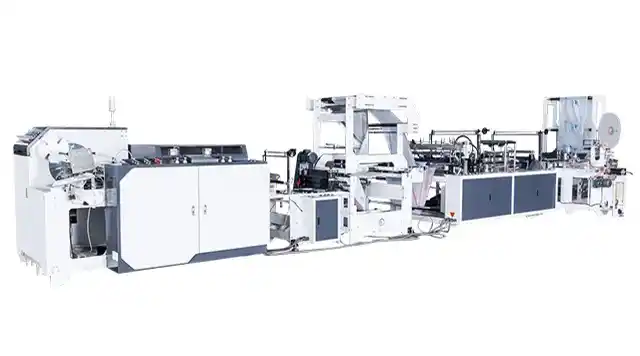
Bags on roll are popular for produce, garbage, and retail. They are wound into rolls and perforated for easy tearing. The machine must handle film tension carefully to avoid wrinkles and uneven winding.
Key machine features:
Tension control system.
Perforation unit with precise spacing.
Draw-tape or star-seal options.
Automatic core change and roll winding.
Typical speed: 40–350 bags/min.
Recommended machine: Bags on Roll Making Machines
Application page: Bags On Roll
Medical waste bags must meet strict standards (e.g., UN3291, EN 868). They are usually made from HDPE or LDPE and require strong seals, often with a yellow or red color. Bottom sealing or side sealing machines can be used, depending on the bag design.
Key machine features:
Cleanroom-compatible design.
Precise temperature control for medical-grade seals.
Optional printing and sterilization indicators.
Recommended machine: Bottom Sealing Bag Making Machines
Application page: Medical Waste Bag
Biodegradable bags are made from PLA, PBAT, starch-based films, or other compostable materials. These films are more sensitive to heat and tension, so the machine must be specially configured.
Key machine features:
Low-temperature sealing capability.
Anti-stick blade coating.
Precise tension control to prevent stretching.
Compatibility with compostable films.
Recommended machine: T-shirt Bag Making Machines or Bottom Sealing Bag Making Machines with biodegradable package.
Application page: Biodegradable Bags
Water sachets: Small, thin bags for drinking water. Require high-speed, precise sealing. Water Sachet
Disposable gloves: Made on specialized glove making machines. Disposable Gloves
Non-standard bags: Custom shapes, sizes, and functions. Lingfeng offers customized solutions. Other Machine

The film material determines sealing temperature, tension settings, and machine hardware. Never assume a machine can run all materials without testing.
Characteristics: Stiff, strong, good moisture barrier.
Common bags: T-shirt bags, garbage bags, grocery bags.
Sealing: Requires higher temperature and pressure.
Machine considerations: Robust sealing bar, strong punching unit.
Characteristics: Soft, flexible, good transparency.
Common bags: Produce bags, flat bags, heavy-duty bags.
Sealing: Lower temperature than HDPE.
Machine considerations: Precise tension control to avoid stretching.
Characteristics: Clear, glossy, high stiffness.
Common bags: Snack bags, stationery bags, courier bags.
Sealing: Higher temperature, often requires impulse sealing.
Machine considerations: Side sealing or bottom sealing with precise temperature.
Characteristics: Excellent clarity, high tensile strength.
Common bags: Food packaging, garment bags, cosmetic bags.
Sealing: Requires special sealing jaws and temperature profiles.
Machine considerations: Often used on side sealing or specialized lines.
Characteristics: Compostable, sensitive to heat and moisture.
Common bags: Shopping bags, produce bags, food bags.
Sealing: Low temperature, short dwell time.
Machine considerations: Anti-stick coating, precise tension, low-temperature sealing.
Characteristics: Variable quality, may contain impurities.
Common bags: Garbage bags, industrial bags.
Sealing: Requires robust sealing and tension control.
Machine considerations: Heavy-duty drive, easy-cleaning sealing bars.
Every film behaves differently. The same machine may run perfectly with one supplier’s LDPE but fail with another’s. Before buying, always request a material test. Lingfeng offers pre-shipment material testing and Factory Acceptance Tests (FAT) to confirm performance. Learn more about our Quality process.
Bag size determines the machine’s maximum web width, cutting length, and sealing area. Undersizing the machine will limit your production flexibility.
Bag Width
Definition: The finished width of the bag.
Machine spec: Maximum web width (e.g., 300–700 mm for T-shirt bags).
Consideration: If you plan to produce multiple sizes, choose a machine with a wider range.
Bag Length
Definition: The finished length from seal to seal.
Machine spec: Maximum cutting length.
Consideration: Longer bags require longer sealing bars and higher cutting precision.
Gusset
Definition: Side folds that expand the bag.
Machine spec: Gusset forming unit.
Consideration: Gusset bags require side sealing or special bottom sealing machines.
Film Thickness
Definition: Measured in microns (µm) or gauge.
Machine spec: Recommended thickness range (e.g., 10–100 µm).
Consideration: Thicker film requires higher sealing temperature and slower speed.
Handle Size
Definition: For T-shirt bags, the handle cutout size.
Machine spec: Punching die size.
Consideration: Custom handle shapes require custom dies.
Roll Diameter
Definition: For bags on roll, the finished roll diameter.
Machine spec: Maximum roll diameter (e.g., 100–300 mm).
Consideration: Larger rolls require stronger winding motors and tension control.
Machine speed is one of the most misunderstood specifications. A machine rated at 300 bags/min may only produce 200 bags/min in real production. You must understand the difference between rated speed and stable production speed.
Definition: Maximum speed under ideal conditions.
Reality: Rarely achieved in daily production.
Use: For comparison only.
Definition: Speed maintained consistently over an 8-hour shift.
Reality: 70–85% of rated speed.
Use: For calculating real output.
Definition: Total shift time minus downtime, changeover, and maintenance.
Reality: 6–7 hours of effective production per 8-hour shift.
Use: For calculating daily output.
Definition: Time to change from one bag size to another.
Reality: 15–60 minutes depending on automation.
Use: For high-mix production, choose machines with quick-change systems.
Thicker film: Slower speed.
Biodegradable film: Slower speed.
Printed film: Slower speed due to print-mark tracking.
Recycled film: Variable speed.
Single-line: One bag per cycle. Lower output, simpler design.
Double-line: Two bags per cycle. Higher output, requires synchronous drive.
Multi-line: Three or more bags per cycle. Highest output, complex design.
Example calculation:
Rated speed: 300 bags/min
Stable speed: 250 bags/min (83%)
Effective time: 6.5 hours
Daily output: 250 × 60 × 6.5 = 97,500 bags/day
Always ask the supplier for a video of the machine running your specific film and bag type. Lingfeng provides real production videos and FAT reports.
Automation affects labor cost, consistency, and ease of operation.
Operation: Manual feeding, sealing, cutting.
Pros: Low cost, simple.
Cons: High labor, inconsistent quality, low output.
Best for: Very small batch, prototyping.
Operation: Automatic sealing and cutting, manual loading/unloading.
Pros: Moderate cost, better consistency.
Cons: Still requires operator attention.
Best for: Small to medium production.
Operation: Automatic feeding, sealing, cutting, punching, winding.
Pros: High output, consistent quality, low labor.
Cons: Higher investment.
Best for: Medium to large production.
Key automation features:
PLC control with touch screen.
Servo-driven sealing and cutting.
Photoelectric print-mark tracking.
Automatic tension control.
Automatic roll change.
For most commercial bag production, fully automatic machines offer the best ROI. Lingfeng’s machines are equipped with servo + PLC control as standard. See our Service page for training and support.
Auxiliary functions increase machine versatility and reduce secondary operations. Choose only what you need, but consider future expansion.
EPC (Edge Position Control)
Keeps the film web aligned.
Essential for printed film and high-speed production.
Gusset
Creates side folds.
Required for shopping bags and courier bags.
Punching
Creates handle holes, tear notches, or ventilation holes.
Custom dies available.
Draw Tape
Inserts a drawstring into the bag.
Common for garbage bags.
Folding
Folds the bag for packaging.
Useful for medical or sterile bags.
Perforation
Creates easy-tear lines.
Essential for bags on roll.
Automatic Core Change
Automatically changes the winding core.
Reduces downtime for bags on roll.
Tensionless Feeding
Prevents film stretching.
Critical for thin films and biodegradable materials.
The machine is only as good as the supplier behind it. Use this checklist to evaluate potential suppliers.
Factory Evidence
Request a live video tour.
Check manufacturing equipment (CNC, lathe, milling).
Verify assembly lines and testing area.
Factory Acceptance Test
Run the machine with your film and bag design.
Check speed, sealing strength, and bag quality.
Record video and test reports.
Material Testing
Send your film samples to the supplier.
Ask for a test report with sealing parameters.
Confirm compatibility before purchase.
Warranty
Standard warranty: 1 year.
What parts are covered?
What is the response time?
Spare Parts
Availability of critical parts.
Lead time for delivery.
Cost of consumables.
Installation
On-site installation included?
Engineer visa and travel costs?
Installation timeline?
Training
Operator training included?
Training materials and manuals?
Remote support available?
After-Sales Response
24/7 support?
Local agents?
Average response time?
Lingfeng Machinery has been manufacturing bag making machines since 1994. We are CE and ISO 9001 certified, and we export to over 50 countries. Our quality system includes 80%+ in-house parts machining and pre-shipment FAT. Learn more on our About Lingfeng and Quality pages.
To get an accurate quotation, prepare the following information. The more details you provide, the faster and more precise the quote.
| Item | Details Required |
|---|---|
| Bag type | T-shirt, flat, courier, garbage, roll, medical, biodegradable |
| Film material | HDPE, LDPE, PP, PET, BOPP, PLA/PBAT, recycled |
| Film thickness | µm or gauge |
| Bag width | mm |
| Bag length | mm |
| Gusset | Yes/No, size |
| Handle | Yes/No, type |
| Printing | Yes/No, colors, print-mark |
| Output target | Bags/min or bags/day |
| Roll format | Yes/No, roll diameter, core size |
| Special functions | EPC, draw tape, perforation, folding, etc. |
| Automation level | Manual, semi-auto, fully auto |
| Installation requirement | On-site installation needed? |
| Voltage | 380V/50Hz, 220V/60Hz, etc. |
| Country | For shipping and certification |
Submit your RFQ to Lingfeng:
How do I choose the right bag making machine?
Start with bag type, film material, size, and output. Then compare machine categories, automation levels, and auxiliary functions. Always test your film with the supplier before buying.
Can one machine run multiple film materials?
Some machines can run multiple materials, but sealing parameters must be adjusted. Biodegradable films often require a dedicated configuration. Always confirm with the supplier.
What is the difference between single-line and double-line?
Single-line produces one bag per cycle. Double-line produces two bags per cycle, increasing output but requiring synchronous drive and more complex mechanics.
How can I confirm real production speed?
Ask for a video of the machine running your specific film and bag type. Request a FAT report with speed, sealing strength, and bag quality data.
What information is needed for an accurate quotation?
Provide bag type, film, thickness, width, length, output, printing, roll format, special functions, and installation requirements. Use the RFQ checklist above.
Can Lingfeng test my film before production?
Yes. Lingfeng offers pre-shipment material testing and Factory Acceptance Tests. Send your film samples to our engineers for a test report.
Are Lingfeng machines CE certified?
Yes. Every machine is built under a CE / ISO 9001 quality system and verified by pre-shipment FAT. View certificates on our Certificate page.
Do you provide overseas installation and training?
Yes. We provide on-site installation, debugging, operator training, and a 1-year warranty, with local agents in Peru, Mexico, Saudi Arabia, Russia, and India.
Choosing a plastic bag making machine is a strategic investment. By following this guide, you can avoid costly mistakes and select a machine that matches your production needs for years to come. Remember:
Start with your bag specification.
Match film material to machine capability.
Size the machine for future flexibility.
Verify real speed, not rated speed.
Choose the right automation level.
Select only necessary auxiliary functions.
Vet your supplier thoroughly.
Prepare a detailed RFQ.
Lingfeng Machinery has over 30 years of experience in manufacturing plastic bag making machines. We serve global packaging manufacturers in retail, e-commerce, food, medical, and waste management industries. If you need help choosing the right machine, our engineers are ready to assist.
Contact us for a free consultation and quote:



 EN
EN
 ES
ES
 AR
AR