
You are specifying a bottom seal bag making machine, and the options do not sort themselves neatly. A flying-knife line promises high cycle rates on heavy film. A tensionless line promises stronger seals by removing tension from the sealing point. A multi-line configuration promises multiplied output from a single jumbo roll. Each architecture solves a different production problem, and the choice depends less on which one is “better” and more on what your bag actually demands from the seal. This guide works through the decision in the order that matters: first the seal itself, then the cutting and feeding method, then the lane architecture, and finally the film and throughput variables that determine whether the rated number survives contact with production.
The broader context for how bottom seal machines fit into the full plastic bag making machine landscape is covered in the general selection guide on plastic bag machine types . This article drills into the bottom seal category specifically.
A bottom seal is formed perpendicular to the direction of film travel. The film moves through the machine as a continuous tube; the sealing jaw closes across the tube’s width; the cut separates one bag from the next. The resulting bag has a single continuous seal at the bottom, with the sides formed by the folded film. TThe seal bears the load of the contents directly, which is why bottom seal machines are the default for garbage bags, produce bags, flat packaging bags and wicket bags where the bottom seam must hold weight without leaking — the full application breakdown by bag type maps these formats to their production requirements.
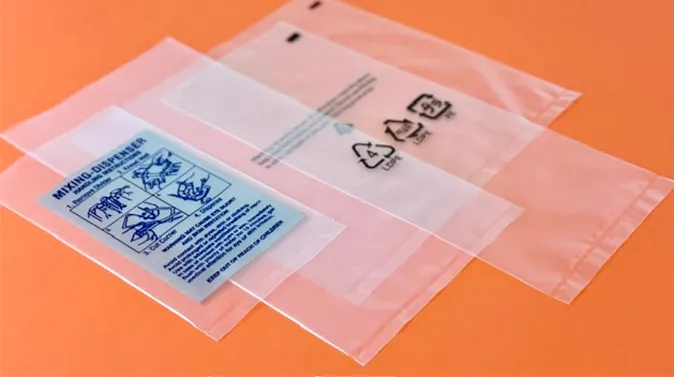
The seal direction is not a cosmetic detail. It determines which bag geometries are physically possible. A side seal runs parallel to film travel, sealing the two side edges of a folded web. Side seal machines produce bags with two side seals and an open or folded bottom, which suits T-shirt bags, garment bags and side-gusseted formats. A bottom seal machine seals across the web, producing a continuous tube cut to length. The two architectures are not interchangeable; they produce fundamentally different bag structures.
For the full comparison of seal geometry, bag types and production speed between the two categories, the side seal vs bottom seal technology comparison provides the detailed framework. The practical takeaway for bottom seal specification is this: you are choosing a machine whose seal orientation is already fixed by the bag you need to make. The remaining decisions are about how that seal is formed and how fast it can be repeated.
The bottom seal machine category page lists the full model range with bag width, producing length and speed specifications for each configuration.
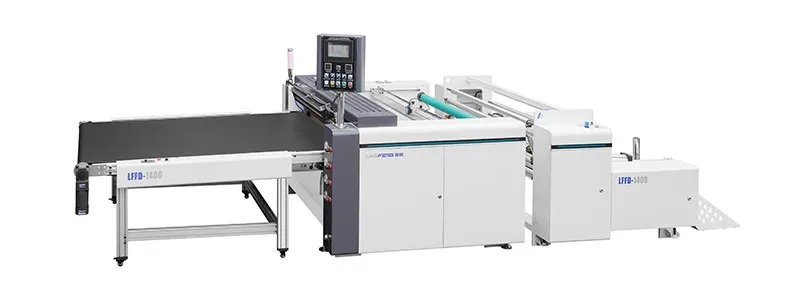
The cutting method is the first major fork in bottom seal machine specification. A flying knife and a tensionless system solve different physical problems, and the choice affects seal quality, film compatibility and achievable speed.
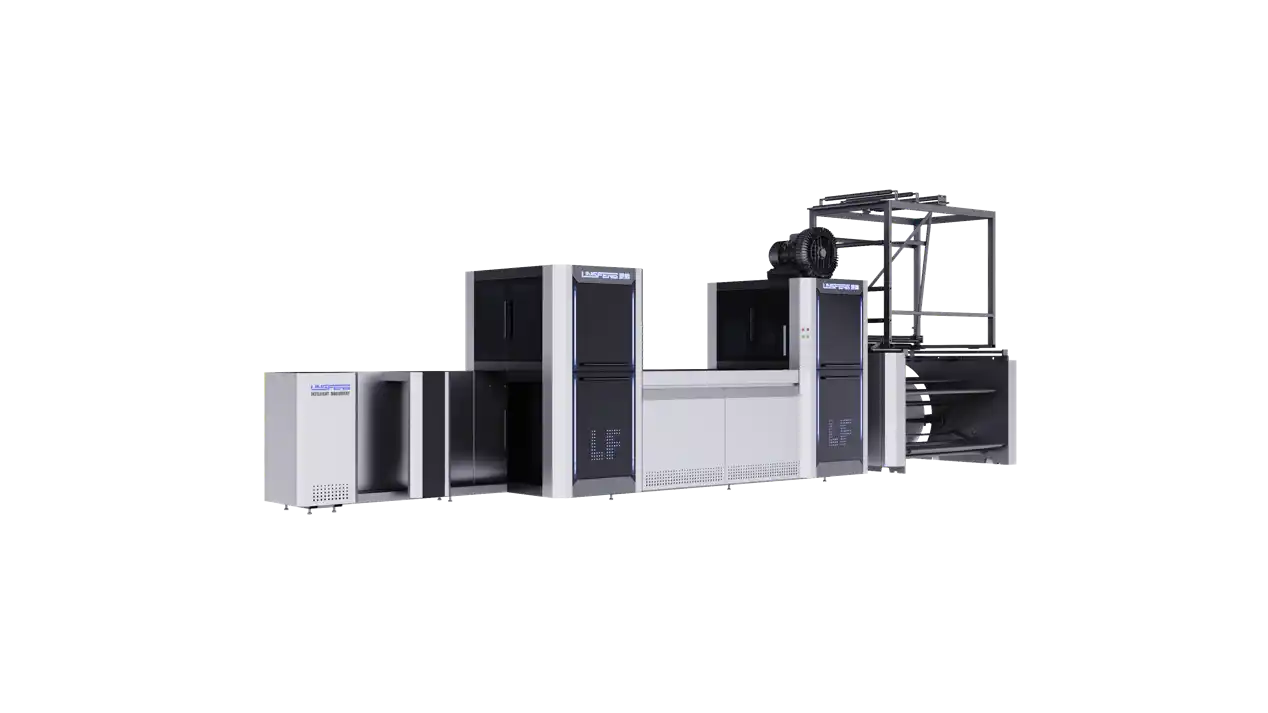
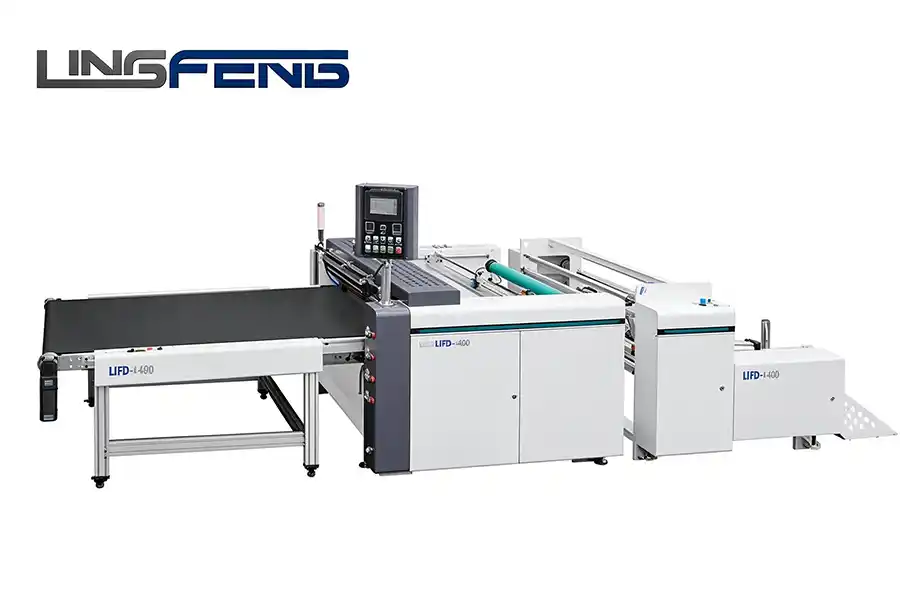
A flying-knife system uses a servo-driven blade that travels with the film during the cut. The blade moves at the film’s speed at the moment of severing, which means the film is not stopped and restarted for each cut. The result is a clean cut at high cycle rates on heavy film. The LFFD series applies this architecture with dual-side wire sealing, producing strong seal lines on HDPE, LDPE and FFS films at bag widths from 1000 mm to 1600 mm, with producing lengths up to 2000 mm and speeds in the range of 70–80 pcs/min on large-format heavy-duty bags. The flying knife is the right choice when the bag is large, the film is thick, and the seal must hold under load without the film being handled gently.
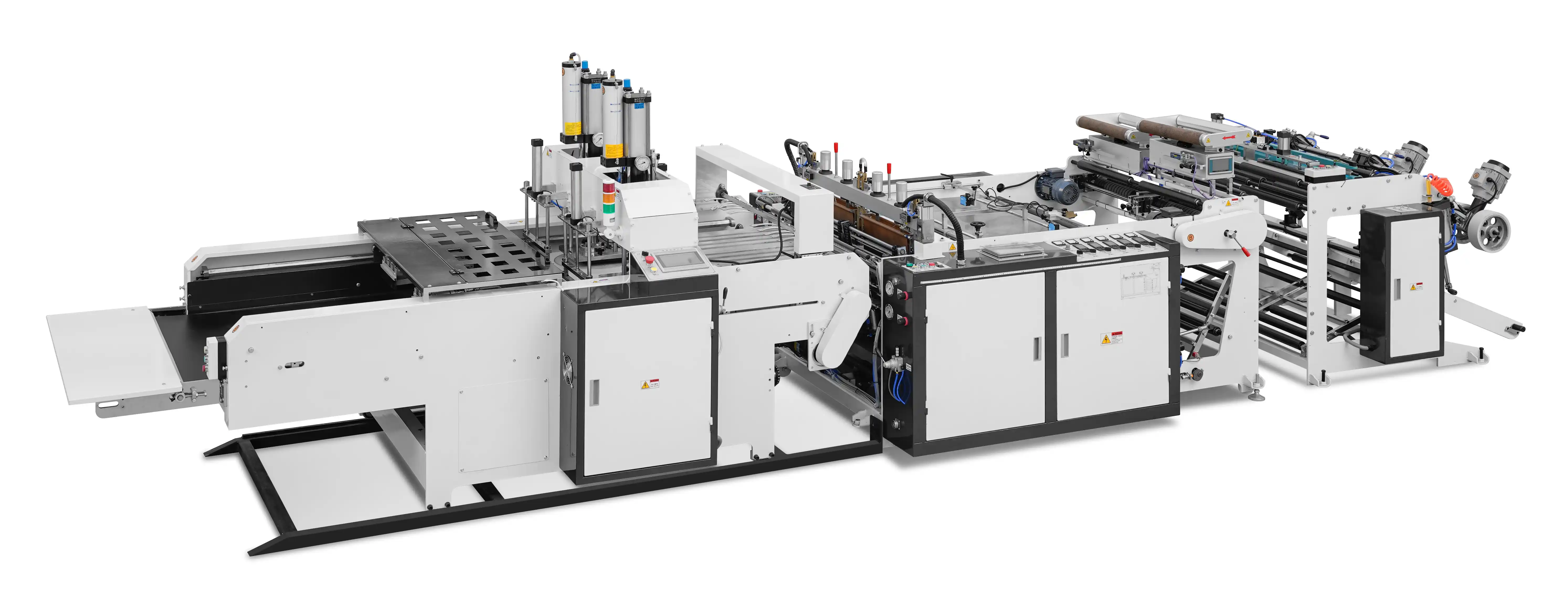
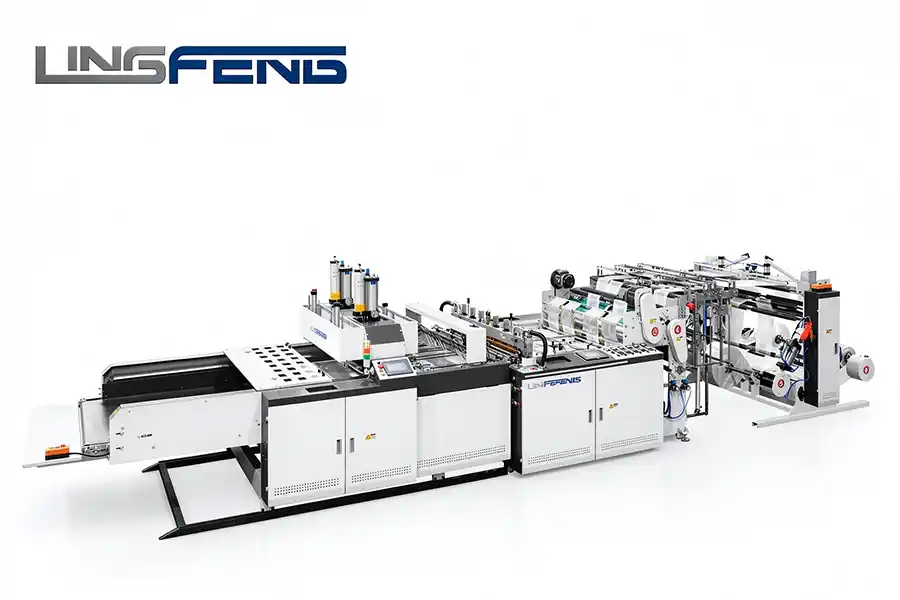
A tensionless system uses front-and-back servo feed motors to hold the film free of tension at the sealing point. The seal is formed while the film is relaxed, then a separate cold knife cuts the bag. The logic is mechanical: a seal formed under zero tension has fewer internal stresses, which produces a stronger seam and a cleaner cut edge. The LDFP-450X2TS applies this with four servo feed motors — two per line, front and back — running HDPE, LDPE and biodegradable PLA/PBAT at up to 180 pcs/min. The tensionless architecture is the right choice when the seal quality is the binding constraint, particularly on thinner films, softer films, or biodegradable films that are sensitive to tension variation.
The trade-off between the two is not simply speed versus strength. A flying knife excels when the film can tolerate being moved at speed and the cut quality depends on blade tracking. A tensionless system excels when the film’s sealing behavior degrades under tension, which is common on thin gauge and eco-film. A heavy-duty garbage bag line running 40–80 micron HDPE at 70–80 pcs/min is a flying-knife application. A double-line line running 15–30 micron LDPE or PLA/PBAT at 150–180 pcs/min is a tensionless application. The film thickness and the film’s tension sensitivity are the deciding variables.
A single-lane bottom seal machine produces one bag per cycle. A double-layer machine processes two layers or two lanes simultaneously; a four-line machine processes four. The arithmetic is straightforward: four lanes produce four bags per cycle. The seal engineering is not.
Each lane has its own film path, its own tension profile and its own sealing jaw contact. On a four-line machine, four seals must form simultaneously to the same quality standard. If one lane’s tension drifts or one sealing jaw’s temperature deviates, the reject rate on that lane rises independently of the others. The LDF-1000H+DS addresses this with a double-layer, four-line synchronized feeding system and a motorized automatic roll lift, producing up to 400 mm × 4 bag widths with a film thickness range of 0.010–0.030 mm. The multi-line architecture is justified when the bag specification is stable and the order volume is high enough to keep all lanes running the same product for extended periods.
The LDFP-1100/1200 takes a different approach: a double-layer machine with an inline automatic punch that produces up to eight bags simultaneously via multiple feed motors, at bag widths down to 200 mm × 8. This is a high-count small-bag configuration, where the economic logic is labor and floor space per bag rather than per-lane seal control.
The decision rule is this: multi-line configurations reward consistency. If your film supply is stable, your bag specification is fixed, and your quality process can hold four seals to the same standard, the per-bag cost advantage is real. If your film varies, your bag sizes change frequently, or your quality process is still maturing, a double-line machine with independent servo per lane will produce a higher ratio of saleable output to gross output, because the losses are contained within fewer lanes.
Not every bottom seal bag is a plain flat bag. Wicket bags need a hanger hole punched through the bottom seal area. Four-finger handle bags need a reinforced patch handle punched and sealed into the bag body. Soft-loop handle bags need a separate handle material heat-softened and welded onto the bag. Each of these functions changes the machine specification beyond the seal itself.
The GDFR-450X2 FF is a double-line bottom seal machine for four-finger (patch) handle bags, with an inline automatic handle-hole punch and waste collection, running HDPE, LDPE and biodegradable PLA/PBAT at up to 220 pcs/min. The LDF-600+TS+LH is a single-lane automatic bottom-sealing machine with heat-softened soft loop handles, built for premium HDPE/LDPE packaging in beverage, garment and boutique applications. The sealing blade is a patented heat-sealing design, and the machine uses servo-controlled tensionless sealing with a servo flying-knife cut.
The specification question here is whether the handle is formed before, during or after the bottom seal, and whether the handle material is the same film as the bag body or a separate web. A patch handle is punched from the same film and sealed into place; a soft-loop handle is a separate insert. The machine’s film path and sealing sequence must be configured accordingly. If the handle function is an afterthought added to a standard bottom seal machine, the synchronization between the punch, the seal and the cut is where quality losses appear.
Garbage bags and flat packaging bags both use a bottom seal, but they sit at opposite ends of the film thickness spectrum. A household garbage bag is typically 10–30 micron HDPE or LDPE, running at speeds above 100 bags per minute on thin film. A heavy-duty industrial or municipal waste bag can be 60–250 micron, often multi-layer co-extruded, running at 30–80 bags per minute because the sealing jaw needs dwell time to penetrate the thickness.
This film regime difference drives the machine architecture more than the bag name does. A thin-film garbage bag line prioritizes cycle rate and tension control; a heavy-duty line prioritizes sealing pressure, jaw temperature stability and cut force. The LFFD flying-knife series is configured for the heavy end of this spectrum, with dual-side wire sealing and producing lengths up to 2000 mm. The tensionless double-line LDFP-450X2TS is configured for the thinner end, where tension removal at the seal point protects seal integrity on soft film.
The practical specification question is not “garbage bag or flat bag” but “what film thickness and seal strength does the bag require, and what happens to the seal when the film is at its thinnest and thickest tolerance limits?” A machine that seals well at nominal thickness but leaks at the low end of the film’s gauge band is not a machine that fits the application. The heavy-duty garbage bag application page provides the production context for the high-thickness end of this decision.
A draw-tape bag adds a separate closure mechanism: a strip of film or tape is inserted into the bag’s hem and sealed into place, so the bag can be pulled closed. The draw tape is a second web that must be fed, aligned and sealed in synchronization with the bag film. This changes the machine’s film path and sealing sequence beyond a standard bottom seal.
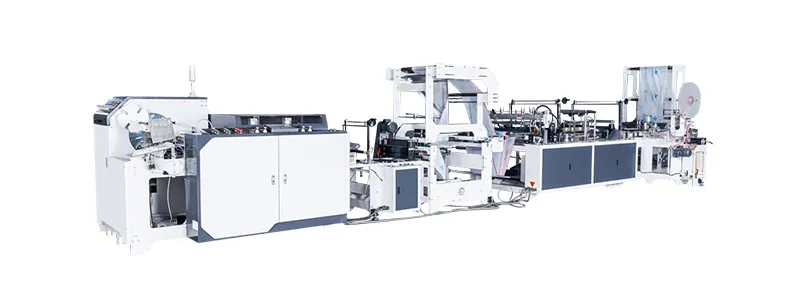
The LDFF-800/1000/1200 is an automatic draw-tape bag making machine with piece-by-piece folding, driven entirely by servo motors with dual-servo feed control. The inline poly draw-tape attachment system and tensionless seal-and-cut design produce drawstring bags in HDPE and LDPE across 400–1000 mm width, with the folding unit servo-integrated. The draw-tape function is not a simple add-on; it requires a dedicated film path for the tape, a separate sealing station for the tape hem, and synchronization between the tape feed and the bag cut.
The draw-tape decision interacts with the folding decision. A draw-tape bag is often folded piece by piece for retail packaging. The LDFF series integrates the folding unit into the same servo architecture, which means the draw-tape insertion, the seal, the cut and the fold are coordinated rather than performed as separate offline operations. If you are producing draw-tape bags, the machine specification should treat the tape system and the folding system as part of the same production logic, not as optional downstream equipment.
The seal strength requirement is the constraint that eliminates more machine options than any other specification. A bottom seal bears the entire load of the bag contents. A weak seal is not a cosmetic defect; it is a leak or a rupture.
Film thickness sets the sealing window. On conventional PE film, the sealing window is relatively wide, and a machine with ±5°C temperature control can hold production. On biodegradable PLA/PBAT film, the sealing window narrows to roughly 10–15°C, and the sealing temperature is lower — PLA/PBAT films seal at 120–140°C compared to 160–180°C for polyolefin. PID temperature control must hold ±2°C, and the sealing jaw surface often needs a non-stick coating to prevent molten film from adhering to the blade. The relevant Chinese national standard, GB/T 38082-2019, specifies a minimum heat-seal strength of ≥8 N/15 mm for PLA/PBAT composite film under defined test conditions, which gives a concrete acceptance criterion for seal quality on biodegradable bags.
This means the film thickness question and the seal strength question are linked. A machine rated for PE at 0.010–0.040 mm may not be the machine that holds a biodegradable seal at the narrow window the film requires. The tensionless LDFP-450X2TS runs HDPE, LDPE and PLA/PBAT, which places it in the biodegradable-compatible category. A general-purpose flying-knife machine rated for HDPE and LDPE alone may not be the right starting point if PLA/PBAT is in the product roadmap.
The material evaluation route on the bottom seal category page is the mechanism for confirming compatibility: send the substrate technical data sheet — thickness in microns, film width, film type — and the engineering team evaluates the sample against the machine’s sealing capability before a configuration is proposed.
The rated speed on a bottom seal machine is measured under a defined film and bag specification. It is not a universal production figure.
A flying-knife LFFD machine rated at 80 pcs/min on a 1000 mm-wide heavy-duty bag will not hold that speed on a thinner film or a smaller bag, because the cycle time is governed by the sealing dwell time and the cut stroke, not by the film feed alone. A tensionless LDFP-450X2TS rated at 180 pcs/min on a 300–700 mm bag will not hold that speed if the bag length moves toward the upper end of the range, because the servo feed distance increases and the cycle time lengthens.
Changeover is the second variable that separates rated speed from shift output. A bag width change on a bottom seal machine involves repositioning the sealing jaw, the cut knife and the film guides. A flying-knife machine’s cut length change requires re-synchronizing the knife travel with the film feed. A multi-line machine’s changeover multiplies this across lanes. The practical planning figure is stable production speed, not rated speed: typically 70–85% of the rated number, with the higher end achievable on stable film and mature operator practice, and the lower end reflecting frequent changeovers or difficult film.
The output calculation framework for bag machines applies the same OEE logic to bottom seal lines: rated speed × availability × performance × quality. A 100 pcs/min flying-knife line running heavy film at 80% availability, 85% performance and 98% quality yields roughly 67 saleable bags per minute, not 100.
The three model families serve three different production logics. The table below maps them to the variables that matter at the specification stage.
| Model family | Cutting / sealing logic | Typical bag width | Typical speed | Film regime | Best-fit production profile |
|---|---|---|---|---|---|
| LFFD (flying knife) | Servo flying knife + dual-side wire sealing | 1000–1600 mm | 70–80 pcs/min | HDPE, LDPE, FFS; heavy-duty, large-format flat bags | Large bags, thick film, dimensional reach, low changeover frequency |
| LDFP (tensionless / double-line) | Hot-seal, cold-cut under tensionless servo feed | 380 mm × 2; 200 mm × 8 on punch configuration | 120–180 pcs/min | HDPE, LDPE, PLA/PBAT | Standard-size bags, seal-quality-critical film, double-line volume |
| LDF (multi-layer / multi-line) | Double-layer, four-line synchronized feed | 400 mm × 4; 900 mm on wide single-layer configuration | 80–150 pcs/min depending on configuration | HDPE, LDPE | Stable bag specification, high volume, multi-lane labor efficiency |
The LFFD family is not “better” than the LDFP family. It is configured for a different bag. A producer running 1500 mm-wide heavy-duty industrial sacks needs the LFFD’s dimensional reach and sealing pressure. A producer running 380 mm shopping or flat bags in HDPE and PLA/PBAT needs the LDFP’s tensionless seal quality and double-line output. The multi-line flying-knife configuration with inline hot-slitting and side gusset is a specific example of the LFFD logic extended to multiple lanes: one wide jumbo roll split inline into narrower lines, with side gussets added and long bags double-folded, all within the same servo architecture.
The comparison that matters at the RFQ stage is not model name versus model name. It is whether the machine’s cutting logic, sealing logic and film compatibility match the bag you are actually going to run.
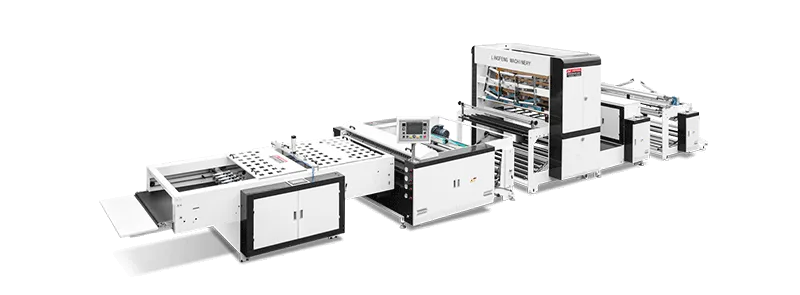
A bottom seal RFQ that produces a usable proposal must specify the following. The RFQ guidance published on the category page covers these fields, and the list below organizes them by the decisions they affect.
| Parameter | Why it matters | Details to provide |
|---|---|---|
| Bag type | Determines seal orientation and handle/punch requirements | Flat, garbage, wicket, four-finger handle, soft-loop handle, draw-tape |
| Film material | Determines sealing window and temperature control requirement | HDPE, LDPE, FFS, PLA/PBAT, recycled; grade and supplier if known |
| Film thickness | Determines sealing dwell time and cut force | µm or gauge, including tolerance band |
| Bag width | Determines maximum web width and lane count | mm, per lane if multi-line |
| Bag length | Determines cut stroke and servo feed distance | mm |
| Seal strength requirement | Determines sealing jaw pressure and temperature control | N/15 mm or application load requirement |
| Handle / punch | Determines inline punch and waste collection | Handle type, hole size, patch or soft-loop |
| Draw tape | Determines additional film path and tape sealing station | Tape material, width, insertion method |
| Target output | Determines lane count and cutting architecture | Bags per minute or per shift, with film and bag spec |
| Changeover frequency | Determines whether multi-line complexity is justified | Bag sizes per week / month |
| Folding requirement | Determines inline downstream configuration | Piece folding, count, fold dimensions |
| Voltage and installation | Determines electrical configuration and support scope | 380V/50Hz, 220V/60Hz, on-site installation needed |
The RFQ should specify the film and bag at the thin end of the tolerance band, not just nominal. A machine that passes at nominal thickness and fails at the low end is not a machine that fits the production reality. The inquiry route on the contact page is where the technical data sheet and bag specification can be submitted for evaluation.
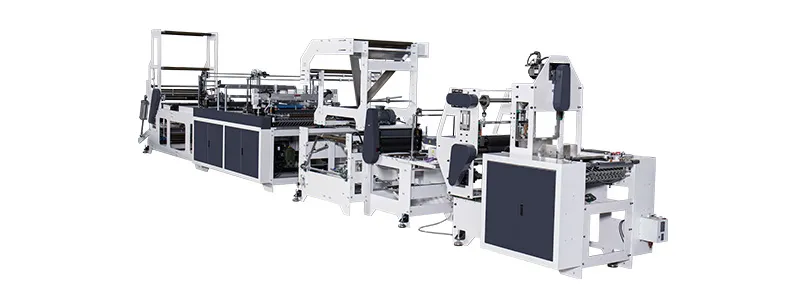
Once the seal orientation, cutting logic, lane count and film compatibility have been narrowed, the remaining step is to verify the specific model configuration against the bag specification at the edges of the film tolerance band. The LFFD family covers the large-format heavy-duty end with flying-knife cutting and dual-side wire sealing. The LDFP family covers the tensionless, seal-quality-critical end with double-line or multi-line feed and biodegradable film compatibility. The LDF family covers the high-volume multi-layer, four-line end where the bag specification is stable and the labor-per-bag economics dominate.
Each model page lists the bag width, producing length, film thickness range and speed that define the machine’s operating envelope. The full bottom seal model listing is the reference point for matching those envelopes to your bag specification. If the bag is a draw-tape format, the draw-tape configuration and folding integration are a separate decision within the same category, and the draw-tape and folding configuration illustrates how the film path and servo architecture change when a closure system is added.
Bottom Sealing vs Side Sealing Bag Machine
This article is part of Lingfeng Machinery’s technical content library. No direct sales or pricing information is included. All technical discussions aim to help you make informed purchasing decisions.



 EN
 ES
 AR