EN
EN
 ES
ES
 AR
AR


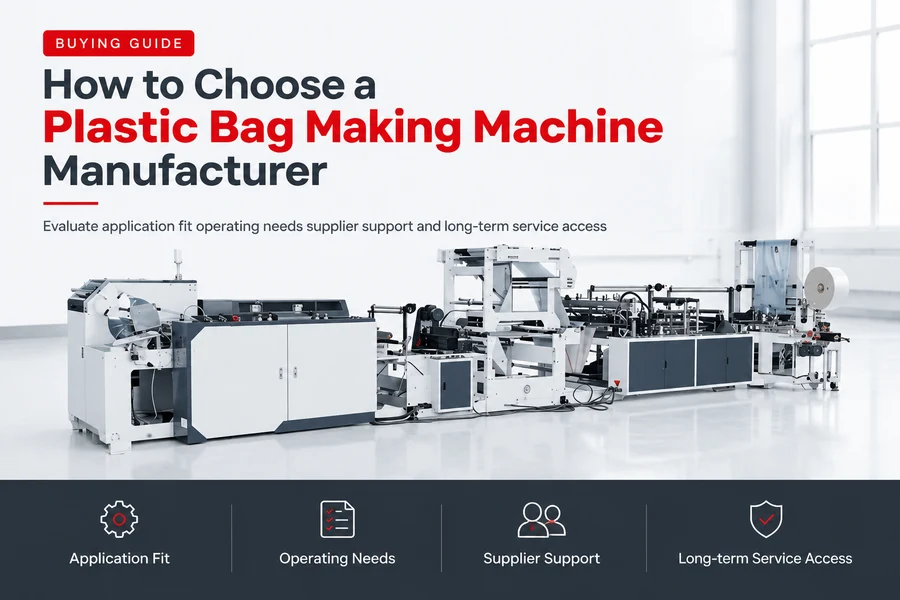
Article Overview: This guide is written for procurement and engineering teams assessing a plastic bag making machine manufacturer for a new or expanded converting line. It answers which requirements to document first, how to compare supplier fit, and what evidence to request before approval. The recommended path is a documented operating envelope, a comparable request for quote, and traceable verification. Evidence here is limited to published supplier comparisons, so quoted rates remain directional until your own trials confirm them.
What Defines the Operating Envelope of a Bag Making Machine?
The operating envelope is the documented combination of bag sizes, film types and gauges, seal and cut methods, output basis, and site conditions a machine must handle, and every supplier comparison should be measured against that record.
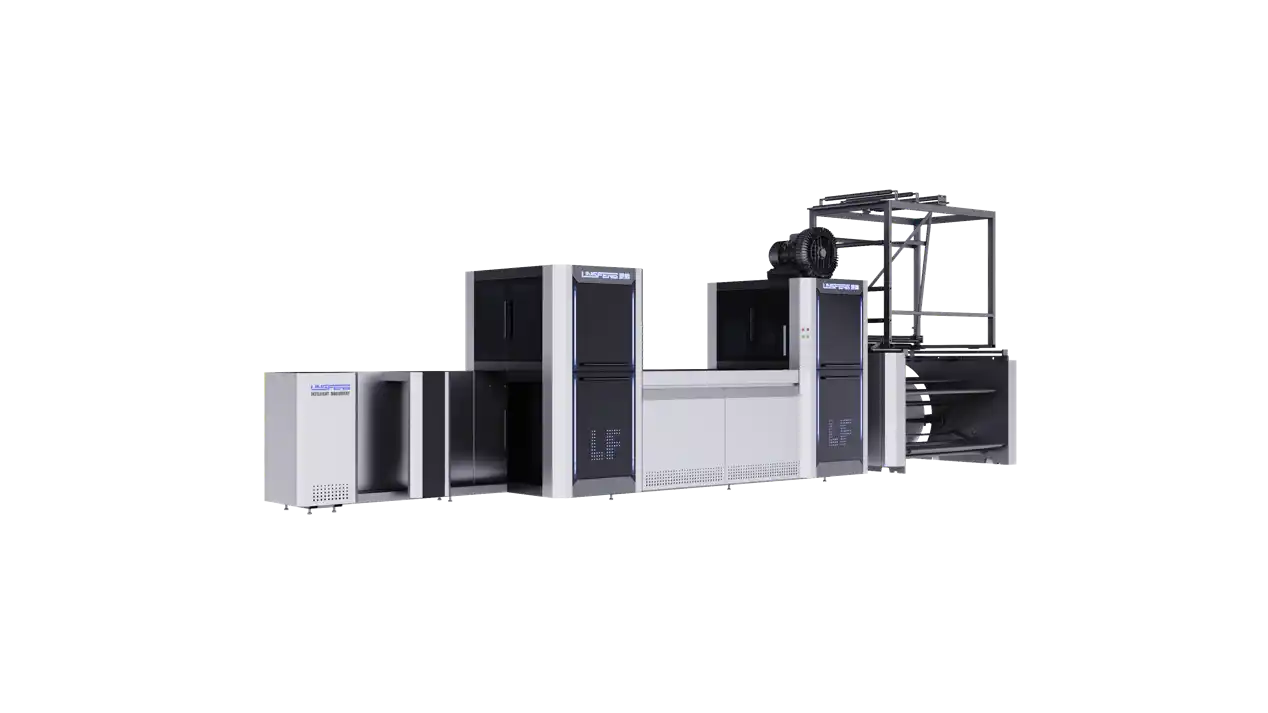
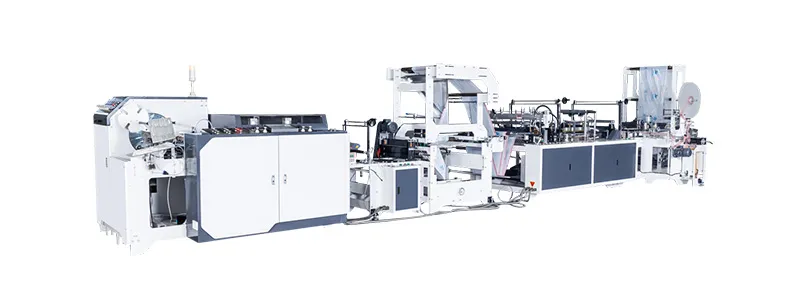
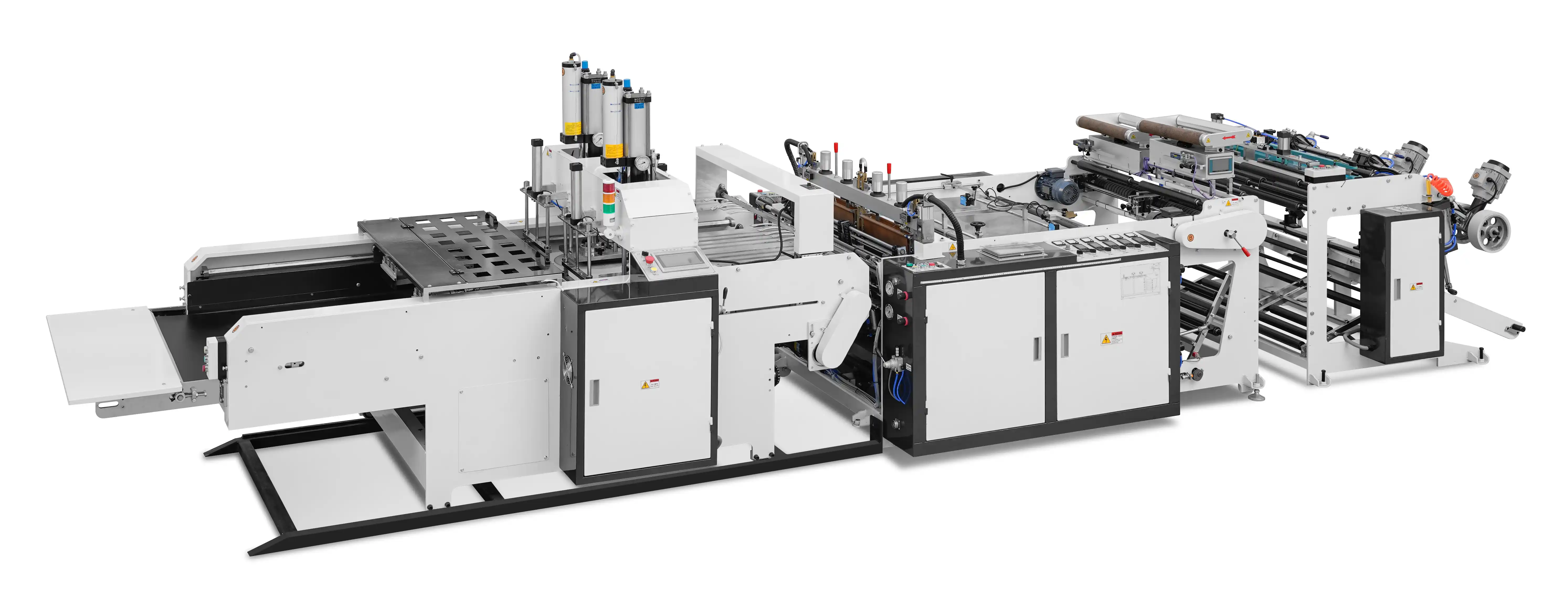
Sealing orientation is usually the first variable to fix because it determines bag geometry and film path. In a bottom sealing machine the seal is made perpendicular to the film flow; in a side sealing machine the seal runs parallel to it. That single difference changes which bag styles a line can produce, how the film is folded or tensioned, and whether the sealing system relies on a hot bar, a flying knife, hot air, or a hot knife. Cutting and perforation choices follow the same logic.
Published comparisons are useful at this stage because they show where each orientation is normally applied. A technical overview of bottom sealing versus side sealing bag machine designs, for example, associates bottom sealing with flat bags, trash liners, and produce bags, and side sealing with courier mailers, food pouches, and comparable pouch formats, while bags-on-roll lines form a separate category.
- Operating envelope
- The documented range of bag formats, film types and gauges, seal methods, and running conditions a line must cover.
- Changeover
- The work needed to move a line from one bag format to another, including tooling, parameter changes, and first-off approval.
- Acceptance criteria
- Written, measurable conditions that define pass or fail at the factory test and again at site commissioning.
- Traceable specification
- A parameter tied to a drawing number, revision, or controlled test record rather than a verbal description.
What Requirements Should Buyers Document First?
Buyers should document bag dimensions with tolerances, film type and gauge, seal and cut method, target output basis, changeover expectations, utilities, and the person who signs off acceptance, because these items decide which machine classes are even comparable.
Requirements documentation is what makes later quotations comparable. When a request lists only a machine name, suppliers answer different questions and price different scopes. When the same request states the format range, the film, and the rate basis, quotations can be placed side by side without guesswork. A practical first pass is to record the following.
| Requirement category | What to state | Acceptance evidence |
|---|---|---|
| Bag geometry | Width, length, gusset depth, handle or cut-out style, tolerance | Approved dimension drawing |
| Film | Resin type, gauge in micron or mil, gauge tolerance, recycled or compostable content | Trial records on the specified resin |
| Seal and cut | Seal orientation and method, knife type, perforation requirements | Sealed samples from the acceptance run |
| Output basis | Target rate, the bag size at which that rate is quoted, efficiency assumption | Rate test at the specified format and film |
| Changeover | Format range, tooling steps, target changeover window | Demonstrated changeover during the acceptance visit |
| Utilities and environment | Power supply, compressed air quality, floor space, ambient conditions | Signed site or utility checklist |
| Support | Spare parts list, response expectations, training, documentation language | Written service scope and parts lead times |
Capacity is often easier to state as a rate. One relationship that supports the conversion is Q = A / (H x E), where Q is the required machine rate in bags per hour, A is the annual good-bag requirement in bags per year, H is planned running hours per year, and E is overall line efficiency as a decimal. As a labeled hypothetical, a plant that must ship 5,000,000 good bags per year across 4,000 planned running hours at an overall efficiency of 0.75 implies a required rate of about 1,670 bags per hour. That figure then has to be checked against the format and film at which a supplier quotes its own rate, because quoted maxima normally apply to one narrow condition.
How Should Teams Compare Plastic Bag Making Machine Manufacturers?
Teams should compare suppliers across configuration and modularity, proven film compatibility, changeover and tooling support, and service responsiveness, scoring each dimension against the documented envelope rather than against purchase price alone.
Supplier fit is a capability question, not a preference question. Published market overviews, such as this guide to top plastic bag making machine manufacturers, are useful for building an initial shortlist, but the decisive evidence usually comes from how a supplier answers your specific requirement list. Four dimensions carry most of the weight.
- Configuration and modularity: whether the machine can integrate with existing extruders, printing lines, or bag collection equipment without a redesign.
- Film compatibility: documented runs on your resin, gauge, and gauge tolerance rather than a statement that the machine handles many films.
- Changeover and tooling: the number of steps, the tooling supplied, and how a format change is verified before full production.
- Service and spares: named spare parts with lead times, remote diagnostic support, training scope, and the language of the documentation.
Throughput deserves particular attention. Vendor-published comparisons in this category report figures such as up to about 120 bags per minute for a single-lane line and 200 to 300 bags per minute for a double-lane line. Those numbers are meaningful only when the bag size, film, and efficiency basis are stated, so ask each supplier for the conditions behind its quoted rate and record the answer next to the figure.
What Evidence Should Be Requested Before Approval?
Before approval, request drawing-level specifications, trial data on your own resin, a spare-parts list with lead times, named reference installations, and a written acceptance test procedure that defines pass or fail.
Evidence differs from assurance. A specification sheet, a sample bag, and a reference contact can all be checked by someone other than the salesperson making the claim. Where a supplier cannot produce a document, treat the parameter as unverified and either exclude it from the decision or make it a contractual condition with a defined remedy. It also helps to separate what is sourced, what is inferred, and what is assumed: a supplier's published comparison is sourced material, an extrapolation from one bag format to another is inference, and any projected output for your plant is an assumption until a trial supports it.
Where trial material is unavailable before order placement, an alternative is to make the trial a milestone: a factory acceptance run on the specified film, with sealed samples retained, followed by a site commissioning test under production conditions. That structure keeps the decision moving while leaving a verifiable checkpoint.
Pre-Purchase Checklist and Approval Workflow
The workflow below converts a requirement list into a documented approval. It assumes the operating envelope has been agreed internally and that a shortlist exists; adjust the sequence if your organization runs supplier qualification before technical review.
Step 1: Freeze the operating envelope
Record the format range, film types and gauges, seal and cut methods, and required output basis in one controlled document. Outcome: every later comparison references the same baseline.
Step 2: Issue a comparable request for quote
Send the same requirement matrix, acceptance criteria, and documentation language to each supplier. Outcome: offers can be compared line by line instead of narrative by narrative.
Step 3: Verify evidence, not statements
Request drawings, trial data, spare-parts lead times, and reference contacts, and confirm each item against the matrix. Outcome: unverified parameters are visible before negotiation rather than after installation.
Step 4: Approve with a defined acceptance test
Attach the acceptance test to the order and name the sign-off authority. Outcome: handover has an objective pass or fail condition.
Reading material that already exists in the category can shorten step one, because many format and film questions have been covered in detail. The blog on bag making equipment collects those technical comparisons, procurement checklists, and material guides in one place, which is often faster than rebuilding the requirement list from scratch.
FAQ
Should a purchase decision rest on a quoted maximum speed?
No. A maximum speed is normally measured on one bag size, one film, and ideal conditions. Treat it as a ceiling rather than a planning rate, and ask for the format, film, and efficiency basis behind it. The rate you can plan against is the verified output at the bag you actually sell, confirmed during an acceptance run, not the headline number in a brochure.
How many supplier quotations are needed for a defensible comparison?
There is no fixed number, but three or more responses to the same requirement matrix usually expose differences in scope, tooling, and support that two offers can hide. The deciding factor is comparability rather than count: quotations answering different questions cannot be ranked, however many are collected.
What should a buyer do when a supplier will not release trial data or references?
Treat the missing items as unverified parameters and either remove them from the decision or convert them into contractual conditions with a defined remedy. If film compatibility or output is central to your business case, the absence of trial evidence is itself decision-relevant information, and it is normally safer to keep evaluating alternatives than to assume performance.
Is a factory acceptance test practical for a single machine order?
Yes, and it is usually simpler than a site-level dispute later. A short run on the specified film, sealed samples retained by both parties, and a signed checklist covering format, dimensions, seal checks, and safety functions give both sides an objective record before shipment and simplify commissioning.
Conclusion: Decide on Documents, Not Impressions
Choosing a plastic bag making machine manufacturer is a documentation exercise before it is a negotiation. Buyers who fix the operating envelope, issue one requirement matrix to every supplier, and request drawings, film trial data, spare-parts lead times, and references are comparing equipment rather than sales material. Vendor-published figures, including the throughput ranges cited above, stay directional until a trial on your own film confirms them. The practical rule is simple: every parameter that affects output, quality, or uptime should be traceable to a document, and every claim that cannot be traced should be treated as an open item rather than a settled fact.