EN
EN
 ES
ES
 AR
AR


Article Overview: This guide helps technical buyers, procurement managers, and operations leaders compare Lingfeng Machinery bag-making options on consistent criteria before issuing an RFQ. The reliable decision sequence is to freeze product geometry and film resin, compare machine families, then filter suppliers on documented evidence. It defines the main configurations, summarizes trade-offs, maps options to operating conditions, and identifies the supplier evidence that should confirm a shortlist. Conclusions are drawn from published Lingfeng Machinery machine comparison and procurement guides rather than from independent laboratory testing.
Which Lingfeng Machinery Options Should Buyers Compare?
Compare machine families before comparing suppliers: bottom-seal versus side-seal geometry and single-line versus double-line lane counts are the primary options. Defining the family that matches your intended bag style lets speed, film compatibility, and changeover be scored on the same basis.
When evaluating Lingfeng Machinery equipment, the useful comparison is product geometry first, model name second. Bag style constrains the machine family: T-shirt and vest bags are produced on bottom-seal lines, pouches and gusseted formats are commonly side-sealed, produce and garbage bags are often run on bags-on-roll machines, and specialty bags may need hot-air or hot-knife sealing. If you cannot name the bag style, specification sheets will not tell you which machine is relevant.
- Bottom-sealing machine
- Creates a seal across the film path to produce flat bags, trash liners, or produce bags. It may use a hot bar for stationary sealing or a flying knife for continuous-motion sealing, and film tension must stay stable to keep the seal square.
- Side-sealing machine
- Seals along the film path to build pouches, gusseted bags, courier mailers, or medical waste bags. Film is usually folded before sealing, so the unwind and folding section define the final format.
- Single-line machine
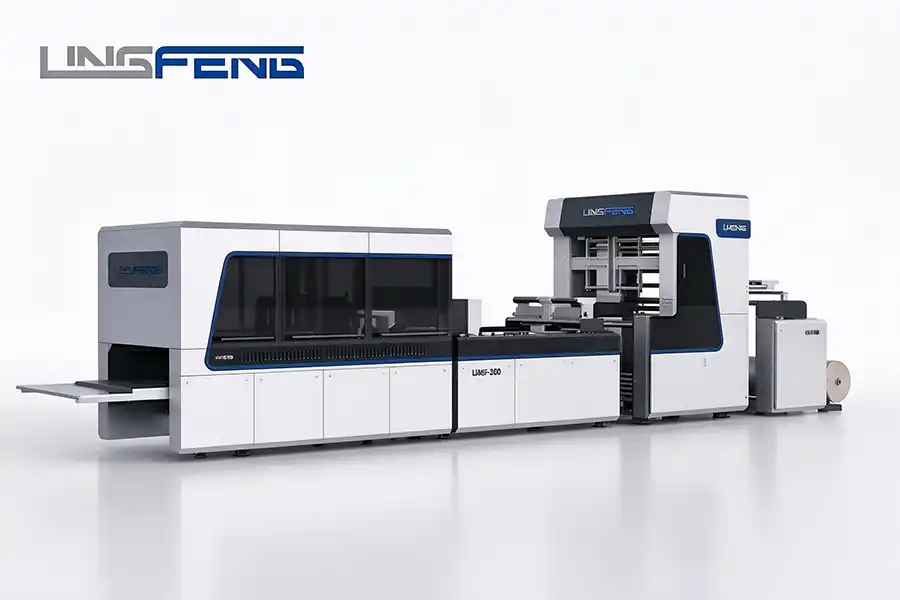
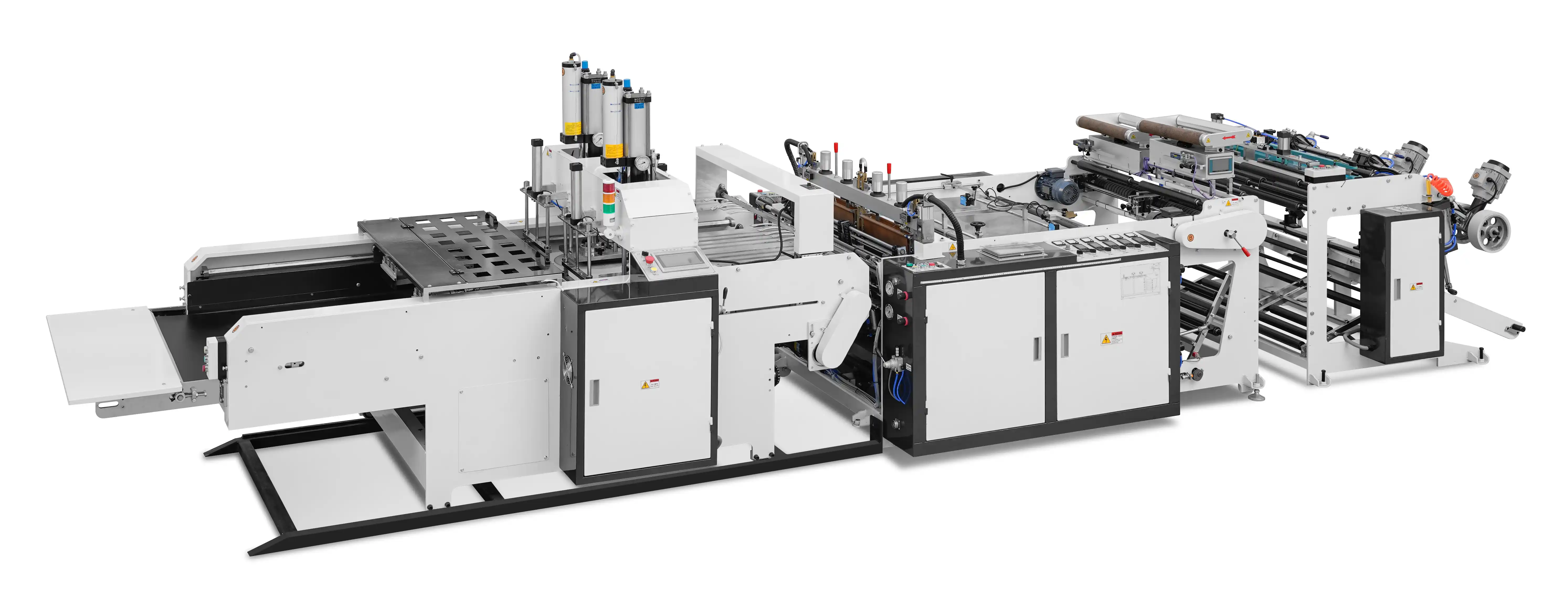
- Processes one lane at a time. Published T-shirt bag line guidance lists speeds up to 120 bags per minute with simpler setup and less complex controls.
- Double-line machine
- Processes two synchronized lanes and is described in published comparisons at 200-300 bags per minute without requiring twice the floor area; coordinated drives call for more advanced operator training.
- Bags-on-roll and specialty lines
- Produce continuous perforated bags wound on rolls, or convert heavier films, biodegradable blends, and custom handles. Evaluate these separately when those formats dominate the order book.
The Lingfeng Machinery blog organizes these machine families by bag style and covers sealing method differences and output ranges. Apply the same comparison dimensions to any option: nominal output at your film thickness, sealing and cutting architecture, usable resin range, and changeover complexity. If these dimensions are not fixed before quotation, supplier returns may not be comparable.
What Are the Main Lingfeng Machinery Trade-Offs?
Trade-offs center on throughput versus simplicity, floor area versus mechanical complexity, and seal geometry versus product flexibility. Double-line machines reach 200-300 bags per minute; single-line machines reach up to 120 with simpler changeover and training.
The first trade-off is lane architecture. A double-line machine consolidates two webs in one frame, and published output for T-shirt bag production is 200-300 bags per minute compared with the single-line upper bound of 120. What changes is control-system depth: synchronized drives require advanced troubleshooting and operator training. For plants with long stable runs, the added hourly output is worth that complexity only when utilization is consistently high.
The second trade-off is sealing orientation. A bottom seal runs across the web to produce flat and T-shirt bags; a side seal runs along the web to create pouches and gusseted formats. Do not treat the two as adjustable settings on one platform. They use different film paths, folding sections, and seal-bar designs, so if your future product mix includes both formats, ask the supplier to document how migration is handled.
The third constraint is film resin. HDPE favors stiffness and lower material cost; LDPE favors softness and tear resistance; PLA or PBAT blends offer compostability but change temperature profile, knife release, and achievable line speed. A line quoted for LDPE is not automatically fit for PLA/PBAT, so the RFQ should name the resin family and expected thickness range.
- High sustained volume favors double-line machines.
- Frequent format changes favor single-line configurations and simple tooling.
- Mixed resin runs favor suppliers who demonstrate runs on each declared film.
Non-comparable quotes often start with a one-line request for a bag machine and no bag dimensions, film thickness, or resin name. Specifying product geometry and film first lets the trade-offs above weight each supplier response on the same scale.
Each machine builder applies these trade-offs differently, so capability verification is part of the comparison. When the trade-off analysis leaves a shortlist, work through the verification criteria in the guide to choosing a plastic bag making machine manufacturer before asking for final quotes.
Which Lingfeng Machinery Option Fits Each Operating Condition?
No single configuration wins across all plants. Sustained T-shirt bag orders fit double-line layouts, mixed flat bag jobs fit single-line bottom-seal units, pouch and courier work fits side-seal lines, and compostable programs fit only with documented process support for the exact resin.
The matrix below shows conditional fit rather than ranking. It names configurations to evaluate and the verification each condition requires.
| Operating condition | Configuration to evaluate | Verification required |
|---|---|---|
| Sustained high-volume T-shirt or vest bag production | Double-line bottom-seal T-shirt machine | Documented output at your bag size and film gauge; operator training plan |
| Low-to-medium flat bag volumes with frequent size changes | Single-line bottom-seal machine | Changeover time; seal alignment at varied film tension |
| Courier mailers, pouches, or gusseted products | Side-seal machine with folding section | Trial runs on your exact web width and seal temperature |
| Trash liners, produce bags, or drawstring bags on rolls | Bags-on-roll or continuous perforation line | Perforation strength and roll winding consistency |
| Biodegradable or PLA/PBAT blend programs | Standard line configured for the resin | Documented production data including line speed and knife settings |
Operating fit also depends on utilization. Consider a hypothetical case where a converter evaluates a double-line machine because one retail customer wants LDPE T-shirt bags in large volumes. If that order runs several shifts at a steady gauge, double-line output may justify its advanced controls and higher maintenance profile. If the same plant changes gauge weekly and serves many short orders, setup time during changeovers can erase the throughput advantage. This example is for planning only, not a performance promise.
What Supplier Evidence Should Influence the Comparison?
Evidence should count heavily once machine dimensions are equal. Compare documented material runs on your film, measured changeover times, spare parts lead-times, and training scope, not brochure speed. These artefacts distinguish two otherwise equal proposals.
Phase 1: Freeze product and film specification
Record bag width, length, gusset depth, film thickness and tolerance, and resin or blend ratio. Output figures from different bag sizes are not comparable.
Phase 2: Score only similar machine architectures
Separate bottom-seal from side-seal responses and single-lane from double-lane responses. Score each group on output, footprint, and operator requirements.
Phase 3: Require documented runs
Ask suppliers to demonstrate production with your declared film at a stated line speed. If your program includes PLA/PBAT, request evidence of how temperature and knife settings were adjusted.
Phase 4: Compare service, spares, and installation conditions
Clarify response times, spare parts availability, installation supervision, and training. These factors determine downtime after commissioning.
Because response fields determine comparability, use a bag making machine procurement checklist to align every bidder on the same specifications, evidence, and deliverables. That checklist turns the phases above into repeatable RFQ questions.
FAQ
Which Lingfeng Machinery configuration suits a first flat-bag production line?
For a first line with limited operator experience, a single-line bottom-seal machine is usually evaluated before a double-line design. It produces flat bags and T-shirt bags at up to 120 bags per minute with simpler controls and lower training effort. A double-line machine only earns consideration when order volume is already steady.
Can one machine produce bottom-sealed flat bags and side-sealed pouches?
Typically no; bottom-seal and side-seal machines use different seal orientations and film paths. Requesting both formats on one frame is possible only if the supplier can document a hybrid configuration. Ask for reference installations and written changeover data before treating the machine as flexible rather than dedicated.
Why does film type change the quote in a Lingfeng Machinery comparison?
HDPE, LDPE, and PLA/PBAT blends behave differently during sealing and cutting. A machine optimized for LDPE may not reach the same speed on compostable films, and knife release changes for PLA/PBAT. Quote documents should name exact resins and thickness bands, or supplier prices cannot be compared.
Is nominal speed the most important criterion?
Speed matters, but so do changeover time, scrap rate, and film compatibility. A double-line machine's published range of 200-300 bags per minute is meaningful only when the run is long enough to recover setup and downtime. Triangulate output with planned utilization before ranking proposals.
Conclusion: Compare Configuration First, Then Supplier Evidence
Comparing Lingfeng Machinery options becomes repeatable when the sequence is stable:
- Classify your products by bag style and film resin.
- Choose the relevant machine family, from bottom-seal to side-seal and from single-lane to double-lane.
- Apply identical scoring dimensions to every quotation.
- Use documented runs, service scope, and spare parts availability as the final filter.
The right configuration is the one whose operating profile matches the plant's run lengths, resin mix, and operator skill level. No supplier should be selected on nominal output alone; validated production evidence should guide the final decision.