EN
EN
 ES
ES
 AR
AR


Article Overview: This article helps CTOs, technical architects, and procurement teams evaluate bag on roll making machine selection without declaring a single winning configuration. It explains how to turn operating requirements into selection criteria, which trade-offs matter most, and what evidence to verify before ordering, using published vendor comparison and procurement guides as the evidence boundary.
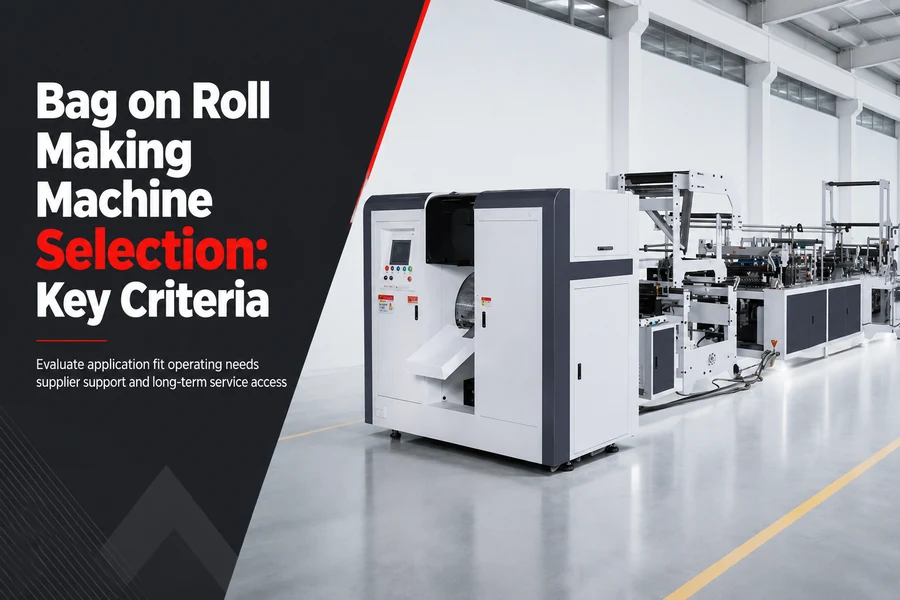
How Should Buyers Approach Bag on Roll Making Machine Selection?
Start by documenting bag geometry, film specifications, sustained line speed, roll format, and changeover frequency. Use those operating requirements to build a measurable scorecard, then compare machines and supplier evidence against the same criteria.
Bag on roll making machine selection is a decision framework, not a product search. Published equipment guides identify bags-on-roll making machines as continuous perforated bag lines for produce bags, garbage bags, and drawstring bags. That product range means the finished bag width, length, perforation pattern, and roll core dimensions should be defined before evaluating any supplier.
Begin with the order profile. Estimate average order size, number of bag sizes per month, film types, and required rolls per shift. This profile determines whether you need a dedicated high-speed line or a flexible multi-size machine. It also gives procurement a defensible basis for asking suppliers to run the same reference product.
Create a shortlist of no more than three or four equipment configurations. A shortlist keeps comparisons manageable and forces the evaluation committee to score the same evidence across vendors. Record assumptions about film density, bag length tolerance, and roll winding tension before the first supplier meeting.
Comparing by criteria rather than by brand is especially important in a market where the same machine name can describe different configurations. Hypothetically, two suppliers may call their equipment a bag-on-roll machine while offering different sealing systems, perforation patterns, and maximum roll diameters. The scorecard forces those differences into the open.
Bag on Roll Making Machine Selection Criteria to Define Before RFQ
Translate operating requirements into measurable criteria before issuing an RFQ. The list below is a starting point for a weighted scorecard, not a universal specification.
- Bag geometry and roll format
- Define bag width, length, gusset depth, perforation spacing, core diameter, and maximum roll outer diameter. These values determine the sealing, cutting, and winding components.
- Film type and thickness range
- Specify HDPE, LDPE, or biodegradable blends such as PLA/PBAT, along with thickness tolerance. Material choice affects seal temperature, knife behavior, and achievable line speed.
- Sustained throughput
- Define bags per minute and rolls per shift at your actual film thickness and bag length. Prefer evidence of sustained output over peak nameplate speed.
- Seal and perforation quality
- Define acceptance criteria for seal strength, perforation tear-off consistency, and registration when printed film is used.
- Changeover and maintenance
- Estimate how often you will change bag length, roll core, or film roll, and request a documented changeover procedure with time.
Use the same criteria for every supplier so quotes can be compared on an equal basis. For a step-by-step version of this process, review the bag making machine procurement checklist before sending the RFQ.
Do not stop at the criteria list. Add installation constraints such as available floor space, electrical supply, compressed air, and operator headcount to the RFQ. These constraints often eliminate a configuration faster than price does, so they need to be documented before the first quote arrives.
An RFQ cannot be too detailed. Missing parameters lead suppliers to interpret the same requirement differently, and that difference becomes visible only after installation. The evaluation committee should read the RFQ from the supplier's perspective before sending it.
Which Bag-on-Roll Machine Trade-Offs Matter Most?
No single configuration wins because trade-offs depend on product mix, film behavior, and operator capability. The key choices balance throughput against changeover flexibility, sealing system against film compatibility, and machine complexity against maintenance resources.
Hypothetical comparison: Throughput versus changeover flexibility
Option A: A dedicated line with fixed bag length and roll format may maximize output for one product family.
Option B: A flexible machine with adjustable length settings can handle frequent changeovers but may have a lower sustained peak speed.
Buyer note: For a hypothetical processor with long stable runs, weight throughput higher; for a hypothetical job shop with short orders, weight changeover time higher.
Sealing system versus film compatibility
Option A: A hot-bar sealing module is commonly associated with stationary sealing and suits many polyethylene films.
Option B: A flying-knife or hot-knife module supports continuous-motion sealing but makes film tension and knife wear more critical.
Buyer note: Ask for documented runs with the film structure you actually use, especially for biodegradable blends or printed film.
Mechanical simplicity versus production flexibility
Option A: A mechanically simpler line is often easier to maintain and troubleshoot, which may reduce downtime in remote locations.
Option B: A configuration with more automated adjustment may reduce changeover time but adds controls complexity that affects operator training and spare-part planning.
Buyer note: Match machine complexity to local maintenance capability and service response.
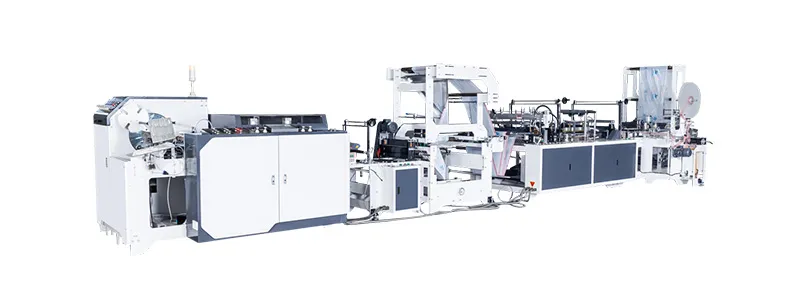
For a broader view of line types, see this technical comparison of bags-on-roll making machines.
Physical constraints also shape trade-offs. Floor space, power capacity, and roll handling equipment can make a nominally faster machine impractical. Include these constraints in the scorecard as pass-fail gates before comparing throughput and changeover flexibility.
As a general operating relationship, higher speed tends to require tighter tension control; depending on film thickness and elasticity, this can affect perforation consistency. Buyers should ask the supplier to identify the speed range where seal and perforation quality remain stable rather than only quoting a maximum speed.
What Should Buyers Verify Before Ordering?
Verify material compatibility, sustained throughput, seal quality, and after-sales support before ordering. Require suppliers to demonstrate each claim on your actual film and bag format through documented reference runs or an acceptance test.
Step 1: Request a reference run
Ask the supplier to run your film or a film with identical specifications, and record line speed, seal temperature, waste, and bag dimensions.
Step 2: Inspect sample rolls
Check perforation tear-off, seal strength, roll winding tension, and roll diameter consistency against the agreed acceptance criteria.
Step 3: Validate changeover evidence
Ask for a documented changeover procedure and measured time from a recent customer installation or a witnessed test.
Step 4: Confirm after-sales support
Define response time, spare parts availability, training scope, and remote diagnostic access in the purchase contract.
Reference runs are only one form of evidence. If the supplier cannot run your film, request a completed customer installation with a comparable film structure and contact that customer for an operating reference.
A supplier video is useful for understanding machine layout, but it is not equivalent to a witnessed run because line speed, waste, and film quality may be edited or staged. Treat videos as a starting point, not acceptance evidence.
Building a Weighted Scorecard for Bag on Roll Making Machine Selection
A weighted scorecard makes trade-offs visible and prevents the evaluation committee from relying on memory or supplier charisma. Define the criteria, assign weights based on your order profile, and score every vendor against documented evidence.
- Assign a weight to each criterion from the earlier list, ensuring the weights total 100 percent.
- Score each supplier independently from reference runs, installation lists, and contract terms.
- Reject any proposal that does not commit to an acceptance test with your film.
- Revisit weights after the first comparison if a new constraint, such as floor space or power supply, appears.
Supplier evaluation should follow the same rigor described in how to evaluate a plastic bag making machine manufacturer. This helps procurement separate equipment performance from commercial promises.
After scoring, conduct a site visit or remote live demonstration. The purpose is not to see the machine run; it is to watch how operators handle changeovers, how the supplier manages waste, and whether the line stops during the demonstration. Record observations against the same scorecard used for paper evidence.
FAQ
What is a bag-on-roll making machine?
A bag-on-roll making machine converts film into continuous perforated bags wound on a roll, typically for produce bags, garbage bags, and drawstring bags. The machine combines sealing, perforation, and winding in one line, and selection depends on bag geometry, film type, and roll format.
Can one bag-on-roll machine run HDPE, LDPE, and biodegradable film?
Material compatibility depends on the sealing system, temperature control, knife configuration, and tension control. HDPE offers stiffness, LDPE provides softness and tear resistance, and biodegradable blends introduce processing challenges. Do not assume compatibility; request a documented run with each film type you plan to process.
Should buyers require an acceptance test before payment?
An acceptance test is a practical verification step, but it should be defined in the purchase contract before payment terms are finalized. Specify the film, bag dimensions, line speed, and quality checks that will be used, and agree on what happens if the machine fails the test.
Conclusion: Bag on Roll Making Machine Selection Is a Criteria-Driven Process
Bag on roll making machine selection improves when buyers define operating needs, translate them into measurable criteria, and verify supplier evidence before ordering. No single configuration is universally superior; the correct choice depends on product mix, film compatibility, changeover frequency, and maintenance capability. Use a weighted scorecard, request reference runs, and put acceptance tests into the contract.