EN
EN
 ES
ES
 AR
AR


Article Overview: This decision framework helps technical buyers, procurement teams, and architects define verifiable criteria for a biodegradable bag making machine. It connects operating requirements to machine trade-offs, prescribes evidence-based pre-order checks, and avoids treating any supplier configuration as universally superior. All conclusions stay within published machine comparison and procurement guidance from the Lingfeng Machinery blog.
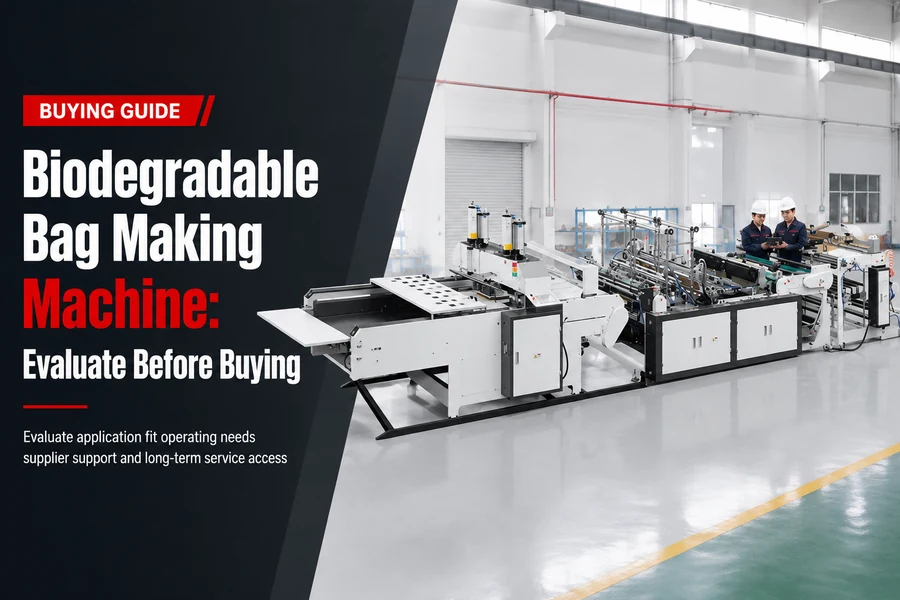
How Should Buyers Choose a Biodegradable Bag Making Machine?
Translate operating requirements into selection criteria: film type and thickness, bag geometry, sealing configuration, output target, changeover speed, and documented compatibility with biodegradable resins before comparing quotes.
The first decision is not which machine to buy; it is which film the machine must run. The HDPE LDPE PLA production comparison on this site states that PLA/PBAT blends deliver compostability but introduce processing challenges. Each resin type requires specific temperature profiles, knife configurations, and line speed settings. A machine described as suitable for plastic film is not evidence that it runs biodegradable resins at a commercially acceptable speed.
Before contacting suppliers, define your operating zone: minimum and maximum bag width, bag length, film thickness, roll diameter, and operator count per shift. These inputs determine which machine options are feasible. If your product mix includes thin and thick film, document both ends of the range. The plastic bag machine types guide on this site distinguishes machines by sealing and cutting mechanisms, which matters because the sealing mechanism determines how much heat is applied and how easily the film releases from the tooling.
Changeover flexibility is often underweighted. If the same machine will alternate between bottom-seal shopping bags and side-seal pouches, the sealing bar layout, film tension controls, and cutting tooling may all need adjustment. Write down the number of size changes per week and the acceptable setup time; a machine with quick-release tooling and motorized adjustments can justify a higher purchase price when changeovers are frequent.
Supplier qualification follows the same logic used for conventional bag machines. For a general supplier evaluation method, the T-shirt bag making machine manufacturer buyer's guide explains how to assess build quality, spare parts support, and production references. For a biodegradable line, apply that discipline but insist on film-specific evidence rather than generic plastic film references.
Do not let a quoted bags-per-minute figure dominate the decision. Rated output is usually tied to a specific film width and gauge; the same line running a thicker biodegradable blend may deliver less. Ask the supplier to state output at your reference film, not at the machine's maximum mechanical speed.
Which Biodegradable Bag Making Machine Trade-Offs Matter Most?
The trade-offs that matter most are material compatibility against rated output, seal integrity against film sticking, and machine simplicity against changeover flexibility. Rank these against your production plan before reading quotes.
Material compatibility vs. quoted speed
Generic plastic film machine: In a common hypothetical, a supplier quotes output based on HDPE or LDPE film, where sealing and cutting are well understood. The same speed is not guaranteed for biodegradable blends.
Biodegradable-tuned machine: Lower rated speed but tighter temperature control and anti-stick sealing surfaces reduce waste and rework during longer runs.
Buyer note: Ask the supplier to name the film, micron, and line speed used in the quoted output. If those fields are empty, treat the number as unverified.
Sealing configuration vs. bag geometry
Bottom sealing: Creates a transverse seal and suits flat bags and vest-style bags, but film tension is critical to maintain seal alignment.
Side sealing: Creates a parallel seal and fits pouches and gusseted bags, often using hot air or hot knife sealing.
Buyer note: Confirm the sealing method can handle the melt-flow behavior of biodegradable resins such as PLA/PBAT, which may stick to heated bars if dwell time is poorly controlled.
Capacity versus operator complexity is another trade-off. The single line vs double line t-shirt bag machine comparison illustrates that a double-line machine can increase output per floor area but requires more advanced controls and operator training. A double-line configuration is more attractive when order volumes are stable and maintenance staff can service two synchronized lanes. In a hypothetical small-batch product mix, the added setup complexity can erase the throughput gain.
Material choice also affects knife wear. The HDPE LDPE PLA production comparison notes that each resin type requires specific knife configurations and line speed settings. If a supplier does not specify the configuration for your biodegradable resin, you may face frequent blade cleaning or downtime during production. Include knife material and cleaning access in the comparison.
For a neutral method of comparing seal orientation, film waste, throughput, and maintenance, the t-shirt bag machine comparison criteria provide a structured framework that also applies to biodegradable film lines.
What Should Buyers Verify Before Ordering a Biodegradable Bag Making Machine?
Verify documented material runs, seal strength samples, changeover procedures, spare parts availability, and written acceptance criteria for speed and waste. Require supplier-run evidence on your film before signing.
Step 1: Define the acceptance film
Document the resin blend, micron range, bag size, and handle style. This specification becomes the reference for every trial and acceptance test.
Step 2: Request a documented trial protocol
Ask the supplier to run your film on the exact machine model you are buying. The trial should record output, waste, seal strength, and knife temperature. Keep the protocol in the RFQ so every supplier measures the same variables.
Step 3: Validate changeover and operator training
Verify how long a size change takes, which tools are required, and how many operators are needed. A detailed T-shirt bag machine procurement and evaluation guide can expose gaps between a supplier's promise and the line's demonstrated behavior.
Step 4: Put acceptance criteria in writing
Include output speed, waste percentage, seal strength, and spare parts response time in the contract, and define test conditions so both parties measure the same thing.
Acceptance tests should also cover edge cases. In a hypothetical line producing both 20-micron and 40-micron film, run the trial at both extremes rather than only at the middle. A machine that seals only the thick gauge may fail on thin film, where heat transfer changes and film tension becomes harder to control.
Keep the evidence trail in the RFQ: film supplier certificate, trial date, machine serial number, and operator name. This protects both parties if the machine later does not meet the promised performance.
The absence of a documented trial is not a reason to assume failure; it is a reason to ask for one. In a hypothetical order where two suppliers quote the same speed, the supplier who offers a film trial on your resin provides more decision-relevant evidence.
Pre-Purchase Checklist for a Biodegradable Bag Machine RFQ
Use this checklist before issuing an RFQ or signing a contract. It consolidates the selection criteria and verification steps from the previous sections.
- Film and resin specification: resin type, blend ratio, micron range, roll width, tolerance.
- Bag geometry: bag style, dimensions, handle type, sealing orientation.
- Output requirement: target bags per minute, shift pattern, planned utilization.
- Material compatibility evidence: supplier-run trial with your film, documented speed and waste.
- Seal and cutting system: temperature range, knife type, anti-stick features for biodegradable films.
- Changeover process: tooling requirements, setup time, operator skill level.
- After-sales support: spare parts availability, remote troubleshooting, training schedule.
- Acceptance terms: written criteria for output, waste, seal strength, and test conditions.
Turn this checklist into a structured RFQ section so each supplier must respond to the same fields. Store the trial data with the purchase contract so the acceptance criteria remain auditable after installation.
FAQ
Can a standard bag machine be converted to run biodegradable film?
Sometimes, but conversion may require new sealing bars, temperature controls, and knife configurations. In a hypothetical conversion, the supplier should provide a retrofit proposal with documented trial results on your film before you commit. If no evidence is offered, consider a machine designed specifically for biodegradable resins.
What film tests should be included in a biodegradable bag machine trial?
At minimum, record seal strength, output speed, film waste, and temperature settings for your resin. Test across the expected micron range, not just at the thickest gauge, because thinner film changes heat transfer and cutting behavior. Keep the trial protocol in the RFQ so all suppliers run comparable tests.
How should procurement teams compare quotes from different biodegradable bag machine suppliers?
Standardize the RFQ by requiring the same film, bag size, output target, and acceptance test. The manufacturer evaluation and comparison guides can help align supplier responses. Treat any quote without specified film conditions as non-comparable, regardless of price or delivery promise.
Conclusion: Evaluate by Evidence, Not Labels
Choosing a biodegradable bag making machine begins with the film you will run and ends with written acceptance criteria. Compare suppliers on documented material compatibility, sealing behavior, changeover feasibility, and output under your exact operating conditions. This decision framework helps procurement teams replace generic claims with auditable evidence.