
Article Overview: This article provides an analytical framework for comparing t-shirt bag making machines. It covers core evaluation criteria, sealing and automation trade-offs, film compatibility considerations, and operational risks, helping procurement teams and technical architects make informed purchasing decisions.
Contents
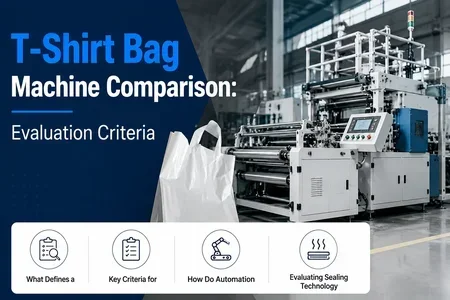
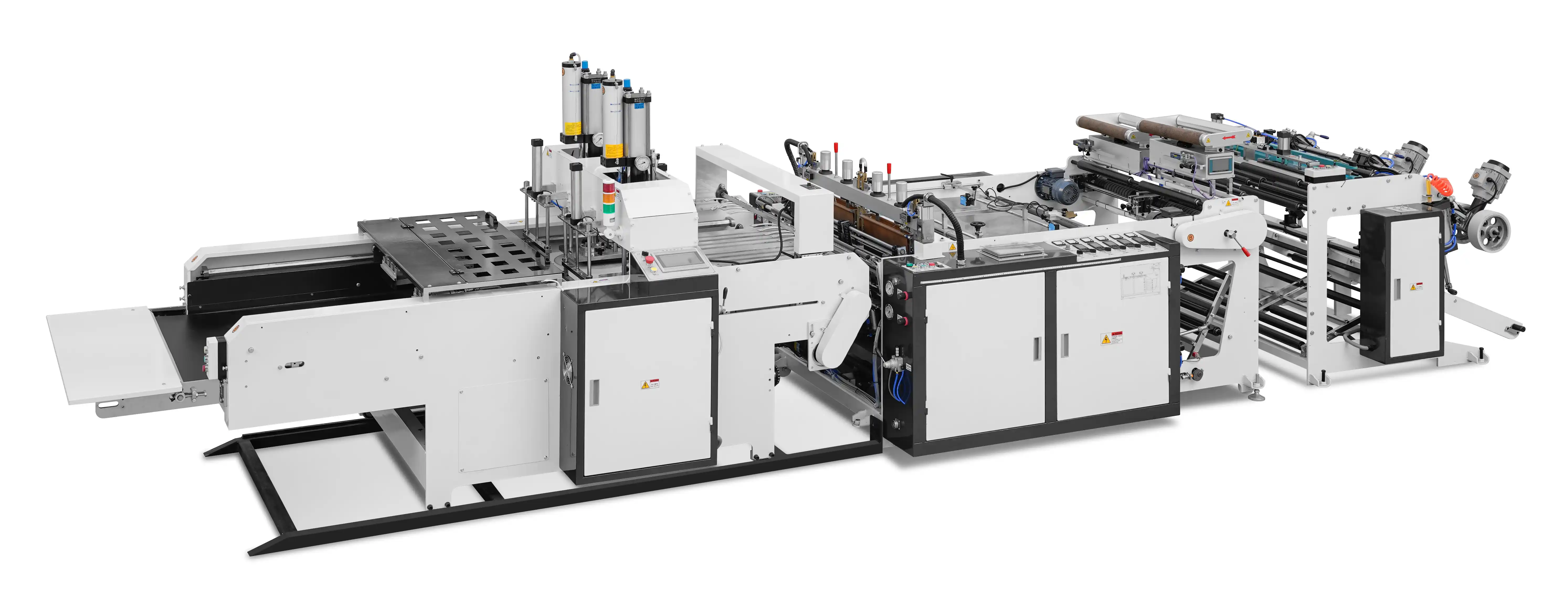
A t-shirt bag making machine is a specialized piece of plastic bag production equipment designed to produce bags with a cut-out handle, commonly used in retail and grocery applications. The machine typically takes blown film, performs sealing, cutting, and handle punching in a continuous process. While the basic function is consistent, significant variations exist in sealing mechanism, automation level, line speed, and film handling capability. These differences directly affect output quality, operating costs, and long-term reliability.
Buyers should first establish whether they need a standalone unit or an integrated line. For example, some lines combine blown film extrusion and bag making, while others require separate bottom sealing bag making machines or side sealing machines for different bag styles. Understanding the complete production workflow is essential before comparing individual machines.
When evaluating t-shirt bag making machines, consider the following dimensions. Each criterion involves trade-offs that must align with your production volume, material specifications, and budget.
| Criterion | Option A | Option B | Buyer note |
|---|---|---|---|
| Sealing mechanism | Hot knife | Servo impulse | Test with your film; impulse preferred for multi-layer or biodegradable. |
| Max line speed (bags/min) | Varies by configuration | Varies by configuration | Ask for certified test data under your bag dimensions. |
| Film width range | Up to 800 mm | Up to 1000 mm | Ensure covers your most common bag sizes. |
| Automation features | PLC with touch screen | Basic relay control | Fully PLC simplifies changeover but requires technician training. |
| Power consumption | Depends on line setup | Depends on line setup | Request annual kWh estimate for your production volume. |
In the table above, Option A and Option B represent typical configuration bundles. Actual specifications vary by manufacturer and customizations. Always request a detailed specification sheet and conduct on-site testing when possible.
Automation is often the deciding factor for high-volume operations. Fully automatic T Shirt Bag Making Machines with servo-driven sealing and automatic tension control can maintain consistent bag dimensions over long runs. However, the initial investment is higher, and the need for skilled maintenance staff can be a hidden cost.
Semi-automatic machines require more manual intervention—operators must align film rolls manually and monitor seal integrity. This is acceptable for short runs or prototyping but leads to fatigue and inconsistency in 24/7 production. Some buyers opt for a mixed approach: one fully automatic line for high-volume standard bags and a simpler machine for specialty orders.
Consider also whether the machine supports automatic roll changing. As noted in our related article on bags on roll making machines, automated winding reduces downtime and material waste—a feature worth evaluating for continuous production.
The sealing system is the heart of any bag making machine. Hot knife systems use a heated blade to simultaneously seal and cut the film. They are simple and cost-effective for standard HDPE films but can cause thin spots or weak seals when running LDPE or recycled blends. Impulse sealing, where the film is clamped and heated briefly, offers better seal strength and is preferred for bags requiring leak resistance or higher durability.
Film compatibility extends beyond resin type. Additives such as slip agents, antiblock, or color masterbatch can affect sealing temperature and line speed. Biodegradable films, increasingly demanded in markets like Europe and California, have narrower processing windows. Ensure the machine's temperature control and sealing dwell time are adjustable and precise.
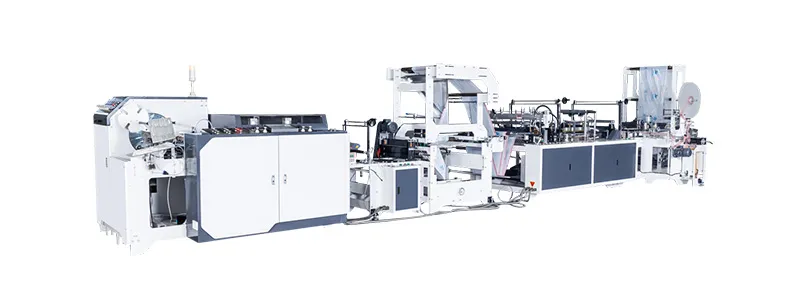
Another factor is the ability to handle multiple lanes. Some T Shirt Bag Making Machines for high-output scenarios feature double-line configurations, which can double throughput without requiring twice the floor space. For example, the Automatic Double Lines T-Shirt Bag On Roll Making Machine (an example from industry sources) can produce two lines of bags simultaneously, but it requires consistent film quality and precise registration.
Beyond the machine itself, consider the total cost of operation. Spare parts availability, lead times for replacement sealing bars, and local service technician support are critical. Machines from established manufacturers with a regional service network often command premium prices but reduce downtime.
Electricity consumption varies significantly. A fully automatic line with multiple servo motors and heating zones can consume 15–25 kW per hour, depending on film width and speed. Validate with the manufacturer's load data under your typical running conditions.
Another risk is underestimating changeover time. Machines that require manual adjustment of guide rollers, sealing bars, and winding stations can take 30–60 minutes to switch between bag sizes. This reduces effective capacity for plants running diverse orders. Machines with servo-driven positioning and recipe storage reduce changeover to under 10 minutes.
We recommend reviewing our Products page to see a range of bag making machine configurations, and the Applications page for industry-specific guidance. For buyers focused on environmental compliance, the Biodegradable Bags section offers relevant insights.
What is the typical lifespan of a t-shirt bag making machine?
With regular maintenance, a well-built machine can last 10–15 years. However, sealing bars, cutting blades, and electrical components may need replacement every 2–5 years depending on usage volume.
Can I use the same machine for both t-shirt bags and flat bags?
Some machines are designed with interchangeable dies and sealing heads to handle multiple bag styles. However, changeover time and lost production should be factored into the cost. Dedicated machines are more efficient for high-volume t-shirt bag production.
What safety features should I look for?
Look for interlocking guards, emergency stop buttons, and laser safety curtains if operators need to access the sealing area. Machines must comply with local safety standards such as CE or UL.
How do I choose between a new and used machine?
New machines offer latest automation, warranty, and energy efficiency. Used machines are lower cost but may have hidden wear on sealing bars and drive systems. Always inspect and test with your film before purchase. For budget-conscious buyers, refurbished machines with a warranty can be a compromise.
Selecting the right t-shirt bag making machine requires a balanced assessment of sealing technology, automation level, film compatibility, and operating costs. No single configuration is optimal for all buyers; the best choice depends on your production volume, material mix, and labor skills. Use the evaluation criteria and comparison table in this article as a starting point for your procurement process. For further exploration, browse our T Shirt Bag Making Machines section and Function Customization Category to see available options.
Related site pages: T Shirt Bag Making Machines, Home, Products, Bottom Sealing Bag Making Machines, Bags On Roll Making Machines, Side Sealing Bag Making Machines.



 EN
EN
 ES
ES
 AR
AR