EN
EN
 ES
ES
 AR
AR


Article Overview: This guide provides a neutral, evidence-based comparison of OPP, BOPP, and PE film compatibility for side sealing bag making machines. It covers critical evaluation criteria such as temperature tolerance, static control, seal clarity, and typical applications like bakery and courier bags. The goal is to equip technical decision-makers with a decision framework for selecting the right film‑machine combination. For a broader view of compatible equipment, explore OPP BOPP PE side sealing compatibility solutions.
What Makes OPP, BOPP, and PE Films Different in Side Sealing?
Understanding the fundamental properties of each film type is essential for assessing OPP BOPP PE side sealing compatibility. The table below summarizes key attributes that affect machine setup and output quality.
| Criterion | OPP (Oriented Polypropylene) | BOPP (Biaxially Oriented Polypropylene) | PE (Polyethylene) |
|---|---|---|---|
| Typical Sealing Temperature Range | 130–160°C | 130–160°C | 110–140°C |
| Static Generation Risk | Moderate to high | High | Low to moderate |
| Seal Clarity | Good | Excellent | Fair |
| Typical Thickness Range (microns) | 20–40 | 20–40 | 30–80 |
| Common Applications | Bakery bags, courier envelopes | Food packaging, high-clarity bags | Heavy-duty sacks, wet-wipes |
Note: Actual values vary by manufacturer and additive package. Always validate with your material supplier and machine maker. The differences in temperature and static behavior directly influence the compatibility with a given side sealing bag making machine.
How Does Film Compatibility Affect Machine Selection?
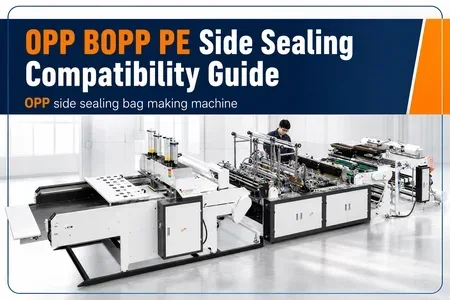
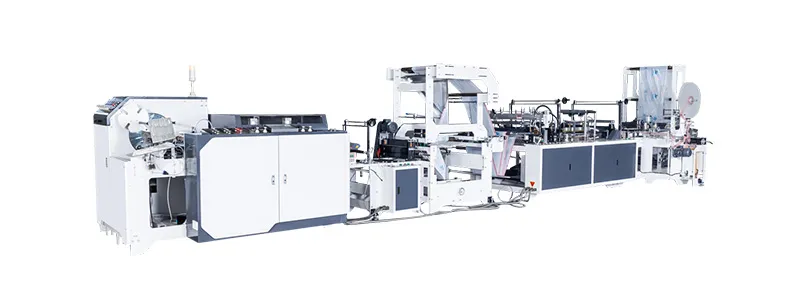
When evaluating a side sealing bag making machine, the compatibility with OPP, BOPP, and PE films determines not only throughput but also waste rates and maintenance intervals. Below we compare the operating implications for each film type. For a comprehensive overview of bag making equipment, consult the bag making machine product range.
OPP Film on Side Seal Machines
Option A: Using OPP film with standard heated sealing bars. Requires precise temperature control (±2°C) to avoid film distortion. Static can be managed with ionizing bars or anti-static additives.
Option B: Using OPP film on a machine equipped with servo-driven sealing pressure control. This reduces film stretch and improves seal consistency at higher speeds.
Buyer note: If your primary product is thin OPP bakery bags (20–25 microns), choose a machine that offers low-inertia sealing jaws and adjustable dwell time. Validate static dissipation mechanisms before purchase.
BOPP Film Considerations
Option A: Standard side seal machine without chill bars. BOPP’s orientation can cause curling at the seal edge, leading to bag distortion. Chill bars or cooling stations are recommended.
Option B: Machine with dual-chill roll system. This maintains seal integrity and flatness, critical for high-clarity food packaging applications.
Buyer note: BOPP typically requires higher seal initiation temperature and more consistent pressure. Confirm the machine’s heating element response time and cooling capacity.
PE Film Compatibility
Option A: Using LDPE or LLDPE on a general-purpose side seal machine. PE’s lower melting point requires reduced heat, but its higher coefficient of friction can cause tracking issues.
Option B: Machine with increased nip roller traction and adjustable unwind tension. This accommodates PE’s stretch characteristics and prevents bag length variation.
Buyer note: For heavy-duty PE courier bags, ensure the sealing bar surface is coated (e.g., Teflon) to prevent sticking. Also review the cutting mechanism—PE can dull blades faster than OPP.
Beyond individual film behavior, the ability to switch between materials on the same line is a frequent requirement. Machines with quick-change sealing modules and programmable recipes reduce changeover downtime. The OPP BOPP PE side sealing compatibility of a machine should be tested with your own film samples before commitment.
Key Decision Factors for OPP BOPP PE Side Sealing Compatibility
When comparing side sealing solutions, procurement committees should focus on these criteria to avoid costly mismatches.
- Temperature Uniformity Across Seal Bar: A variation of more than 3°C across the bar width can cause weak seals in OPP and BOPP films. Request thermographic reports from the manufacturer.
- Static Control System: High-static films (especially BOPP) attract dust and cause bag feeding issues. Machines with integrated static eliminators (ionizing bars or active discharge) are preferable.
- Seal Jaw Profile: Flat vs. serrated jaws affect seal strength and appearance. For OPP bakery bags, serrated jaws can reduce seal peeling, while BOPP food bags often require flat smooth seals for printing compatibility.
- Cooling Section Length: For BOPP and thick PE films, insufficient cooling leads to weak seals. Check if the machine includes forced air or water-cooled chill rolls.
- Film Unwind Tension Control: Accurate tension control is critical for thin OPP films to avoid stretching. Machines with closed-loop tension sensors are recommended.
These factors collectively determine the real-world OPP BOPP PE side sealing compatibility of a bag making line. A checklist approach during vendor evaluation helps standardize comparisons.
Common Pitfalls to Avoid When Running Mixed Films
- Underestimating Static: BOPP films can generate charges over ±5 kV; without proper grounding or ionizers, seals may be compromised and operators face shocks.
- Ignoring Film Additives: Slip and anti-block additives can alter sealing behavior. Request additive data sheets from your supplier.
- Neglecting Cool-down: For PE and BOPP, insufficient cooling allows the seal to peel open under load. Ensure the machine has adequate cooling length.
- Overlooking Seal Jaw Material: Copper bars heat quickly but may wear faster; steel bars last longer but require precise PID control. Choose based on film abrasiveness.
How to Evaluate OPP BOPP PE Side Sealing Compatibility for Your Application
When commissioning a new side seal line, we recommend a systematic evaluation process. The following steps outline how to assess compatibility for your specific film mix.
Step 1: Define Operating Zone
Identify the film types you will run most frequently. For each, note the recommended sealing temperature range from the supplier. Set the machine’s PID controller to maintain that zone within ±1°C during a 30-minute run.
Step 2: Static Audit
Measure static charge on the film before and after the seal section using a handheld electrostatic meter. Target a residual charge below ±500V. If readings exceed ±2000V, plan to add static elimination equipment.
Step 3: Seal Quality Sampling
Produce 100 bags at production speed. Check seal peel strength with a tensile tester (ASTM F88). For OPP/BOPP, target >8 N/25mm; for PE, >10 N/25mm. Also inspect seal clarity visually against a backlight.
Step 4: Production Trial
Run a full shift (8 hours) with each film type. Record waste percentage, downtime, and bag dimension variation. Compare against your baseline tolerance. This trial validates the machine’s OPP BOPP PE side sealing compatibility under realistic conditions.
This evaluation protocol gives buyers objective data to compare machines side by side. It also helps in negotiating performance guarantees with the supplier.
Common Applications: Bakery vs. Courier Bags
The choice of film and machine configuration often depends on the end-use application. Below we compare two typical segments.
Bakery Bags (Thin OPP)
Requirement: High seal clarity, low static to avoid dust attraction, and consistent seal strength at high speed (150+ bags/min). Thin OPP (20–25 micron) demands gentle handling.
Machine Fit: Machines with servo-driven sealing pressure, low-inertia jaws, and integrated ionizing bars. Example: dedicated OPP side sealing bag making machine with a hot-cut or cold-cut option.
Buyer note: Verify that the machine can maintain seal integrity when running at 180 bags/min with 22-micron OPP. Request a trial with your film.
Courier Bags (PE & OPP laminates)
Requirement: Strong seals to withstand rough handling, ability to run thicker films (50–80 micron), and compatibility with self-adhesive closure tapes. PE is common, but some courier bags use OPP/PE laminates for printing.
Machine Fit: Machines with heavy-duty seal bars, high nip pressure, and cooling sections. The cutting unit must handle PE’s toughness without burrs.
Buyer note: For courier bags, the machine’s ability to register print and apply tape is critical. Ensure the side seal machine can integrate with optional modules for patch handle or tamper-evident features.
By aligning the machine’s capabilities with the specific film and bag design, buyers can avoid performance gaps.
FAQ
Can the same OPP side sealing bag making machine run BOPP and PE films?
Yes, many modern machines are designed for multi-film compatibility, but you must calibrate temperature, pressure, and speed for each material. The machine’s control system should store recipes for OPP, BOPP, and PE. Without proper recipe management, seal quality and static control may suffer.
What is the most common cause of seal failure in OPP films?
Inconsistent temperature across the seal bar is the primary cause. A difference of 5°C between the center and edge of the bar can create weak spots. Regular maintenance of heating elements and thermocouples is essential.
How do I reduce static when running BOPP on a side seal line?
Install passive or active static eliminators (ionizing bars) before and after the seal section. For BOPP, also ensure that the unwind tension is not creating additional friction. Anti-static additives in the film formulation can help, but they may affect seal strength.
Is there a minimum film thickness for side sealing?
Most side seal machines can handle films as thin as 15 microns, but high-speed running of ultra-thin OPP (below 20 microns) requires a machine with low-inertia sealing jaws and precise tension control. Always test thin films before committing to production.
What should I look for in a machine to handle PE courier bags?
Look for a seal bar coating (e.g., Teflon) to prevent sticking, adequate nip roller grip to handle PE’s stretch, and a robust cutting mechanism (rotary or guillotine) that can handle PE without dulling quickly. Also ensure the cooling section is long enough for thicker gauges.
Conclusion
Selecting a side sealing bag making machine with strong OPP BOPP PE side sealing compatibility requires a methodical evaluation of film properties, machine specifications, and application requirements. By focusing on temperature uniformity, static control, seal clarity, and cooling capacity, buyers can match a machine to their current film mix while retaining flexibility for future product changes. Use the comparison framework and evaluation steps outlined here to run structured trials and negotiate informed investments. For a deeper discussion on machine options, consult the OPP BOPP PE side sealing compatibility solution page.