EN
EN
 ES
ES
 AR
AR


Article Overview: Selecting the right material for t-shirt bag production directly affects line speed, seal quality, knife wear, and end-product feel. This article compares HDPE, LDPE, and PLA/PBAT blends across key processing parameters, machine requirements, and application fit to help procurement and engineering teams make informed decisions. The focus remains on HDPE LDPE PLA t-shirt bag production, covering the core trade-offs in material selection and equipment compatibility.
Why Does Material Choice Matter in HDPE LDPE PLA T-Shirt Bag Production?
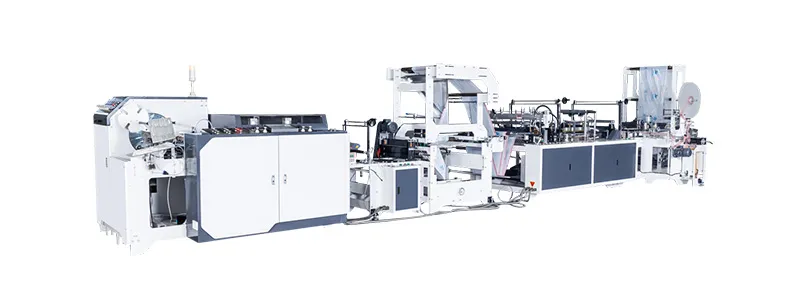
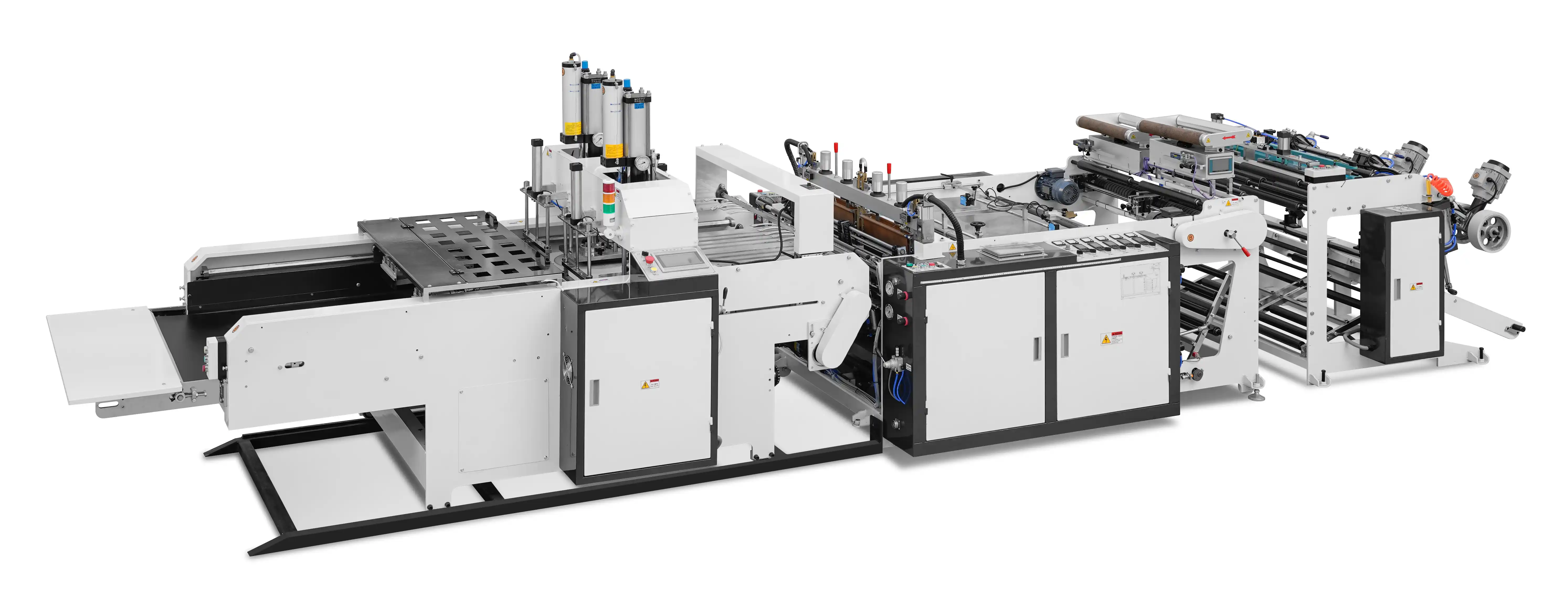
The material used in t-shirt bag manufacturing determines not only the bag's mechanical properties but also the operating parameters of the converting line. HDPE offers stiffness and low cost, LDPE provides softness and tear resistance, and PLA/PBAT blends deliver compostability but introduce processing challenges. Each resin type requires specific temperature profiles, knife configurations, and line speed settings. Understanding these differences early in the equipment selection phase can prevent costly retooling and production delays. For a detailed overview of compatible machines, refer to the HDPE LDPE PLA t-shirt bag production equipment.
Key Differences in Processing Parameters
When comparing HDPE, LDPE, and PLA/PBAT for t-shirt bag production, three critical processing parameters deserve close examination: seal temperature, knife adhesion behavior, and achievable line speed. The following table summarizes typical ranges based on industry practice and equipment manufacturer guidelines.
| Criterion | HDPE | LDPE | PLA/PBAT blends |
|---|---|---|---|
| Seal temperature range | 130–160 °C | 120–150 °C | 150–200 °C (validate with film supplier) |
| Knife adhesion tendency | Low | Moderate | High – anti-stick coating recommended |
| Typical line speed (bags/min) | 80–120 | 70–100 | 40–70 (dependent on film gauge) |
| Bag hand-feel | Stiff, crisp | Soft, flexible | Soft but slightly tacky |
| Compostability certification | Not applicable | Not applicable | OK-compost HOME / EN 13432 (varies by formulation) |
Buyer note: All numbers are illustrative and should be validated against your specific film formulation and machine capabilities. Lower line speeds for PLA/PBAT are often due to narrower temperature windows and increased tack.
How to Evaluate Machine Compatibility for Each Material
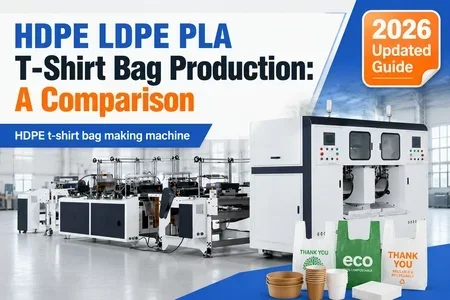
Not every t-shirt bag making machine can handle all three material types without modification. Key areas to assess include:
- Sealing system: HDPE and LDPE seal well with standard hot-bar or impulse systems. PLA/PBAT may require servo-driven sealing heads with precise temperature control to avoid sticking.
- Knife material and coating: For PLA/PBAT, a non-stick coating (e.g., PTFE) or ceramic blade is often necessary to reduce residue build-up.
- Cooling section: PLA/PBAT benefits from extended cooling zones to set the seal properly before winding.
- Infeed tension: LDPE and PLA/PBAT films are more stretchy; tension control must be fine-tuned to avoid bag distortion.
When evaluating a machine for multi-material flexibility, request a trial run with each resin type. Many manufacturers offer adjustment kits for compostable film conversion. For a dedicated HDPE t-shirt bag making machine, ask about optional upgrades for LDPE and PLA processing.
Sealing system trade-off
Option A: Standard hot-bar – Lower cost, sufficient for HDPE/LDPE. Risk of sticking with PLA/PBAT unless coated.
Option B: Servo-driven impulse sealer – Higher investment but precise temperature profile, reduces downtime from blade cleaning.
Buyer note: If PLA/PBAT represents more than 20% of future production, prioritize impulse sealing with anti-stick coating.
Knife configuration
Option A: Standard steel blade – Works for HDPE/LDPE. Re-sharpening interval: every 2–3 shifts.
Option B: Ceramic or coated blade – Longer life, especially for PLA/PBAT. Cost per blade ~2x, but fewer stops.
Buyer note: Evaluate total cost of ownership including downtime for blade changes.
Which Material Offers the Best Processing Efficiency?
Choosing the right material for t-shirt bag production depends on the end-use environment and regulatory requirements. The following flow cards outline two common scenarios.
Scenario A: High-volume retail carrier bags
Requirement: Low cost, good printability, stiff opening. Material fit: HDPE (typically 15–25 micron). Machine setup: standard HDPE t-shirt bag making machine with high-speed servo drive. Expected line speed: 100+ bags/min. Knife life: long. Expected seal quality: consistent. Risk factors: brittleness in cold temperatures.
Scenario B: Compostable shopping bags for regulated markets
Requirement: OK-compost HOME certification, soft feel, good tear strength. Material fit: PLA/PBAT blend (25–35 micron). Machine setup: modified machine with servo sealing, coated knife, extended cooling. Expected line speed: 50–70 bags/min. Need to validate film formulation with supplier. Risk: narrower sealing window; anti-block additives may be required.
Procurement teams should also consider supply chain stability. HDPE and LDPE are widely available commodities; PLA/PBAT blends are specialty grades with longer lead times. Request a material compatibility certificate from your machine supplier before committing to a dedicated line.
Frequently Asked Questions About HDPE LDPE PLA T-Shirt Bag Production
Can I run PLA/PBAT on a standard HDPE t-shirt bag making machine?
Yes, but modifications are usually required. The most common changes include upgrading the sealing system to servo-driven impulse, adding a non-stick coating to the knife, and extending the cooling conveyor section. Without these adjustments, line speeds drop and seal defects increase.
What is the typical line speed difference between HDPE and LDPE?
HDPE generally allows 10–20% higher line speeds because of its higher stiffness and faster seal setting. LDPE requires slightly slower speeds to avoid seal tearing. Actual speed depends on gauge, bag size, and machine condition.
Which material is best for a t-shirt bag with a soft, fabric-like feel?
LDPE and PLA/PBAT blends both produce a softer hand-feel compared to HDPE. LDPE is non-compostable but more forgiving on existing machines. PLA/PBAT offers compostability but at higher material cost and slower production rates.
How do I decide between a dedicated HDPE line and a multi-material line?
Analyze your forecasted product mix. If PLA/PBAT will be less than 15% of total volume, a dedicated HDPE line with a separate small multi-material line may be more economical than a single flexible line that sacrifices speed for all materials.
Conclusion
Selecting the optimal material for t-shirt bag production is a balancing act between processing efficiency, bag performance, and regulatory compliance. HDPE remains the workhorse for high-speed, low-cost production. LDPE offers a softer bag with slightly slower output. PLA/PBAT meets compostability demands but requires machine adjustments and accepts lower throughput. Use the specification comparison and decision framework in this article to align your material choice with both operational goals and market requirements. For further guidance on machine configuration, consult a technical sales engineer who can match your film specification to the appropriate HDPE LDPE PLA t-shirt bag production solution.