EN
EN
 ES
ES
 AR
AR


Article Overview: Selecting the right garbage bag on roll making machine directly impacts production efficiency, roll quality, and total cost of ownership. This guide helps procurement managers and project engineers evaluate machine specifications, validate supplier capabilities, and avoid common buying mistakes. We focus on the key decision factors in garbage bag on roll machine selection solutions, from roll format and perforation to output capacity and automation level.
Key Criteria for Garbage Bag on Roll Machine Selection
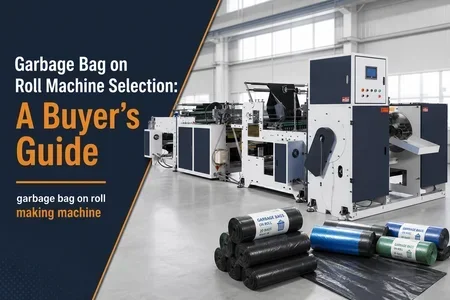
When evaluating a garbage bag on roll making machine, buyers must consider the interaction between roll specifications, bag dimensions, and production throughput. The following criteria form the foundation of a sound procurement decision.
Roll Length and Bag Count
In garbage bag on roll machine selection, the required roll length and number of bags per roll are primary drivers of machine design. A machine that produces 50-meter rolls with 100 bags per roll requires different winding tension control than one running 500-meter rolls. Ensure the supplier can demonstrate consistent roll diameter and tension across the full range of your target roll lengths.
Core vs. Coreless Winding
Coreless rolls reduce material cost but require precise winding control to prevent telescoping. Machines with core winding (paper or plastic cores) offer better stability for high-speed packaging lines. Your garbage bag on roll machine selection should match the winding type to your downstream handling equipment.
Perforation Pitch Accuracy
Inconsistent perforation leads to bag tearing and waste. Ask the supplier for perforation pitch tolerance data. A high-quality machine maintains ±1 mm pitch accuracy at maximum speed. This is especially critical for automatic dispensing applications where bag separation must be reliable.
Step 1: Define Your Roll Format Requirements
Start by listing your target roll length, bag count, core/coreless preference, and perforation pitch. Also specify bag width, length, and thickness (gauge). This information becomes the basis for machine configuration and supplier discussion.
How to Match Machine Output to Your Production Requirements?
Output capacity, measured in rolls per hour or bags per minute, must align with your downstream processing speed. A mismatch creates either bottlenecks or underutilization. Use the following approach to define realistic output thresholds.
- Calculate peak demand: Estimate the maximum rolls needed per shift based on order forecasts. Add a 15–20% safety buffer for unexpected spikes.
- Assess cycle time: Include roll change, tension adjustment, and perforation blade change time. Automatic roll changers reduce downtime but increase initial investment.
- Verify sustained speed: Ask the supplier for sustained output (not just theoretical maximum) under your specific film type (HDPE, LDPE, etc.). Some machines slow down significantly with thicker film.
In your garbage bag on roll machine selection approach, insist on a written output guarantee tied to your material specification. This protects against overpromised performance.
Step 2: Validate Supplier Output Claims
Request a reference list of similar installations. Contact three references and ask about actual output, uptime, and material type. If possible, arrange a production trial with your own film extrusion blend to measure real throughput.
Supplier Evaluation Checklist for Garbage Bag on Roll Making Machines
Beyond machine specifications, the supplier’s engineering support, spare parts availability, and service network are critical. Use the following checklist when comparing bids.
- Machine construction: Frame material, sealing bar durability, and bearing quality. Ask about IP rating for washdown environments.
- Control system: PLC brand, touchscreen interface, and remote diagnostics capability. A standard control system simplifies training and troubleshooting.
- Winder technology: Surface winder vs. center winder vs. gap winder. Center winders offer better tension control for coreless rolls but cost more.
- Perforation mechanism: Rotary blade vs. punch. Rotary blades are quieter and longer-lasting for high-speed runs.
- Safety compliance: CE, UL, or equivalent certifications. Verify guards, emergency stops, and interlock switches.
This checklist helps standardize your garbage bag on roll machine selection across suppliers. Weight each criterion based on your production priorities.
Common Procurement Mistakes in Garbage Bag on Roll Machine Selection
Even experienced buyers can overlook details that lead to costly integration problems. Below are three frequent pitfalls and how to avoid them.
- Ignoring film roll diameter limits: The unwind stand must handle your extrusion roll diameter and width. A mismatch forces additional equipment purchase.
- Overlooking perforation blade life: Cheap blades wear quickly, causing downtime. Budget for premium carbide blades and ask about average blade lifespan.
- Not planning for future product changes: If you expect to add draw-tape bags or star-seal formats later, choose a modular machine that accepts retrofits rather than buying a new line.
These mistakes often arise when procurement focuses solely on price. A thorough garbage bag on roll machine selection process balances cost with operational risk.
FAQ
What is the typical output range for a garbage bag on roll making machine?
Output varies widely based on roll format and bag size. Small machines may produce 30–50 rolls per hour, while high-speed lines exceed 100 rolls per hour. Always request output data for your specific bag dimensions and film gauge.
How do I decide between core and coreless winding?
Coreless winding saves material cost per roll but requires more precise tension control. Core winding offers better roll stability and easier handling downstream. Choose based on your packaging line automation level and end-user preferences.
What maintenance is required for the perforation unit?
Rotary blades need periodic sharpening or replacement depending on film type. Lubricate shafts weekly and inspect alignment monthly. Suppliers typically provide a maintenance schedule with the machine manual.
Can the same machine produce both flat and star-seal bags?
Some machines are designed for quick changeover between sealing types, but it adds complexity and cost. Confirm with the supplier if this flexibility is available as an option or requires a dedicated module.
Conclusion
Successful garbage bag on roll machine selection requires a structured approach: define your roll format and output needs, validate supplier performance with real data, and evaluate total cost of ownership including maintenance and changeover downtime. Use the checklists and flow steps in this guide to prepare a clear RFQ. By focusing on these procurement checkpoints, you reduce the risk of underperforming equipment and costly rework. For detailed machine specifications and to request a sample run, explore our garbage bag on roll machine selection solutions or browse other bag making machines to see the full product range.