EN
EN
 ES
ES
 AR
AR


Article Overview: This guide explains the critical role of bottom seal strength quality in bottom sealing bag making machines. It covers the key factors influencing seal integrity, how to evaluate suppliers, common defects to avoid, and practical steps for your RFQ process. Designed for procurement managers, sourcing teams, and project engineers, this article helps you make informed purchasing decisions to minimize downstream packaging failures.
What Is Bottom Seal Strength Quality and Why Does It Matter?
Bottom seal strength quality refers to the ability of the bottom seal on a bag or pouch to withstand mechanical stress during filling, handling, and transport without leaking or bursting. In bottom sealing bag making machines, the seal is formed by applying heat and pressure to the film layers at the bag’s bottom. Poor seal quality leads to product waste, customer complaints, and increased costs. For B2B buyers, specifying and verifying bottom seal strength quality is essential to ensure packaging performance aligns with end-use requirements, whether for food, medical waste, or industrial packaging.
Key Factors That Affect Bottom Seal Bag Sealing Quality
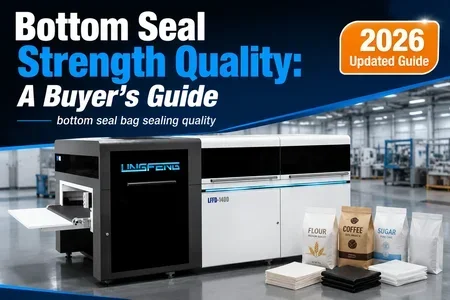
Several process variables directly influence bottom seal bag sealing quality. Understanding these parameters helps buyers ask the right questions during supplier evaluation.
- Sealing temperature: Too low results in weak seals; too high causes film degradation and brittleness.
- Dwell time: Insufficient time prevents proper polymer fusion; excessive time damages film.
- Pressure: Inconsistent pressure yields uneven seal thickness and strength.
- Film material and thickness: Each polymer blend (e.g., LDPE, HDPE, biodegradable) requires optimized settings.
- Contamination: Dust, oil, or moisture on film surfaces weakens bonds.
- Cooling: Rapid cooling after sealing sets the bond; poor cooling can lead to reopening.
Buyers should request supplier data on how their machines control these variables, especially for the specific film types they plan to use.
How to Evaluate Bottom Seal Strength Quality During Supplier Selection
When evaluating machinery suppliers, a structured approach reduces procurement risk. Use the following steps to validate bottom seal strength quality before purchase.
Step 1: Request Seal Strength Test Data
Ask suppliers for documented test results using standards such as ASTM F88 or internal protocols. Require data across a range of film specifications (thickness, material type) and machine speeds. Look for consistent values above your minimum acceptable seal strength (e.g., 5 N/25 mm for light-duty bags).
Step 2: Conduct On-Site or Remote Trial Runs
Insist on a production-scale trial using your own film rolls. Observe seal appearance (no wrinkles, melt-through, or gaps). Perform manual peel tests or use a tensile tester. Document any parameter adjustments needed to achieve acceptable bottom seal strength quality.
Step 3: Evaluate Control System Capabilities
Advanced machines offer closed-loop temperature control, servo-driven pressure adjustment, and digital recipe storage. Confirm that the system can maintain ±2°C at the sealing bar and provide repeatable pressure profiles across shifts.
These steps form the core of a robust supplier evaluation. Include them in your RFQ to ensure comparability between bids.
Common Bottom Seal Defects and How to Prevent Them
Even well-engineered machines can produce defects if process conditions drift. The table below outlines common issues and corrective actions.
- Weak seal: Increase temperature or dwell time within film limits. Check pressure uniformity.
- Burst seal: Reduce temperature or pressure; verify film thickness is within tolerance.
- Uneven seal: Inspect sealing bar parallelism and heater element condition. Adjust nip roll alignment.
- Film sticking to bar: Apply anti-stick coating (e.g., PTFE) or lower temperature slightly.
- Seal contamination: Clean sealing area; install film cleaning brushes or ionizers.
Buyers should ask suppliers for a troubleshooting guide and ensure that service technicians are available to address these issues quickly.
Bottom Seal Strength Quality Testing Methods
Validating bottom seal bag sealing quality after installation is critical for quality assurance. Common test methods include:
- Peel test (ASTM F88): Measures force required to separate the seal; provides quantitative strength data.
- Burst test: Pressurizes the bag until seal failure; simulates real-world stress.
- Leak test: Submerges sealed bag in water or applies vacuum; detects pinholes and channel leaks.
- Visual inspection: Check for clarity, uniformity, and absence of wrinkles or bubbles.
For high-volume production, integrate inline seal inspection systems that flag anomalies in real time. When drafting your RFQ, specify the test methods and acceptance criteria that match your application. For more detailed product comparisons, visit the Products page.
FAQ
What is the minimum acceptable bottom seal strength for industrial bags?
There is no universal standard; it depends on bag size, film thickness, and content weight. Typically, for lightweight films (20-30 µm), a peel strength of 4-6 N/25 mm is common. For heavy-duty bags (100+ µm), 10-15 N/25 mm may be required. Always specify your own criteria based on application testing.
How often should bottom seal strength quality be tested during production?
At minimum, test at start of each shift and any time a new film roll is loaded. For critical packaging (food, medical), inline testing every bag is recommended. Suppliers should offer machines with continuous monitoring options.
Can bottom seal strength quality be adjusted on existing machines?
Yes, by tuning temperature, pressure, dwell time, and cooling. However, machine design limits the achievable range. When evaluating new equipment, consider flexibility for future film changes.
What are the main causes of seal failure in biodegradable films?
Biodegradable films often have narrower sealing windows. Overheating can degrade the material, while low temperature results in weak bonds. Precise temperature control and matched pressure are critical. Ask suppliers for specific recipes for compostable materials.
Conclusion: Prioritize Bottom Seal Strength Quality in Your Next Purchase
Bottom seal strength quality is a non-negotiable performance attribute for bottom sealing bag making machines. By understanding the influencing factors, implementing a structured supplier evaluation process, and applying proactive testing, you reduce the risk of packaging failures. This guide provides the procurement checklist necessary to align your RFQ with real-world production requirements. Start your evaluation today by contacting suppliers with a clear specification and test protocol.