EN
EN
 ES
ES
 AR
AR


Article Overview: This guide helps procurement managers, sourcing teams, and project engineers evaluate suppliers of T Shirt Bag Making Machines systematically. You will learn which technical parameters matter most, how to verify production capabilities, how to reduce procurement risks, and what to include in your RFQ. Use this as a practical checklist to avoid costly mistakes and build a shortlist you can defend internally.
What Technical Parameters Should You Prioritize When Evaluating t-shirt bag Making Machines?
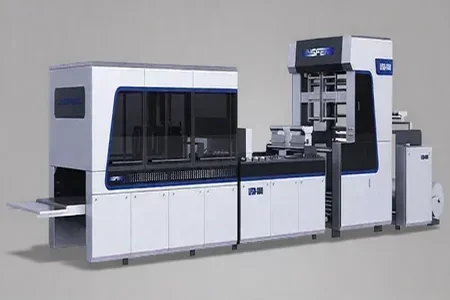
When comparing t-shirt bag manufacturing equipment, not all specifications carry equal weight for consistent output and low defect rates. Focus on the following parameters to create a defensible comparison baseline:
- Machine speed (bags per minute): Most high-speed lines operate between 60 and 120 bags per minute. Verify that the rated speed is sustainable over an 8-hour shift, not just peak burst speed.
- Material compatibility: Confirm the machine can process the specific resin grades you plan to use (HDPE, LDPE, LLDPE, or blends). For biodegradable films, check if the sealing system adjusts to lower melt temperatures.
- Bag size range: Machines often have a fixed width range (e.g., 300–700 mm). Ensure your target bag dimensions fall within the adjustable range without requiring major change parts.
- Sealing and cutting technology: Hot knife vs. cold knife, servo-driven vs. pneumatic. Evaluate seal strength consistency and changeover time between different bag lengths.
- Control system: PLC-based with HMI is standard. For integration into smart factories, check for remote monitoring capability and open communication protocols.
Comparing Speed vs. Reliability
Option A: A machine rated at 120 bags/min but with simple servo tension control may produce more waste due to film registration drift.
Option B: A machine rated at 100 bags/min with advanced automatic tension control and dual-servo sealing often yields higher effective output with lower scrap rates.
Buyer note: Ask for real production data (uptime, scrap rate) from three similar installations. Do not rely solely on brochure speeds.
How to Verify a Supplier's Production Capabilities for T Shirt Bag Making Machines?
Before adding a supplier to your shortlist, conduct a structured verification. Use the following three-step process to assess whether the manufacturer can deliver consistent quality and support.
Step 1: Review Manufacturing Facility and Process
Request a virtual or on-site tour. Look for clean assembly areas, in-house testing stations, and quality control checkpoints. Ask about ISO certification (9001 or 14001) and whether critical parts like sealing bars and servo motors are sourced from reputable brands.
Step 2: Request Customer References and Production Reports
Ask for at least three customer contacts in your region or industry segment. Inquire about installation experience, training quality, spare parts availability, and mean time between failures (MTBF) for the model you are considering. If the supplier hesitates, consider that a red flag.
Step 3: Validate After-Sales Support and Warranty Terms
Clarify warranty duration, what is covered (labour, travel, consumables?), and response time commitments. For T Shirt Bag Making Machines, consider whether the supplier offers remote diagnostics and local technicians in your region. A shorter warranty with reliable local support may be better than a long warranty with slow response.
Key Procurement Risks and How to Mitigate Them
Buying t-shirt bag production equipment involves several risks that can delay commissioning and raise total cost of ownership. Below are common pitfalls and practical countermeasures.
- Specification mismatch: The machine cannot handle your exact film width or bag profile. Mitigation: Provide a written bag specification sheet and ask the supplier to confirm feasibility in writing.
- Unexpected customs and logistics costs: Import duties, port handling, and inland freight can add 15–30% to the purchase price. Mitigation: Request a complete landed cost estimate before signing.
- Inadequate operator training: Complex PLC controls require skilled operators. Mitigation: Specify training days in the contract and require a sign-off on operator proficiency.
- Spare parts lead time: Critical parts like sealing knives may take weeks to ship. Mitigation: Mandate a recommended spare parts list with local stocking arrangements.
RFQ Checklist: What to Include in Your Request for Quotation
An RFQ for T Shirt Bag Making Machines should leave no room for ambiguity. Use this checklist to structure your document:
- Bag dimensions (width, length, gusset) and material specifications (resin type, thickness range).
- Required production volume per shift or month.
- Machine configuration: single-lane or multi-lane, printing registration, stacking vs. winding.
- Acceptable power supply (voltage, frequency, phases) and compressed air requirements.
- Certifications needed: CE, UL, EAC, etc.
- Training, installation supervision, and commissioning support.
- Warranty terms and spare parts package.
- Payment terms and delivery timeline.
Phase: Evaluating Supplier Responses
Create a scoring matrix using the parameters above. Weight each criterion according to your priorities (e.g., speed 20%, reliability 30%, support 25%, price 25%). Invite the top two suppliers for a technical call or video demonstration. Compare responses side by side before making a final decision.
FAQ
What is the typical lifespan of a T Shirt Bag Making Machine?
With regular maintenance, high-quality machines can operate 10–15 years. Major components like servo motors and sealing bars may need replacement after 5–8 years depending on usage intensity.
Should I choose a single-line or multi-line machine?
Multi-line machines (e.g., double-line) increase output per floor space but require more skilled operators and higher upfront investment. Single-line machines are easier to troubleshoot and more flexible for frequent bag size changes. Base your choice on volume stability and crew expertise.
How do I verify the claimed production speed?
Ask for a witnessed production run or a video showing the machine operating at the claimed speed with your target film thickness and bag size. Request data on actual output (bags per hour) including downtime for reel changes and waste removal.
What certifications should a reliable supplier hold?
At minimum, look for ISO 9001 quality management. For export to the EU, CE marking is required. Some buyers also prefer ISO 14001 for environmental management. Check that the certificates are current and cover the specific machine model.
Conclusion: Build a Shortlist with Confidence
A defensible shortlist for t-shirt bag production equipment is built on verifiable technical data, transparent supplier evaluation, and clear RFQ criteria. By following the steps in this guide, you can reduce procurement risk, compare offers fairly, and justify your choice to stakeholders. Remember to involve your production team early, and always ask for machine demonstrations before committing. For further information on T Shirt Bag Making Machines, visit our product page or explore our complete range of bag making equipment. If your application involves shopping bag production, consider machines with high-speed folding and stacking options. For high-volume operations, our bags on roll making machines offer a reliable alternative. Start your evaluation with the parameters outlined above, and you will be well prepared for a successful procurement process.
Related site pages: Home, Bottom Sealing Bag Making Machines, Side Sealing Bag Making Machines, Other Machine, Applications, Function Customzation Category.