EN
EN
 ES
ES
 AR
AR


Article Overview: This article provides a procurement checklist for buyers preparing a draw tape star seal bag on roll RFQ. It covers key specifications, supplier evaluation criteria, and common pitfalls to ensure your investment in a draw tape bag on roll machine delivers consistent output.
What Should Your Draw Tape Star Seal Bag on Roll RFQ Include?
When drafting a draw tape star seal bag on roll RFQ, you need to capture every detail that affects production quality and cost. A poorly specified RFQ leads to mismatched equipment, rework, and delayed timelines. Below are the critical elements to include:
- Bag Dimensions: Width, length, gusset (if any), and tolerance requirements.
- Draw Tape Specification: Material (HDPE, LDPE, polypropylene), width, thickness, and placement (inside or outside fold).
- Star Seal Pattern: Number of stars, seal width, and exact position relative to the bag mouth.
- Roll Format: Roll length, core inner diameter (e.g., 3-inch), outer roll diameter, and winding tension.
- Perforation & Tear-Off: Perforation line type (micro, slit, or skip), spacing between bags, and tear-off direction.
- Material & Film: Resin type, thickness (microns), additive requirements (UV, anti-block, slip), and print registration.
- Output Capacity: Bags per minute or meters per minute – ensure it meets your production targets.
Step 1: Document Your Exact Bag Specifications
Compile a detailed product spec sheet with drawings or reference samples. Include all tolerances (e.g., +/− 1 mm for length). This is the foundation of your draw tape star seal bag on roll RFQ and prevents ambiguity during supplier evaluation.
Step 2: Define Roll Handling Requirements
Specify whether bags are wound onto cores with or without a core, the winding direction (face-in or face-out), and whether a cut-point or continuous perforation is needed. This directly impacts the draw tape bag on roll machine’s winder and cutting modules.
How to Evaluate Suppliers for a Draw Tape Bag on Roll Machine?
Not every supplier can deliver a reliable draw tape bag on roll machine. Use the following criteria to shortlist vendors:
- Application fit: Does the supplier offer machines specifically designed for draw tape and star seal? Ask for case studies or reference installations.
- Customization capability: Can they adjust sealing temperature, winding speed, and perforation patterns to match your bag format?
- Component quality: Inquire about servo motors, sealing bars, and control systems. Premium components reduce downtime.
- Support infrastructure: Check spare parts availability, local service technicians, and response times.
Supplier Comparison Snapshot
Option A: Broadline manufacturer with standard models. May require extensive modifications for draw tape star seal bag on roll RFQ specifics.
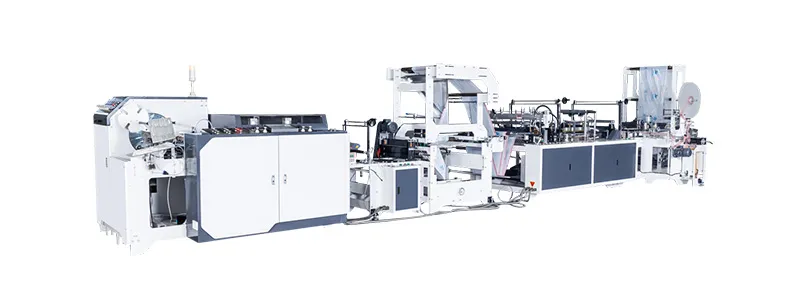
Option B: Specialized producer with dedicated bag on roll machine solutions. Often faster setup and better process integration.
Buyer Note: Request a pilot run with your film and bag design before committing to full production.
Key Machine Specifications to Validate Before Purchase
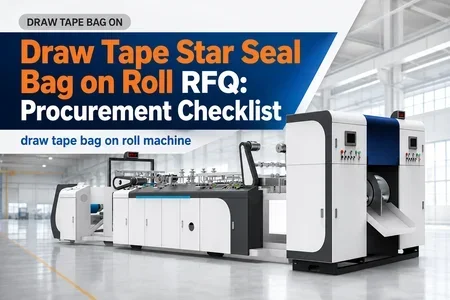
Beyond the RFQ specs, you must verify the draw tape bag on roll machine’s capabilities. Use this checklist during supplier demonstrations:
- Sealing dwell time – adequate for star seal depth and draw tape integration.
- Perforation quality – clean tear without film distortion.
- Winder tension control – uniform rolls without telescoping or wrinkling.
- Automation level – automatic core loading, film splicing, and counters reduce labor.
Phase: Machine Capability Validation
Run three tests: (1) material compatibility with your target film, (2) speed stability over a 4-hour continuous run, and (3) accuracy of star seal placement within 0.5 mm tolerance. Compare results against your draw tape star seal bag on roll RFQ targets.
Common Procurement Mistakes and How to Avoid Them
Even experienced buyers can overlook details. Here are five frequent errors when sourcing a draw tape bag on roll machine:
- Overlooking film properties: Not all machines handle low- or high-slip films equally. Test with your actual material.
- Ignoring roll footprint: Maximum roll diameter affects storage and downstream handling. Match to your logistics.
- Underestimating changeover time: If you produce multiple bag sizes, choose a model with quick-adjust seal heads and unwind stands.
- Skipping the service agreement: Downtime costs far exceed a maintenance contract. Include this in your draw tape star seal bag on roll RFQ.
- Assuming standard models match custom needs: Always validate the exact bag configuration with the supplier. Request a dedicated draw tape star seal bag on roll RFQ solution if your spec differs from standard.
FAQ
What is the advantage of star seal over bottom seal for draw tape bags?
Star seal provides a stronger closure and better leak resistance, making it ideal for packaging loose contents like trash or absorbent materials. It also allows a more compact roll because the seal does not add thickness at the bag bottom.
How do I choose between single-line and double-line draw tape bag on roll machines?
Single-line machines offer higher precision for complex star patterns, while double-line machines double output for simpler designs. Your choice depends on volume and bag complexity. Include output targets in your draw tape star seal bag on roll RFQ to guide the supplier.
What core size is standard for star seal bag on roll?
3-inch (76 mm) is the most common for automatic unwinding equipment. However, 1.5-inch and 4-inch cores are available. Specify the core size in your RFQ to match your dispenser.
Can the same machine produce both draw tape and non-draw tape bags?
Yes, many draw tape bag on roll machines can switch between draw tape and plain bags by disengaging the tape feeder and adjusting seal parameters. Confirm this flexibility with the supplier and request a demo.
Conclusion: Next Steps for Your Draw Tape Star Seal Bag on Roll RFQ
Preparing a thorough draw tape star seal bag on roll RFQ is the most effective way to align supplier capabilities with your production needs. Focus on bag specifications, machine validation, and supplier experience. By applying the checklist above, you reduce the risk of costly mismatches and shorten the procurement cycle. For a complete view of available product ranges and to discuss your specific requirements, contact equipment specialists who understand draw tape and star seal technology.