English
 Español
 عربي
عربي 

Article Overview: This guide is written for procurement managers, sourcing teams, and project engineers who are evaluating t-shirt bag making machines for commercial production. It provides a neutral, risk-aware framework to help you prepare supplier evaluations, validate technical specifications, and draft effective RFQs. The goal is to reduce procurement mistakes by focusing on critical checkpoints that directly affect output quality, operational uptime, and total cost of ownership.
Understanding the T-Shirt Bag Market and Your Production Requirements
T-shirt bags are ubiquitous in retail, grocery, and takeaway food sectors. Their simple design—a die-cut handle and open top—makes them one of the highest-volume bag types produced globally. For buyers, this volume translates into intense competition on price, which puts pressure on machinery reliability and throughput.
Before issuing an RFQ, you must define your target bag dimensions, film thickness range (typically 10–50 microns for HDPE or LDPE), and desired output speed. A machine rated at 600–800 bags per minute might sound attractive, but real-world throughput depends on film quality, operator skill, and consistent material properties. Procurement teams should request speed-at-spec data under standard operating conditions, not just theoretical maximums.
Another key requirement is the type of t-shirt bag: star-sealing, bottom-seal, or on-roll format. Each has different downstream packaging needs. For example, star-sealing produces bags that open easily, while on-roll bags are used in automatic bagging stations. Your choice directly influences machine configuration, so clarify the end-use scenario early.
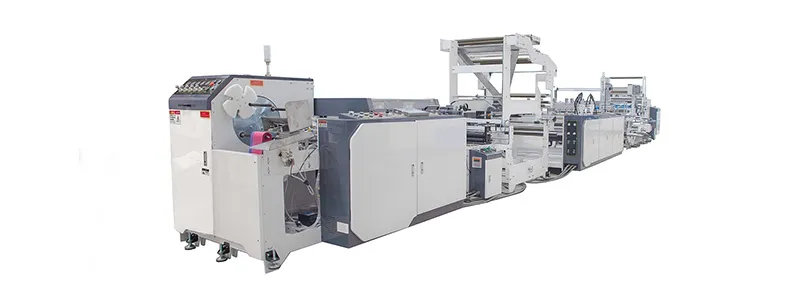
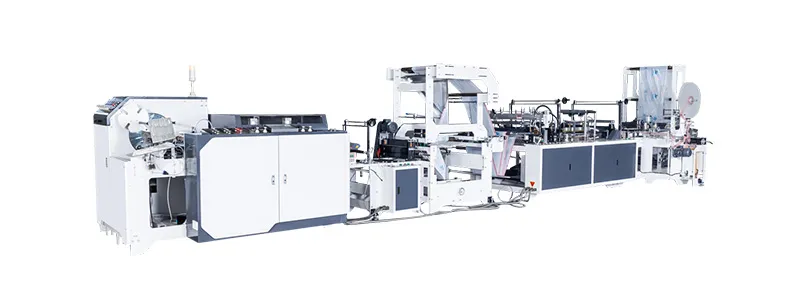
Example scenario: A mid-sized packaging converter planning to enter the t-shirt bag market would need to decide between a single-line machine with manual setup and a fully automatic double-line system. The choice depends on forecast volume, labor cost, and space constraints. Use such scenarios to frame your own requirements.
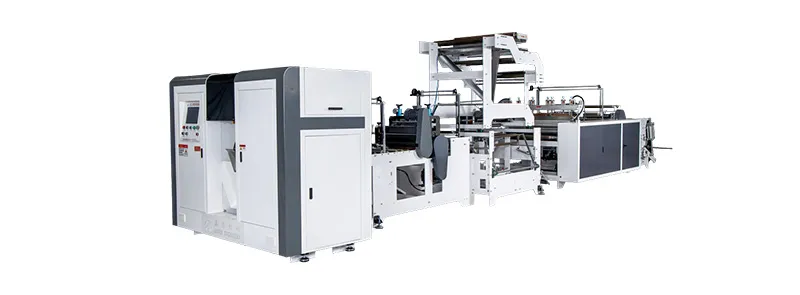
Key Technical Specifications to Validate Before RFQ
When comparing t-shirt bag making machines from different suppliers, focus on the following spec checkpoints:
- Sealing and cutting system: Constant-temperature or impulse sealing? Servo-driven cutting versus mechanical clutch? Servo systems offer better accuracy and less mechanical wear, but they cost more upfront.
- Film width and unwind capacity: Ensure the machine accepts the reel diameters you intend to use. Larger unwinds reduce changeover frequency.
- Bag length and width range: Many machines can handle a range, but verify that the adjustments are quick and repeatable. Manual changeover can cause significant downtime.
- Control system: PLC with touchscreen interface is standard. Ask about remote diagnostics capability—this can reduce on-site service costs.
- Stacking or winding options: For flat bags, a counting and stacking unit is essential. For bags on roll, a surface or center rewinder with tension control is required.
Each supplier may have proprietary technology. For instance, some machines feature automatic tension control that compensates for film thickness variations—a valuable feature when running recycled or biodegradable materials. Validate performance claims with documented test data or references from similar production environments.
It is also wise to ask about compliance with local electrical standards and safety certifications (CE, UL, etc.). Non-compliance can delay installation and increase costs.
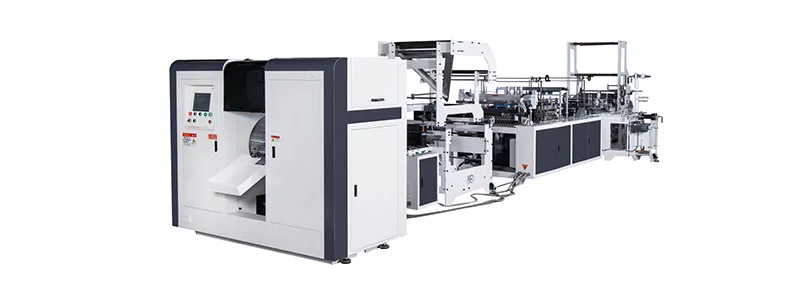
Evaluating Supplier Capabilities and Implementation Risk
Supplier evaluation goes beyond the machine spec sheet. You need to assess the supplier’s manufacturing process, quality control, and after-sales support infrastructure. Request a factory audit or a virtual tour. Look for standardized assembly procedures and quality checkpoints during production.
Ask how the supplier handles spare parts availability. Common wear items (sealing bars, cutting blades, belts) should be readily available, with clear lead times. Some suppliers offer a spare parts kit with the machine; others expect you to order separately. Include these requirements in your RFQ.
Implementation risk includes shipping logistics, installation supervision, and operator training. For a t-shirt bag making machine, on-site commissioning typically takes 3–7 days. Confirm whether the supplier’s technician is fluent in your working language and has a local presence or travel support.
Another consideration is the supplier’s experience with your specific bag material. If you plan to run biodegradable films or high-recycled-content resins, ask for case studies or lab test results. For reference, t-shirt bag making machines from experienced suppliers often include settings for alternative materials.
Cost, Quality, and After-Sales Support Trade-Offs
In B2B machinery procurement, the lowest initial price rarely equates to the lowest total cost of ownership (TCO). Consider energy consumption, scrap rates, and maintenance frequency. A machine with 2% higher scrap rate can erode margins quickly at high volumes.
Compare warranty terms carefully: standard is usually 12 months, but some suppliers offer extended warranties at additional cost. Clarify what is covered (parts only or labor as well) and the response time for breakdowns. Request references from other buyers in your region or industry.
After-sales support is often the deciding factor. A supplier with a local service center or a network of trained agents can reduce downtime. Evaluate remote support capabilities—can the supplier diagnose issues via video call or remote PLC access?
For procurement teams, it is advisable to create a weighted scorecard for TCO elements: price, delivery, warranty, service, spare parts availability, and energy efficiency. This helps justify the selection to internal stakeholders.
Preparing an Effective RFQ for T-Shirt Bag Making Machines
A well-structured RFQ communicates your exact needs and enables suppliers to quote accurately. Include the following sections:
- General information: Company background, project timeline, delivery location, and site conditions (power supply, floor space, ventilation).
- Technical requirements: Bag dimensions, material type (e.g., HDPE, LDPE, biodegradable), target output speed (bags/minute), and any specific sealing or printing requirements.
- Quality and compliance: Certifications required, inspection expectations (e.g., first-article approval), and packaging standards.
- Commercial terms: Request a breakdown of price (FOB or CIF), payment schedule, lead time, and warranty conditions.
- Support and training: Specify installation supervision hours, operator training days, and documentation languages.
- Spare parts: Ask for a list of recommended spares with prices and availability.
Send the RFQ to at least three qualified suppliers. Compare responses using your TCO scorecard. Do not hesitate to ask for clarification on ambiguous points. Explore available product configurations and consider requesting a demonstration or sample production run if feasible.
Frequently Asked Questions
What is the typical lifespan of a t-shirt bag making machine?
With proper maintenance, a well-built machine can operate 8–12 years. Key factors include wearing parts replacement, lubrication, and environmental conditions such as dust and temperature.
How do I choose between a single-line and double-line machine?
Single-line machines are simpler and lower cost, suitable for smaller volumes. Double-line machines double output and often include common drives, but require more floor space and higher investment. Base your decision on projected capacity and return on investment.
Can t-shirt bag making machines run biodegradable materials?
Yes, but not all machines handle such materials without modification. Biodegradable films often have different melt flow indexes and require adjusted sealing temperatures, tension settings, and sometimes different sealing bars. Verify with the supplier and ask for test results.
What is the importance of servo motors in bag-making machines?
Servo motors provide precise control of film feeding and sealing motions, leading to consistent bag length and reduced scrap. They also consume less energy than mechanical drives and allow faster changeovers.
How long does it take to install and commission a t-shirt bag making machine?
Installation and commissioning typically ranges from 5 to 10 days, depending on the machine complexity and the experience of the technician. This includes alignment, electrical connection, trial runs, and operator training.
What spare parts should I stock for a new machine?
Essential spares include sealing bars, heating elements, cutting blades, belts, and electronic sensors. Ask the supplier for a recommended spare parts list tailored to your machine model and typical usage.
Conclusion
Procuring a t-shirt bag making machine is a significant investment that requires careful planning. By defining your production requirements, validating technical specifications, evaluating supplier capabilities, and preparing a thorough RFQ, you reduce the risk of costly mistakes. Focus on total cost of ownership rather than upfront price, and prioritize suppliers who offer solid after-sales support and proven experience with your materials.
As a next step, review your production forecast and create a detailed requirement document. Then share it with a shortlist of qualified suppliers. For more insights on machine configurations and customization, visit the function customization options and application-specific solutions. A systematic procurement approach will help you secure a machine that meets your production goals and delivers long-term value.